Luang Prabang Framework, Understanding the City as a Living Governance System
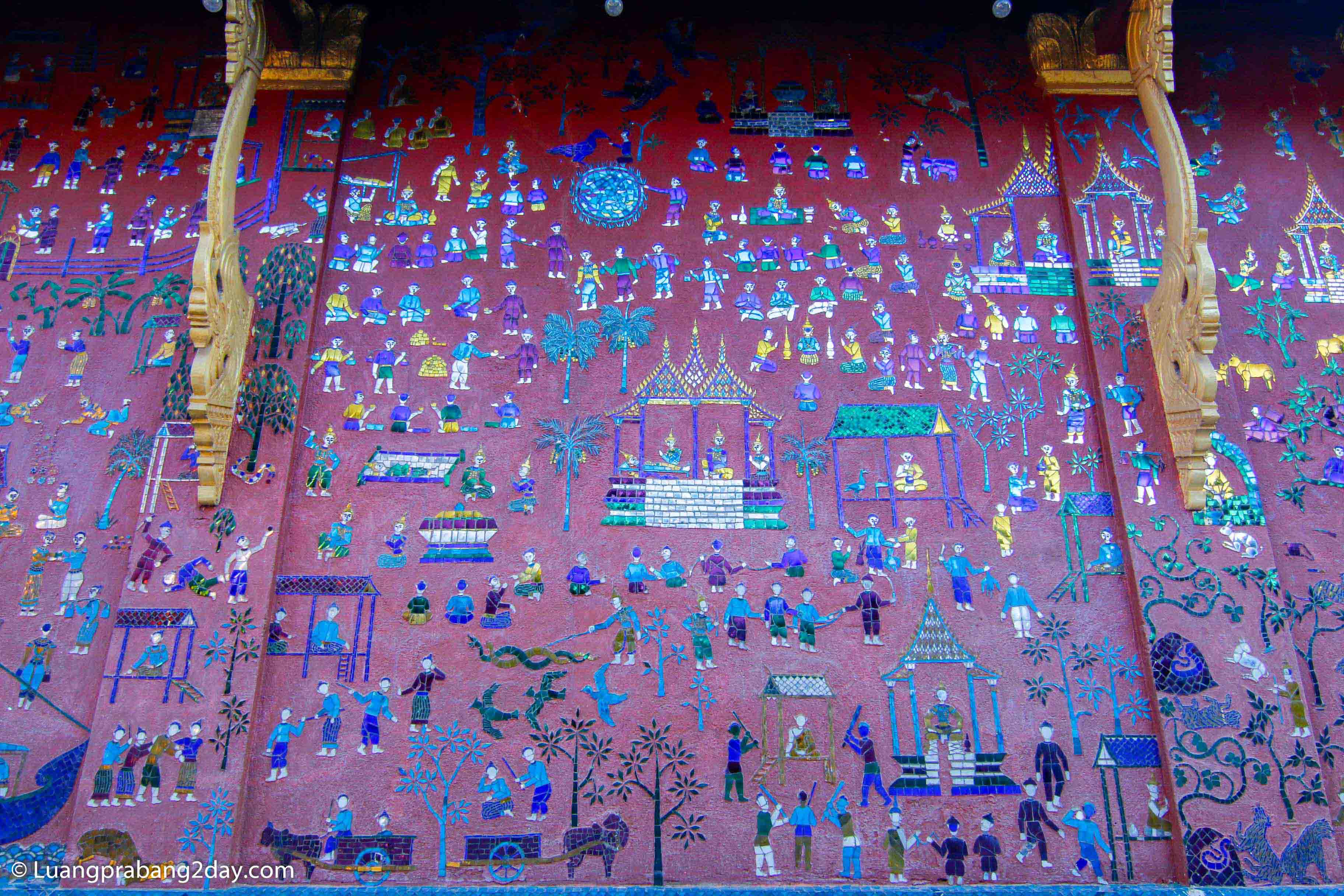
The Luang Prabang Framework
Understanding the City as a Living Governance System
The Five Layers of Urban Continuity
Understanding the City Beyond Appearances
Luang Prabang is frequently described as a preserved city.
Visitors notice architectural harmony.
Observers speak of tranquility.
International narratives emphasize heritage status and historical beauty.
These descriptions are not inaccurate.
But they are incomplete.
What remains less understood is not what Luang Prabang looks like — but why it continues to remain coherent while many historic cities gradually lose internal balance despite preservation efforts.
The answer cannot be found in architecture alone.
Nor can it be explained entirely through policy frameworks, heritage regulations, or international recognition.
Luang Prabang functions as something more complex:
a living governance system composed of multiple interdependent layers operating simultaneously across culture, space, time, and social legitimacy.
These layers rarely announce themselves openly. They guide behavior quietly, shaping decisions long before formal authority becomes visible.
Understanding these layers helps explain:
-
why some initiatives integrate smoothly while others encounter friction,
-
why rapid transformation often slows naturally,
-
and why continuity here emerges less from control than from alignment.
The Luang Prabang Framework is therefore not a theory imposed on the city.
It is an attempt to describe how the city already works.
Layer One: Spiritual Authority
Legitimacy Before Power
In many modern governance systems, authority originates from institutions.
In Luang Prabang, legitimacy historically emerged elsewhere.
Temples are not merely religious landmarks or cultural symbols. They function as sources of moral orientation and social legitimacy.
Authority traditionally arose through:
-
religious merit,
-
ritual correctness,
-
ethical conduct,
-
alignment with shared moral expectations.
Leadership was accepted not primarily because it was enforced, but because it was recognized as appropriate within a shared cultural framework.
This distinction remains significant today.
Projects or initiatives that ignore spiritual legitimacy rarely fail dramatically. Instead, they encounter subtle resistance:
delayed cooperation,
hesitation in participation,
quiet disengagement rather than confrontation.
The system does not reject openly; it withdraws alignment.
This layer demonstrates that governance in Luang Prabang begins not with power, but with recognition.
Layer Two: Cultural Regulation
Rules Without Enforcement
Traditional practices such as ฮีต 12 คอง 14 were not ceremonial traditions created for display.
They functioned as operational protocols organizing social life.
These cultural systems regulated:
-
agricultural and labor cycles,
-
communal responsibilities,
-
conflict mediation,
-
behavioral expectations.
Remarkably, they operated without formal enforcement mechanisms.
There were no written penalties, no centralized policing structures, and no bureaucratic oversight.
Compliance emerged through shared understanding.
Cultural coherence replaced legal coercion.
This explains why abrupt external changes often struggle to take root. The system prioritizes harmony over efficiency, continuity over acceleration.
When initiatives align with cultural rhythm, adoption occurs naturally.
When they conflict, adaptation slows — not by regulation, but by collective hesitation.
Layer Three: Spatial Governance
Space as Authority
In Luang Prabang, space itself carries meaning.
Urban layout is not merely functional; it encodes hierarchy and responsibility.
Location implies legitimacy.
Proximity implies relationship.
Visibility implies obligation.
Temples anchor symbolic centers.
Residential areas reflect social continuity.
Rivers define orientation and movement.
The spatial organization of the city guides behavior without explicit instruction.
Individuals intuitively understand appropriate conduct depending on location.
This explains why zoning or development debates often feel emotionally charged. They are rarely about technical planning alone.
They involve disruptions to spatial meaning embedded over generations.
When spatial logic is respected, change integrates smoothly.
When ignored, friction emerges even if regulations permit development.
Layer Four: Temporal Governance
Time as Coordination
Modern cities typically operate according to economic speed.
Luang Prabang operates according to ritual time.
Daily offerings structure mornings.
Seasonal festivals recalibrate yearly rhythms.
Ceremonial pauses interrupt continuous activity.
Time functions as governance.
Rather than maximizing productivity, temporal cycles stabilize social coordination.
Ritual calendars synchronize behavior across the community without centralized direction.
This temporal structure explains a recurring experience shared by many observers:
Those who attempt to move quickly encounter resistance.
Those who align with rhythm experience continuity.
Time here is not optimized.
It is balanced.
Acceleration without synchronization introduces instability.
Layer Five: The Modern Interface
Negotiation with the Outside World
The outer layer of the system connects Luang Prabang with global forces:
tourism flows,
UNESCO governance frameworks,
digital visibility,
international investment,
transnational cultural exchange.
This layer does not replace traditional structures.
It interacts with them.
When alignment exists between external initiatives and internal layers, integration succeeds.
When alignment is absent, friction appears — often interpreted externally as inefficiency, but internally experienced as systemic self-protection.
Most misunderstandings about Luang Prabang originate at this interface.
External actors interpret slow adaptation as resistance rather than coordination.
The system is not rejecting change; it is negotiating compatibility.
Interdependence of the Five Layers
These five layers do not operate independently.
They reinforce one another.
Spiritual legitimacy supports cultural regulation.
Cultural practices reinforce spatial meaning.
Spatial organization stabilizes temporal rhythm.
Temporal rhythm moderates interaction with modern pressures.
Remove one layer, and strain increases across others.
This interdependence explains why isolated interventions rarely produce lasting transformation.
Change succeeds only when multiple layers align simultaneously.
Why This Framework Matters
For Travelers
Understanding the framework changes experience fundamentally.
Visitors move from consuming images toward participating respectfully within an existing system.
Observation becomes interaction grounded in awareness.
For Owners and Investors
Decisions shift from imposing external models toward positioning initiatives within local logic.
Success becomes less about speed and more about legitimacy.
For Policymakers and Institutions
Governance expands beyond managing appearances toward sustaining systemic coherence.
Policy becomes alignment rather than enforcement.
The Hidden Rule of Luang Prabang
The city rewards legitimacy, not ambition.
Efforts seeking rapid extraction encounter invisible resistance.
Projects built gradually — through relationships and understanding — become absorbed into the system.
This absorption is not granted by policy alone.
It emerges from alignment across layers.
The system recognizes coherence.
From Framework to Decision
The framework is not theoretical.
It has practical implications.
Long-term initiatives that succeed typically align with at least three of the five layers:
cultural legitimacy,
spatial coherence,
temporal rhythm,
community participation,
or governance compatibility.
Failures often ignore these relationships entirely.
Understanding the system does not guarantee success.
Ignoring it reliably produces friction.
Why This Framework Exists
This article does not aim to impress or define Luang Prabang conclusively.
It exists to establish one principle:
Luang Prabang cannot be understood through surface description alone.
A preserved façade reveals little about underlying governance.
Framework precedes interpretation.
Understanding precedes decision.
Those who recognize this do not require persuasion.
They require dialogue.
A Quiet Closing Perspective
Living heritage cities endure not because they resist change, but because change passes through systems capable of absorbing it carefully.
Luang Prabang continues to function because governance here is distributed across culture, space, time, and legitimacy rather than concentrated solely in institutions.
The city governs itself through alignment.
To understand Luang Prabang, therefore, is not to analyze isolated elements, but to recognize relationships.
Once those relationships become visible, the city appears different.
Not slower.
Not resistant.
But coherent.
LuangPrabang2Day
Authority before action.
Understanding before decision.
ABOUT THE AUTHOR
Hello We are OddThemes, Our name came from the fact that we are UNIQUE. We specialize in designing premium looking fully customizable highly responsive blogger templates. We at OddThemes do carry a philosophy that: Nothing Is Impossible