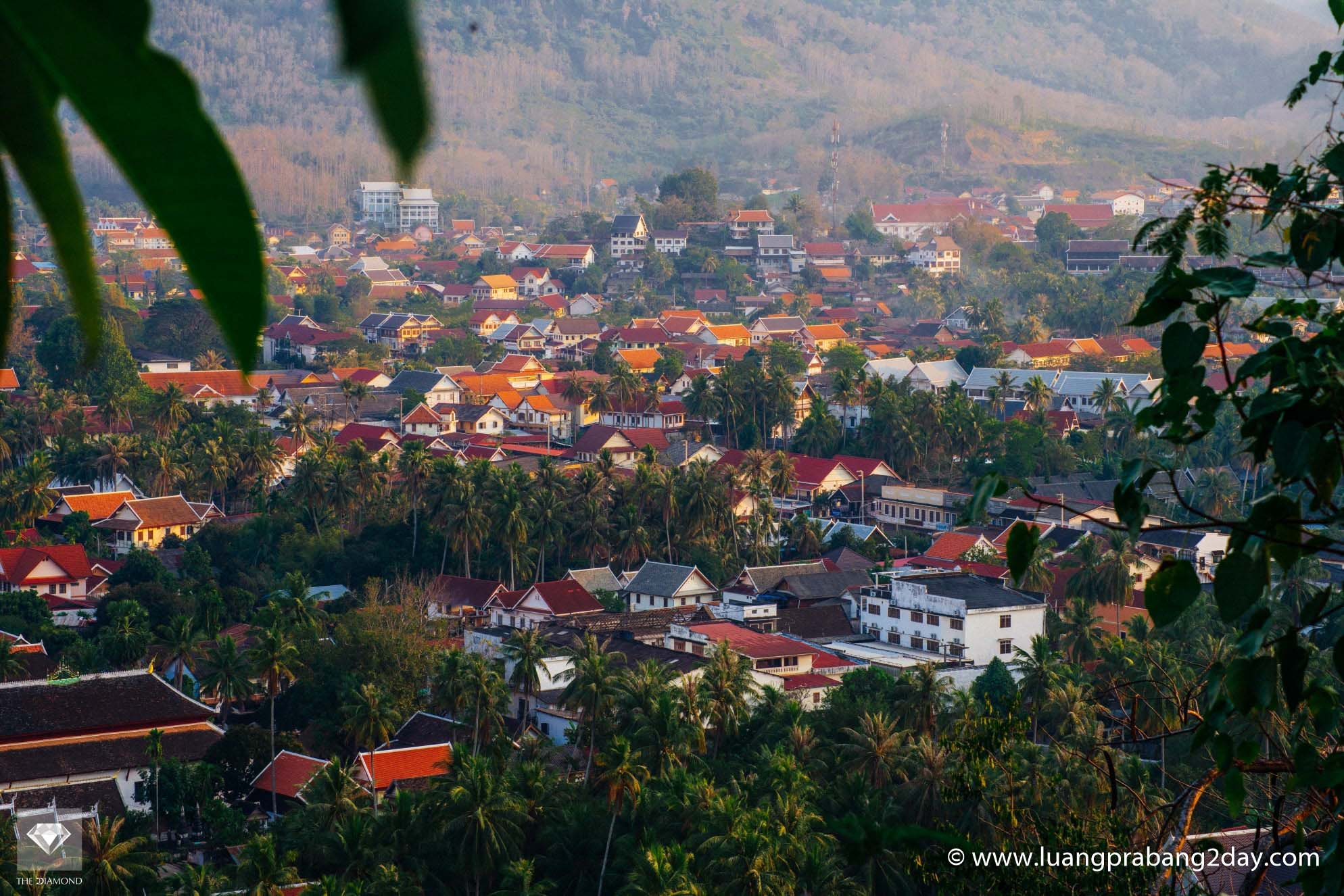
UNESCO Is a Governance Framework, Not a Heritage Label
Understanding How Luang Prabang Is Guided, Not Branded
Luang Prabang is frequently introduced to the world through a familiar phrase: a UNESCO World Heritage city.
The phrase appears in travel writing, promotional materials, academic descriptions, and casual conversation alike. It has become shorthand for historical importance — a convenient way to communicate cultural value in a single recognizable expression.
Yet repetition has produced a quiet misunderstanding.
UNESCO, in public perception, is often treated as a label — a mark of beauty, authenticity, or international prestige applied to a place once it has proven worthy of admiration.
This perception is understandable, but incomplete.
In Luang Prabang, UNESCO functions not primarily as recognition, but as governance.
It is not a badge placed upon the city.
It is a framework that guides how the city continues to change.
Understanding this distinction fundamentally alters how Luang Prabang itself can be understood.
Recognition and Responsibility
When a city is inscribed on the World Heritage List, recognition is immediate. International awareness increases, cultural significance becomes globally acknowledged, and the city enters a shared human narrative of heritage preservation.
Responsibility, however, begins only after recognition.
UNESCO designation does not freeze a city in time. Nor does it exist merely to preserve visual beauty. Heritage status introduces a long-term commitment — one that extends beyond present needs toward future continuity.
This commitment emphasizes:
-
continuity rather than acceleration
-
coherence rather than expansion
-
stewardship rather than extraction
-
responsibility rather than celebration
The designation transforms heritage from an achievement into an obligation.
From that moment forward, the city is governed not only by contemporary priorities but also by inherited meaning and future accountability.
The past becomes an active participant in present decision-making.
Governance Without Visibility
One reason UNESCO is widely misunderstood lies in the subtlety of its operation.
Unlike conventional governance systems, UNESCO’s influence is rarely visible in everyday life. There are no daily announcements, no obvious enforcement mechanisms, and no constant reminders signaling its presence.
Yet its influence permeates decisions quietly.
It shapes how change is evaluated.
It conditions how development is discussed.
It influences how limits are negotiated.
Its presence appears in questions rather than commands:
-
How should space evolve without losing meaning?
-
Which changes maintain coherence?
-
Where must restraint replace expansion?
UNESCO does not directly manage Luang Prabang.
Instead, it establishes conditions under which management must occur.
This distinction is subtle but essential. Governance here operates through alignment rather than control.
From Label to Framework
A label describes what something is.
A framework shapes how something continues to exist.
When UNESCO is interpreted as a label, heritage becomes static — something admired from outside. When understood as a framework, heritage becomes dynamic — something continuously negotiated within lived reality.
In Luang Prabang, heritage is not confined to architecture alone. It exists within relationships between people, ritual, space, and time.
The framework therefore extends beyond buildings.
It influences:
-
spatial rhythm
-
cultural practices
-
patterns of adaptation
-
collective expectations about change
The city is preserved not by preventing transformation but by guiding it.
Constraint as Coordination
Modern development culture often interprets constraints as obstacles to progress.
Within heritage contexts, constraints serve a different function: coordination.
Constraints align diverse actors — residents, institutions, planners, visitors, and businesses — within shared limits that protect long-term coherence.
In Luang Prabang, such coordination helps ensure that:
-
development does not erase accumulated meaning
-
modernization remains compatible with historical rhythm
-
short-term efficiency does not undermine long-term stability
Constraints do not exist to slow the city unnecessarily. They exist to synchronize change with continuity.
When understood this way, limitation becomes a form of care.
Why UNESCO Is Not a Tourism Mechanism
UNESCO designation is frequently associated with tourism growth. Increased attention often follows inscription, creating the impression that the framework exists primarily to attract visitors.
This interpretation reverses cause and effect.
Visibility is a consequence, not the purpose.
The framework was created to regulate transformation, not to stimulate consumption.
When UNESCO is treated primarily as a tourism label, imbalance emerges:
Expectations expand faster than understanding.
Demand grows faster than coordination.
Activity accelerates beyond the system’s adaptive capacity.
The result is not immediate failure but structural strain.
The framework was designed for balance, not acceleration.
Living Heritage Requires Governance
Luang Prabang is often described as a living heritage city.
The phrase carries meaning only when governance exists to sustain it.
Without governance, heritage risks becoming static display. Without coordination, continuity becomes accidental rather than intentional.
Living heritage depends on systems that allow culture to reproduce itself naturally.
UNESCO provides a reference structure — a shared understanding of what must endure even as circumstances evolve.
It does not prescribe specific outcomes. Instead, it shapes the conditions within which decisions are made.
This distinction protects flexibility while maintaining coherence.
Governance as Cultural Memory
Governance frameworks function as institutional memory.
They ensure that decisions are informed not only by immediate needs but by accumulated knowledge about what has allowed the city to endure.
In heritage cities, memory is not nostalgic; it is operational.
Past experience informs present limits.
Historical patterns guide contemporary judgment.
UNESCO’s framework embeds this memory into planning processes, preventing decisions from being made in isolation from historical context.
Through governance, continuity becomes intentional rather than accidental.
A Framework That Rewards Patience
Cities guided by heritage governance rarely respond well to shortcuts.
They respond instead to patience, legitimacy, and contextual awareness.
Change succeeds when it aligns gradually with existing systems rather than attempting rapid transformation.
This principle applies equally to:
-
residents adapting daily practices
-
institutions planning development
-
creatives documenting cultural life
-
visitors engaging with the city
Those who align with the framework often experience coherence and acceptance.
Those who attempt to bypass it encounter resistance — not imposed by authority, but emerging naturally from structural incompatibility.
Understanding Before Interaction
To understand Luang Prabang through UNESCO is not to admire an emblem. It is to recognize a governing logic.
The city does not invite optimization.
It invites understanding.
Engagement begins not with action but with observation — an attentiveness to rhythm, limits, and relationships that sustain continuity.
Understanding precedes alignment.
And alignment allows participation without disruption.
Cultural Diplomacy and Shared Responsibility
UNESCO governance also introduces a form of cultural diplomacy.
Heritage cities belong simultaneously to local communities and to global humanity. Governance therefore mediates between openness and protection.
Diplomacy ensures that international engagement strengthens rather than destabilizes local systems.
It reframes visitors and observers not as consumers but as participants within a shared responsibility.
Through this lens, preservation becomes collaborative rather than restrictive.
The framework does not close the city to the world. It teaches the world how to approach the city respectfully.
Closing Perspective
UNESCO, in Luang Prabang, is not an emblem of prestige.
It is not a marketing device.
It is not a static preservation mechanism.
It is a governance framework — one that allows the city to remain itself while continuing to exist within the present.
Those who understand this do not move faster here.
They move more carefully.
And in Luang Prabang, care is not limitation.
It is respect expressed through continuity.
LuangPrabang2Day
Understanding before action.
Context before decision.
ABOUT THE AUTHOR
Hello We are OddThemes, Our name came from the fact that we are UNIQUE. We specialize in designing premium looking fully customizable highly responsive blogger templates. We at OddThemes do carry a philosophy that: Nothing Is Impossible