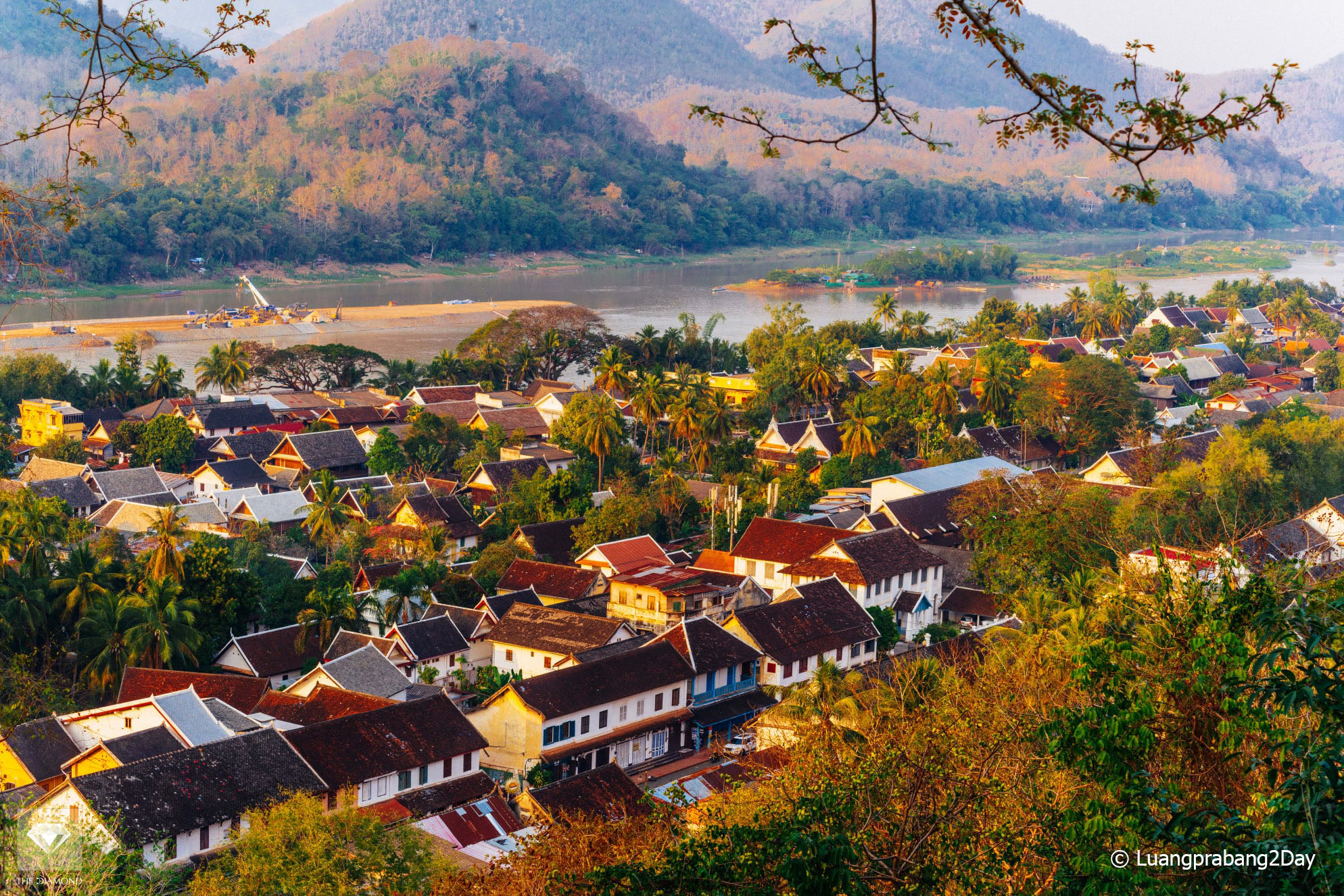
Why Cities That Look Preserved Often Break Internally
Understanding the Difference Between Appearance and Urban Stability
Most cities fail loudly.
Infrastructure collapses.
Conflict becomes visible.
Decline announces itself through disorder.
These failures attract attention because they are easy to recognize.
But some cities fail quietly.
The most fragile cities are not always those that appear chaotic or neglected.
Often, they are the ones that look perfectly preserved.
Clean façades.
Controlled colors.
Carefully maintained streets.
Architectural harmony sustained through regulation.
From the outside, everything appears intact.
Inside, the system is under strain.
Understanding this paradox requires reconsidering what preservation actually means — and what it does not.
The Illusion of Preservation
Preservation is frequently mistaken for stability.
When buildings remain standing, when regulations are enforced, and when visual consistency is maintained, observers assume the city is functioning well.
Order becomes equated with health.
Yet cities do not endure because surfaces remain unchanged.
They endure because internal systems continue to operate coherently across time.
A city may appear preserved while its social coordination, economic balance, and cultural rhythms gradually weaken.
The illusion emerges because preservation is most visible at the surface level.
Walls can be restored. Streets can be cleaned. Colors can be standardized.
Systems, however, are invisible.
And invisible systems determine whether continuity survives.
Cities Are Systems, Not Images
A city is not a collection of buildings.
It is a coordination of behaviors unfolding through time.
Daily routines regulate movement.
Shared expectations shape interaction.
Spaces acquire meaning through repeated use.
Architecture supports these processes, but it does not create them independently.
When preservation focuses primarily on objects rather than relationships, attention shifts away from the mechanisms that sustain urban life.
The city begins to function as an image rather than a system.
Images can remain stable even when systems weaken.
This is why internal breakdown often occurs without immediate visual change.
When Appearance Replaces Function
Many preservation strategies concentrate on elements that are easily measured:
-
architectural form
-
streetscape coherence
-
materials and textures
-
color regulation
-
designated heritage zones
These elements are practical to manage. They can be documented, evaluated, and displayed as evidence of success.
They photograph well.
What proves far more difficult to regulate is function:
-
how residents actually use space
-
how daily rhythms organize time
-
how work, rest, and social interaction remain balanced
-
how cultural meaning transfers across generations
When appearance becomes the primary objective, function gradually adapts to support the image rather than the people who inhabit the city.
Shops adjust schedules to expectation rather than need.
Public spaces prioritize observation over participation.
Activities become staged rather than lived.
Internal pressure begins quietly.
The Missing Layer: System Alignment
Preservation without system alignment is inherently fragile.
Alignment refers to the relationship between spatial design, social practice, economic activity, and cultural rhythm.
When these elements reinforce one another, cities absorb change naturally.
When alignment weakens, systems compensate silently.
New regulations may conflict with daily habits.
Economic incentives may alter long-standing patterns.
Infrastructure improvements may accelerate rhythms previously balanced by restraint.
Residents rarely resist openly. Instead, they adjust.
Traditional practices shorten. Participation declines. Meaning becomes symbolic rather than functional.
Nothing collapses immediately.
The city simply becomes less itself.
Quiet Adaptation and Invisible Strain
Internal breakdown rarely begins with crisis.
It begins with adaptation.
Residents modify behavior to accommodate external expectations.
Spaces become optimized for observation.
Activities shift toward performance rather than necessity.
These adjustments appear harmless because they occur gradually.
From the outside, preservation appears successful.
From within, coherence becomes harder to maintain.
The city expends increasing effort maintaining appearance while losing the internal logic that once made preservation effortless.
Early Warning Signals of Internal Breakdown
Cities under internal strain often display subtle indicators.
Streets become quieter, but not calmer.
Spaces remain maintained but are used less meaningfully.
Local presence declines while transient activity increases.
Routines become efficient but lose cultural depth.
These signals are easily misinterpreted as progress.
Orderliness may mask disengagement.
Efficiency may replace participation.
The city is still standing — yet it is no longer absorbing change. It is deflecting it.
Deflection creates fragility because pressure accumulates without integration.
Why Visual Success Can Increase Vulnerability
Paradoxically, cities that appear highly preserved may become more vulnerable over time.
Visible success attracts attention.
Attention increases expectation.
Expectation introduces pressure.
If governance responds primarily to appearance, adjustments reinforce image maintenance rather than systemic stability.
The city begins optimizing for perception.
Perception operates quickly.
Continuity evolves slowly.
The mismatch between speed and rhythm produces tension that remains largely invisible until alignment becomes difficult to restore.
Why Some Cities Endure
Cities that endure understand preservation differently.
They preserve:
-
rhythms rather than only structures
-
usage rather than only form
-
continuity rather than only heritage designation
Their systems remain legible to residents.
People know how spaces should be used.
Behavior aligns naturally with context.
Change is negotiated rather than imposed.
Preservation succeeds because it reflects existing coherence rather than attempting to manufacture it.
Enduring cities do not resist change entirely. They integrate change gradually within established rhythms.
Preservation as Process, Not Outcome
A common mistake lies in treating preservation as a final state.
Preservation is not something a city achieves once and maintains indefinitely.
It is an ongoing process emerging from coordination.
When preservation becomes the objective rather than the result, strategies shift toward cosmetic stability.
Time is frozen visually while systems continue evolving underneath.
This separation produces instability masked by beauty.
True preservation protects relationships — between people, space, and time.
Governance and the Capacity for Restraint
Internal stability depends heavily on governance culture.
Governance in heritage contexts is less about enforcement than about restraint.
It asks:
When should change slow?
When should opportunity wait?
When does intervention cause more disruption than benefit?
Restraint rarely appears dramatic, yet it preserves coherence.
Cities that endure possess decision-making cultures capable of saying not only yes or no, but not yet.
This temporal awareness protects alignment.
Cultural Legibility
A stable city remains understandable to its inhabitants.
Residents recognize how to behave within shared space.
Rituals maintain temporal structure.
Daily life follows rhythms inherited across generations.
When cultural legibility weakens, preservation becomes increasingly dependent on regulation rather than understanding.
Rules replace intuition.
And when intuition disappears, preservation requires constant intervention — a sign that internal systems are no longer self-sustaining.
Preservation Beyond the Photograph
Photography captures surfaces.
Continuity exists beyond the frame.
The most important elements sustaining heritage cities cannot easily be photographed:
shared timing,
mutual awareness,
collective restraint,
informal coordination.
Preservation that focuses only on what can be seen risks overlooking what allows the city to remain alive.
Beauty may remain visible long after coherence fades.
From Appearance to Understanding
Cities do not break because they change.
They break when change ignores the systems that allow adaptation to occur safely.
Preservation succeeds when it protects relationships rather than appearances.
Understanding must therefore precede intervention.
Observation must precede optimization.
Care must precede visibility.
Closing Reflection
Cities rarely collapse suddenly.
More often, they drift away from themselves while appearing unchanged.
A preserved façade can conceal systemic strain.
Order can mask imbalance.
Beauty can coexist with fragility.
The true measure of preservation is not how intact a city looks, but whether its internal rhythms remain functional without constant correction.
Cities endure when preservation protects what cannot be photographed — the coordination of life unfolding through time.
Understanding this distinction is no longer optional.
It is foundational to the future of living heritage cities.
LuangPrabang2Day
Authority before action.
Understanding before decision.
ABOUT THE AUTHOR
Hello We are OddThemes, Our name came from the fact that we are UNIQUE. We specialize in designing premium looking fully customizable highly responsive blogger templates. We at OddThemes do carry a philosophy that: Nothing Is Impossible