Morning Alms in Luang Prabang: A Rhythm of Relationship and Shared Time
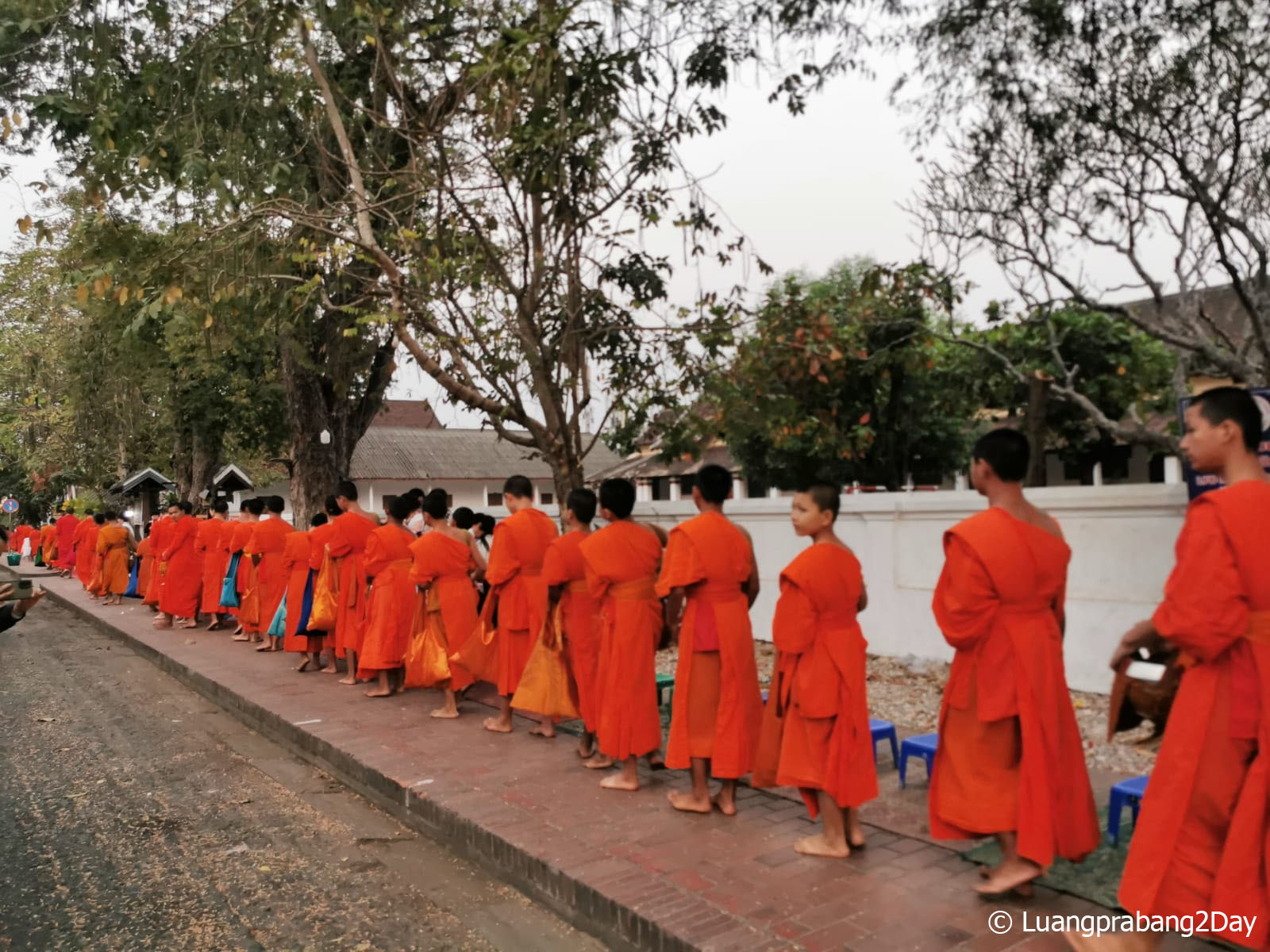
Morning Alms in Luang Prabang: A Rhythm of Relationship and Shared Time
A Ritual & Living Heritage Essay
Category: Ritual & Time
Editorial Framework: Ritual & Time • Local Intelligence
Introduction: A City That Wakes Through Giving
Before sunrise reaches the Mekong River, Luang Prabang begins to awaken quietly. The city does not rise through urgency or the noise of commerce, but through preparation carried out with calm intention. Doors open softly. Mats are placed along sidewalks. Steam rises slowly from baskets of freshly cooked sticky rice.
The morning begins not as a performance, but as participation.
The ritual known locally as Tak Bat, or morning alms, is often introduced to visitors through images: lines of saffron-robed monks walking through mist-filled streets at dawn. Yet appearance alone cannot explain its meaning. What unfolds each morning is not simply a religious ceremony, nor a cultural attraction preserved for observation.
It is a relationship enacted through time.
In Luang Prabang, giving food is also giving attention, patience, and presence. Receiving food is not an act of dependence, but an acceptance of responsibility within a shared spiritual and social rhythm. The ritual continues not because it is protected as heritage, but because it is lived daily by the community itself.
For nearly two decades, observers and local storytellers have watched this continuity unfold across changing seasons and increasing global attention. Such long observation reveals a simple truth: morning alms survives not through preservation alone, but through quiet commitment renewed every dawn.
The Genealogy of a Living Ritual
The origins of morning alms reach deep into the historical foundations of Luang Prabang, once the royal capital of the Lan Xang Kingdom. Buddhism here developed not as an isolated belief system but as a structure woven into governance, education, and everyday social life.
Monasteries historically functioned as more than religious spaces. They served as centers of learning, ethical guidance, and community cohesion. Many young boys entered monastic life temporarily, receiving education and discipline before returning to secular society. Through this cycle, nearly every family maintained a personal connection with the Sangha.
The alms ritual therefore evolved as a living social ecosystem:
-
monks depend on lay communities for daily sustenance,
-
communities depend on monks for spiritual continuity,
-
the ritual renews this interdependence each morning.
No formal agreement governs this exchange. Trust itself sustains it.
Across political transitions, economic change, and growing tourism, the ritual endured because it was never owned by an institution. It belongs collectively to those who practice it. Living heritage survives not by resisting change, but by adapting while preserving meaning.
Time as Structure: The Rhythm of Dawn
One of the most remarkable aspects of morning alms is its relationship with time. The ceremony begins long before anyone witnesses it.
Rice must be prepared fresh before sunrise. Families wake early to cook, arrange offerings, and wait patiently along familiar routes. The ritual unfolds through invisible stages:
-
awakening
-
preparation
-
waiting
-
offering
-
reflection
Ordinary morning time transforms into shared sacred time.
In many modern cities, mornings are governed by productivity and speed. In Luang Prabang, dawn briefly reverses this logic. Movement slows. Silence gains purpose. Attention replaces urgency.
The monks walk barefoot not for symbolism but as daily practice—an embodiment of humility and awareness. Each step reinforces presence in the moment.
No announcements guide participants. Yet everyone understands when to kneel, when to offer, and when to step aside. Time itself becomes the organizer.
The Sensory Landscape of the Ritual
To encounter morning alms fully requires attention to subtle sensory details.
Warm rice releases a gentle fragrance into cool morning air. Temple bells resonate faintly in the distance. Saffron robes emerge gradually from shadow, appearing rhythmically rather than suddenly, like waves arriving at shore.
The soundscape remains delicate:
-
baskets opening quietly,
-
soft footsteps against pavement,
-
whispered greetings between neighbors.
Seasonal changes reshape the atmosphere without altering the ritual’s continuity. During cooler months, visible breath reminds participants of shared vulnerability. During rainy seasons, umbrellas appear while the procession continues uninterrupted—a quiet statement that continuity matters more than comfort.
Meaning reveals itself slowly to those willing to observe patiently.
Giving and Receiving: Beyond Transaction
From an external perspective, almsgiving may resemble charity. Within Buddhist understanding, however, the exchange operates on different principles.
The offering is not payment.
The monk does not verbally thank the giver.
Nothing is negotiated.
Instead, both sides participate in reciprocal generosity.
Laypeople provide material sustenance.
Monks offer spiritual presence and the opportunity to practice generosity.
Neither role exists independently of the other.
Traditionally, food prepared at home carries particular significance because effort and mindfulness are embedded within its preparation. Cooking becomes part of the offering itself. While modern convenience has introduced purchased offerings, local perspectives often emphasize intention over form. Authenticity arises not from perfection, but from sincerity.
Living traditions evolve while maintaining ethical balance.
Intergenerational Learning Without Instruction
Morning alms also functions as a quiet system of education.
Children frequently sit beside parents or grandparents, observing long before participating. No formal instruction is necessary. Understanding develops through repetition.
This is embodied knowledge—learning through action rather than explanation.
Children learn:
-
how to kneel respectfully,
-
how to offer gently,
-
how to wait without impatience,
-
how to share space with others.
These lessons extend beyond religion. They cultivate attentiveness, humility, and social awareness. The ritual becomes a classroom without walls, where values are transmitted through lived experience rather than spoken rules.
Each generation inherits habits of respect.
Visitors and the Ethics of Presence
For local residents, the ritual requires no explanation. Visitors encounter only a brief moment within a practice that continues long before and long after observation.
Curiosity from visitors is natural and often reflects admiration. Ethical engagement begins by recognizing that the ceremony exists independently of spectatorship.
Visitors are guests within an ongoing relationship.
Respectful presence may include:
-
maintaining quiet observation,
-
dressing modestly,
-
avoiding intrusive photography,
-
positioning oneself lower than monks as a gesture of humility.
These are not rigid rules but expressions of spatial respect rooted in cultural understanding. When approached with patience, observation becomes dialogue rather than disruption.
Here, diplomacy is practiced through behavior rather than speech.
Living Heritage in a Changing World
International recognition, including UNESCO World Heritage status, brought global visibility to Luang Prabang. Yet heritage designation alone cannot sustain living traditions.
Buildings can be restored through policy. Rituals survive only through participation.
Morning alms continues because residents choose, each day, to maintain it. Its endurance reflects resilience rather than resistance to change. Technology, tourism, and evolving economic realities reshape the city, yet the ritual adapts quietly while preserving its essential meaning.
Living heritage remains balanced through continuous renewal.
Diplomacy Through Everyday Practice
Morning alms reveals a subtle form of cultural diplomacy practiced at the community level.
No speeches are delivered. No policies are announced. Yet the ritual communicates enduring values:
-
generosity without expectation,
-
coexistence through mutual respect,
-
continuity across generations.
For observers willing to slow down, the ceremony becomes an introduction to Lao cultural philosophy. Diplomacy here is not negotiation between institutions, but understanding formed through shared presence.
Influence does not always seek visibility. Sometimes it flows quietly through consistency.
The Meaning of Shared Time
Perhaps the most powerful dimension of morning alms is shared temporality.
Participants momentarily step outside individual schedules and align themselves with a collective rhythm. Monks, elders, vendors, children, and visitors occupy the same moment together.
For a brief period each morning, the city moves as one.
The offering lasts only seconds, yet its meaning extends far beyond the gesture. It reconnects participants to continuity—linking past, present, and future through repetition.
Shared time becomes shared meaning.
Conclusion: Observing With Care
To understand morning alms in Luang Prabang requires moving beyond photography, beyond classification, and beyond the language of attraction or spectacle.
It is a living conversation between community and belief, humility and generosity, continuity and adaptation.
Culture is not preserved through display but through respectful participation.
In an era defined by speed and visibility, Luang Prabang offers another lesson: enduring meaning often resides in quiet repetition.
Each morning, without announcement, the city renews a relationship that sustains both spiritual life and social harmony. The procession passes, daily life resumes, yet something subtle remains—a shared awareness that giving and receiving are inseparable.
Morning alms is therefore not only about faith.
It is about coexistence sustained through responsibility.
And within that shared responsibility lies the enduring rhythm of Luang Prabang itself.
LuangPrabang2Day
Understanding before interpretation. Presence before representation.
ABOUT THE AUTHOR
Hello We are OddThemes, Our name came from the fact that we are UNIQUE. We specialize in designing premium looking fully customizable highly responsive blogger templates. We at OddThemes do carry a philosophy that: Nothing Is Impossible