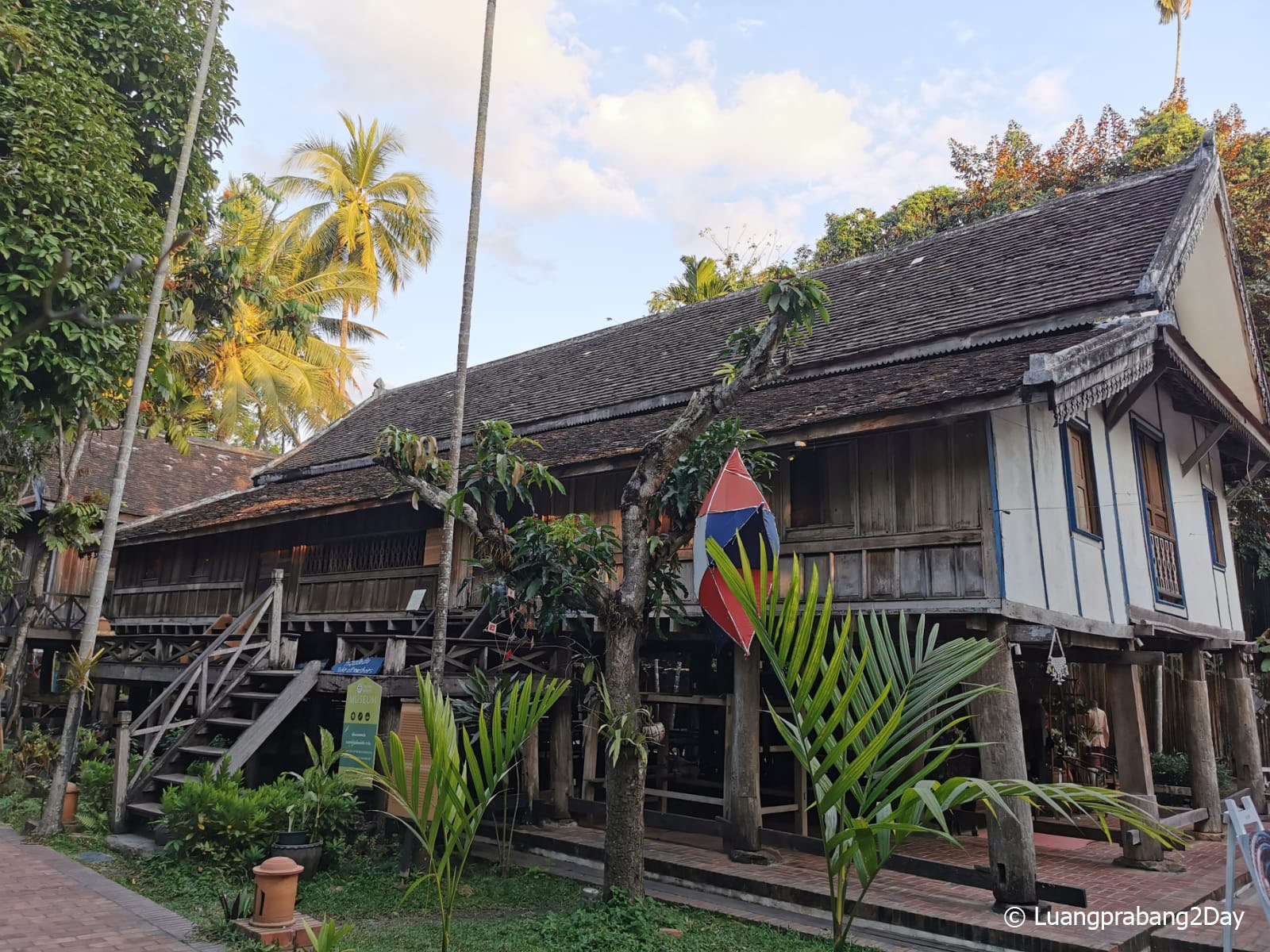
Why Local Knowledge Outlasts Imported Solutions?
Why Luang Prabang Cannot Be “Fixed” With Imported Systems
Luang Prabang is not a city that can be improved simply by copying what worked elsewhere.
At first hearing, this statement may sound resistant to progress or skeptical of innovation. Yet it reflects a deeper reality often misunderstood by those encountering the city from outside perspectives.
Every city operates according to an internal logic formed over time. That logic is shaped not only by planning decisions or economic models but by climate, belief systems, spatial habits, and shared cultural memory accumulated across generations.
When solutions designed for different environments are applied without understanding this internal logic, unintended consequences follow.
In Luang Prabang, the difference between local knowledge and imported solutions is not theoretical.
It is the difference between preservation and gradual loss.
Local knowledge endures because it grows from the conditions that sustain the city itself. Imported systems, even when well intentioned, often struggle because they carry assumptions belonging to other places.
Understanding this distinction is essential for anyone seeking to engage responsibly with Luang Prabang’s future.
1. Imported Solutions Are Designed for Different Systems
Every solution emerges from a system.
A system includes far more than technical design or policy frameworks. It reflects an entire environment of relationships:
-
climate and geography,
-
architectural tradition,
-
economic behavior,
-
governance structures,
-
religious worldview,
-
patterns of social interaction,
-
and the unspoken rhythms guiding everyday life.
Urban planning models developed in dense metropolitan centers assume different mobility patterns than those shaped by river-based communities. Tourism frameworks created for entertainment-driven destinations rely on expectations unlike those governing sacred heritage environments.
When a solution is transferred from one context to another, it carries embedded assumptions — often invisible to those introducing it.
These assumptions influence how space should function, how people should move, how decisions should be made, and what outcomes define success.
Thus when external actors introduce:
-
standardized urban planning templates,
-
international tourism development models,
-
imported business frameworks,
-
rapid modernization strategies,
they also introduce hidden logic.
If this logic does not align with the receiving city’s internal system, friction emerges.
The result is rarely immediate failure. Instead, the city begins operating under conflicting principles.
Over time, coherence weakens.
2. Luang Prabang Runs on Continuity, Not Efficiency
Many imported systems prioritize measurable outcomes:
-
speed,
-
efficiency,
-
maximum capacity,
-
economic turnover,
-
rapid transformation.
These priorities function effectively in cities designed for expansion and acceleration.
Luang Prabang operates differently.
Its strength lies in continuity.
Continuity means life unfolds slowly but deeply. Cultural practices repeat across generations, reinforcing shared understanding. Stability emerges from rhythm rather than optimization.
The city survives because it maintains alignment with its own tempo.
Outsiders sometimes interpret slowness as inefficiency — a problem to be solved. Yet within heritage systems, slowness often functions as protection.
It allows adaptation without rupture. It provides time for social negotiation. It ensures change integrates into existing patterns rather than replacing them abruptly.
Slow does not mean stagnant.
Slow means stable.
3. Local Knowledge Is Not Opinion — It Is a Tested System
Local knowledge is frequently misunderstood.
It is often dismissed as nostalgia, tradition, or resistance to modernization. Such interpretations overlook its true nature.
Local knowledge is accumulated experimentation conducted over centuries.
It represents solutions refined through lived experience rather than theoretical design.
Local knowledge includes understanding:
-
how buildings survive monsoon climates,
-
how communities manage conflict informally,
-
how religious practice structures social behavior,
-
how dignity is maintained without constant enforcement,
-
how identity persists under external pressure.
Each practice exists because alternatives failed in the past.
Local knowledge therefore operates as a living operating system — continuously updated through practice rather than rewritten through policy.
Imported solutions may introduce innovation, but local knowledge provides resilience.
The difference lies in testing: imported ideas are new; local systems have already survived time.
4. Imported Solutions Often Create “Beautiful Damage”
The most dangerous aspect of imported systems is that they often appear successful initially.
New developments bring visible improvement:
-
clean modern buildings,
-
stylish cafés,
-
increased visitor numbers,
-
foreign investment,
-
international recognition.
From the outside, transformation appears positive.
Yet beneath the surface, misalignment begins.
When development follows external logic rather than local rhythm, subtle erosion occurs:
-
cultural practices adjust to market expectations,
-
local ownership diminishes,
-
spiritual spaces become visual assets,
-
community rhythms fragment,
-
identity becomes performance rather than lived experience.
This phenomenon might be described as beautiful damage — change that looks successful aesthetically while weakening underlying systems.
The city may photograph better.
But it functions less coherently.
5. Local Knowledge Is Rooted in Place
Imported solutions are portable.
Local knowledge is rooted.
Its foundation includes environmental and cultural realities inseparable from location:
-
soil conditions shaping construction methods,
-
river dynamics influencing settlement patterns,
-
seasonal heat and monsoon cycles guiding architecture,
-
local materials defining aesthetic continuity,
-
rituals structuring communal time,
-
memory linking generations to place.
Because local knowledge emerges from these conditions, it cannot easily be replicated elsewhere — nor replaced without consequence.
It works precisely because it belongs here.
This rootedness explains its endurance.
While imported systems travel globally, local knowledge evolves locally, adapting continuously without losing alignment with place.
6. Beyond the False Choice: Modern vs Traditional
Debates about Luang Prabang’s future often frame modernization and tradition as opposing forces.
This is a false dilemma.
The city has always evolved. Architectural styles shifted, trade networks expanded, and social practices adapted long before modern globalization.
The real question is not whether change should occur.
It is whether change preserves coherence.
The essential challenge becomes:
Can Luang Prabang evolve without breaking the system that makes it Luang Prabang?
Modernization aligned with local knowledge strengthens continuity. Modernization imposed without understanding risks replacing identity with imitation.
A city may modernize successfully while remaining itself — but only when change grows from internal logic rather than external replication.
7. The Invisible System That Protects the City
Luang Prabang’s UNESCO designation provides recognition and regulatory support.
Yet formal designation alone does not sustain heritage.
The city’s true protection lies within invisible systems carried daily by local communities:
-
behavioral etiquette,
-
spatial awareness,
-
ritual timing,
-
social discipline,
-
collective respect,
-
quiet dignity embedded in everyday life.
These practices operate without constant instruction or enforcement. They function because they are shared.
Visitors may notice architecture first, but continuity survives through behavior.
The city persists because its inhabitants maintain alignment with inherited rhythm.
8. Development Without Understanding
Development becomes harmful not when it introduces change, but when it ignores context.
Imported solutions often prioritize solving visible problems quickly. Yet heritage cities contain layered systems where solving one issue may unintentionally destabilize others.
Efficiency-driven solutions may reduce friction while removing stabilizing constraints. Economic expansion may increase revenue while weakening community cohesion.
Without understanding the system already functioning, interventions risk solving symptoms while damaging foundations.
True development therefore begins with observation rather than implementation.
Before asking what should be added, one must understand what already works.
Final Reflection: Identity as Infrastructure
A city can be developed and still be lost.
Buildings may improve. Infrastructure may modernize. Tourism may grow.
Yet if identity dissolves, continuity disappears.
Luang Prabang’s strength lies not primarily in architecture or designation but in the invisible system locals sustain daily — through ritual, behavior, memory, and shared responsibility.
Imported solutions aim to solve problems.
Local knowledge preserves identity.
And in Luang Prabang, identity is not decoration.
It is infrastructure.
If We Truly Want to Understand Luang Prabang
The most important question is not:
“What should we add?”
But:
“What system is already holding this city together?”
Preservation is not an object to install or a project to complete.
Preservation is an outcome — the result of respecting systems that already work.
Local knowledge endures because it listens to place rather than imposing upon it.
And for Luang Prabang, listening remains the beginning of wisdom.
LuangPrabang2Day
Authority before action. Understanding before decision.
ABOUT THE AUTHOR
Hello We are OddThemes, Our name came from the fact that we are UNIQUE. We specialize in designing premium looking fully customizable highly responsive blogger templates. We at OddThemes do carry a philosophy that: Nothing Is Impossible