Cultural Continuity Is Not Cultural Resistance
Stability ≠ Stagnation
Cultural continuity is often misunderstood.
When a city chooses to maintain long-standing practices, rhythms, or forms, observers sometimes interpret this choice as resistance to change. Stability is mistaken for stagnation. Restraint is described as hesitation. Continuity becomes framed as reluctance to modernize.
This misunderstanding appears frequently in discussions about historic and heritage cities, where visible preservation is easily misread as unwillingness to evolve.
Yet continuity and resistance are not the same thing.
One protects coherence.
The other rejects engagement.
Confusing the two leads to flawed decisions — policies that attempt to accelerate change without understanding the systems already sustaining stability.
Understanding the difference is therefore not merely theoretical. It shapes how cities grow, how communities adapt, and whether heritage environments remain living systems or gradually become disconnected from themselves.
Continuity as a System Function
In historic cities, culture is not decoration.
It is infrastructure.
Practices transmitted across generations — rituals, spatial habits, seasonal timing, etiquette, and informal social agreements — serve coordinating functions within urban life. They organize behavior without constant instruction. They regulate pace without enforcement. They maintain alignment between individuals and shared space.
These practices form what might be described as a cultural operating system.
Just as software coordinates processes within a computer, cultural continuity coordinates relationships within a city. It ensures that daily activity unfolds within shared expectations, reducing conflict and uncertainty.
Continuity allows adaptation without disorientation.
Change still occurs. New technologies appear. Economic patterns evolve. External influences arrive.
But change happens within an existing framework of meaning.
This framework provides orientation — a sense of direction that allows transformation without fragmentation.
Continuity therefore represents structural memory: knowledge embedded in behavior rather than stored in documents.
Why Continuity Is Often Misread
Modern development discourse frequently prioritizes visibility, speed, and measurable output. Progress becomes associated with acceleration — faster construction, faster decision-making, and faster economic turnover.
Within this framework, systems designed for balance can appear inefficient.
A city that moves carefully may seem hesitant. Processes that involve consultation or gradual adaptation may appear slow compared to rapid transformation models.
Yet historic cities were not designed for rapid reconfiguration.
They evolved incrementally through accumulated experience. Adjustments occurred through alignment rather than replacement. Each generation modified inherited structures carefully, maintaining compatibility with existing social and environmental conditions.
What appears slow from an external perspective often reflects calibration.
What appears resistant may actually be evaluative.
Continuity does not oppose change; it asks whether change fits the system.
The Tempo of Heritage Cities
Every city operates according to tempo — a characteristic rhythm shaping how decisions unfold and how daily life is experienced.
Modern metropolitan environments often function at accelerated tempos driven by global markets and technological networks. Speed becomes necessary for competitiveness.
Heritage cities operate differently.
Their tempo reflects cycles of ritual, climate, and social interaction developed over centuries. Movement aligns with human scale rather than mechanical efficiency. Time includes pauses — moments allowing reflection, adjustment, and recovery.
This slower tempo is not accidental.
It stabilizes relationships between people, space, and meaning.
Acceleration introduced without sensitivity to tempo creates tension. Systems designed for gradual adaptation struggle under rapid change. Coordination weakens because shared rhythms disappear.
Understanding tempo reveals why continuity functions as protection rather than resistance.
The Risk of Confusing Continuity with Opposition
When continuity is labeled as resistance, pressure emerges to “unlock” perceived constraints.
Well-intentioned interventions may attempt to modernize systems already functioning effectively — simply operating according to different priorities.
Policies designed to increase efficiency may unintentionally disrupt coordination. Projects aimed at revitalization may replace practices that previously sustained balance.
Friction appears not because communities reject innovation, but because innovation arrives without translation.
Cultural systems do not reject new ideas.
They require new ideas to become legible within existing meaning structures.
Translation — the process of aligning innovation with cultural logic — determines whether change strengthens or destabilizes continuity.
Without translation, even beneficial interventions can create disorientation.
Continuity as Adaptive Intelligence
Continuity should not be understood as preservation of sameness.
Rather, it represents adaptive intelligence developed over time.
Communities maintain certain practices not because they refuse alternatives, but because those practices have proven effective in sustaining social harmony and environmental balance.
Continuity filters change.
It allows useful innovation while slowing transformation that risks destabilizing identity.
This filtering function resembles ecological resilience. Ecosystems survive not by resisting all change but by integrating change at a rate compatible with internal processes.
Similarly, cultural continuity enables gradual evolution without systemic shock.
Cities governed by continuity therefore change continuously — but rarely abruptly.
Continuity Enables Sustainable Change
Cities maintaining strong continuity often demonstrate long-term resilience.
They are able to:
-
absorb external influence without fragmentation,
-
integrate new economic functions while preserving cultural meaning,
-
adjust spatial use without losing identity,
-
maintain trust between institutions and communities.
Continuity provides a stable reference point against which change can be evaluated.
Without such reference, transformation becomes reactive rather than intentional.
Change accumulates without direction.
Continuity ensures change remains cumulative rather than disruptive.
Each adaptation builds upon previous structures instead of replacing them entirely.
Cultural Memory and Collective Coordination
One of continuity’s most important functions lies in coordination.
Shared cultural memory reduces the need for explicit regulation. People understand appropriate behavior through inherited practice rather than constant instruction.
This coordination produces social efficiency of a different kind — not speed efficiency, but relational efficiency.
Conflicts decrease because expectations are shared. Public space functions smoothly because behavior aligns naturally.
When continuity weakens, coordination must be replaced by regulation. Rules multiply where shared understanding once existed.
Thus, continuity reduces governance burden by embedding order within culture itself.
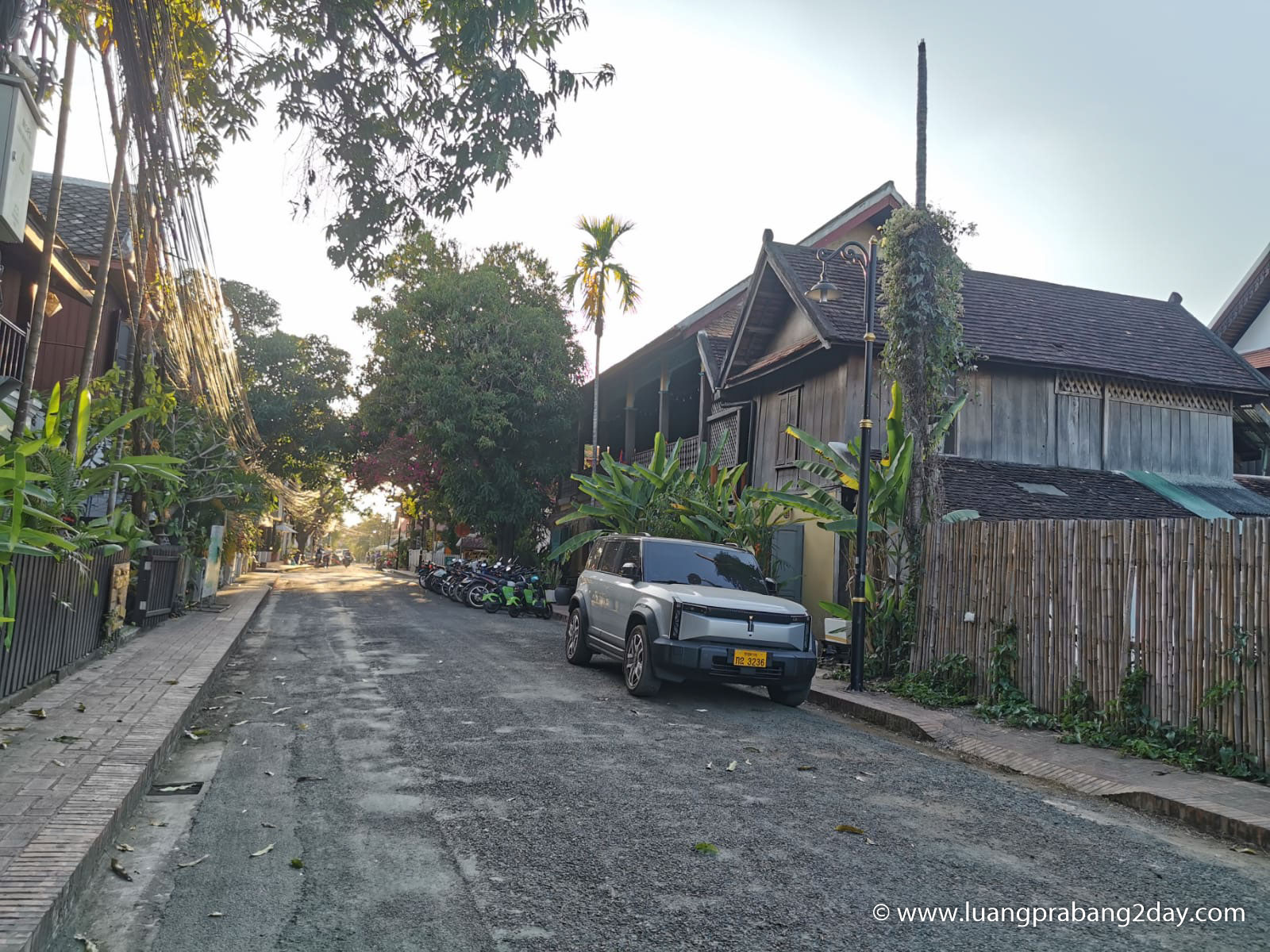
Luang Prabang as a Living Example
Luang Prabang illustrates how continuity enables engagement rather than isolation.
The city has interacted with global influences for centuries — through trade, colonial history, religious exchange, and international recognition. Yet it has maintained coherence because adaptation occurred selectively.
External frameworks were negotiated rather than adopted wholesale.
Recognition through UNESCO did not create continuity; it acknowledged continuity already present.
The city’s stability arises from its ability to align new influences with existing rhythm.
Luang Prabang did not remain stable by rejecting the world.
It remained stable by remaining legible to itself while engaging with the world.
This distinction explains why continuity functions as strength.
A Different Understanding of Progress
In heritage environments, progress cannot be measured solely through expansion or acceleration.
Alternative indicators become necessary:
-
continuity of meaning,
-
preservation of coordination,
-
trust between generations,
-
endurance of cultural rhythm,
-
ability to adapt without fragmentation.
These measures evaluate long-term health rather than short-term output.
Progress becomes less visible but more sustainable.
Stability, in this context, represents responsibility — an awareness that present decisions shape conditions future generations must inhabit.
Stability as Responsibility
Stability is often interpreted as lack of ambition.
In reality, stability requires discipline.
Maintaining continuity demands ongoing negotiation between innovation and preservation. Communities must evaluate change carefully, balancing opportunity with responsibility.
This process requires awareness, patience, and collective judgment.
Stability therefore represents active stewardship, not passive preservation.
It reflects commitment to continuity across time rather than immediate advantage.
Reframing Continuity in a Changing World
As globalization accelerates exchange between cultures, misunderstanding continuity becomes increasingly risky.
Cities pressured to imitate external models may abandon systems that previously ensured resilience. Uniform development replaces localized adaptation.
Yet diversity of urban systems represents strength at global scale.
Heritage cities offer alternative models of sustainability — demonstrating that progress can coexist with continuity.
Recognizing continuity as intelligence rather than resistance allows more nuanced engagement between local knowledge and global innovation.
Conclusion: Continuity as Cultural Intelligence
Cultural continuity is not cultural resistance.
It is a form of intelligence shaped by time.
It prioritizes coherence over acceleration, alignment over disruption, and endurance over immediacy.
Cities that understand this distinction do not fall behind.
They remain whole.
They evolve without losing orientation. They adapt without abandoning identity. They demonstrate that stability and change are not opposites but partners within a balanced system.
In heritage cities like Luang Prabang, continuity ensures that progress strengthens rather than replaces what already works.
Because the goal is not simply to move forward.
It is to remain recognizable while doing so.
LuangPrabang2Day
Authority before action. Understanding before decision.
ABOUT THE AUTHOR
Hello We are OddThemes, Our name came from the fact that we are UNIQUE. We specialize in designing premium looking fully customizable highly responsive blogger templates. We at OddThemes do carry a philosophy that: Nothing Is Impossible