Walking Without Hurry: Life Between Moments
In Luang Prabang, movement rarely demands attention.
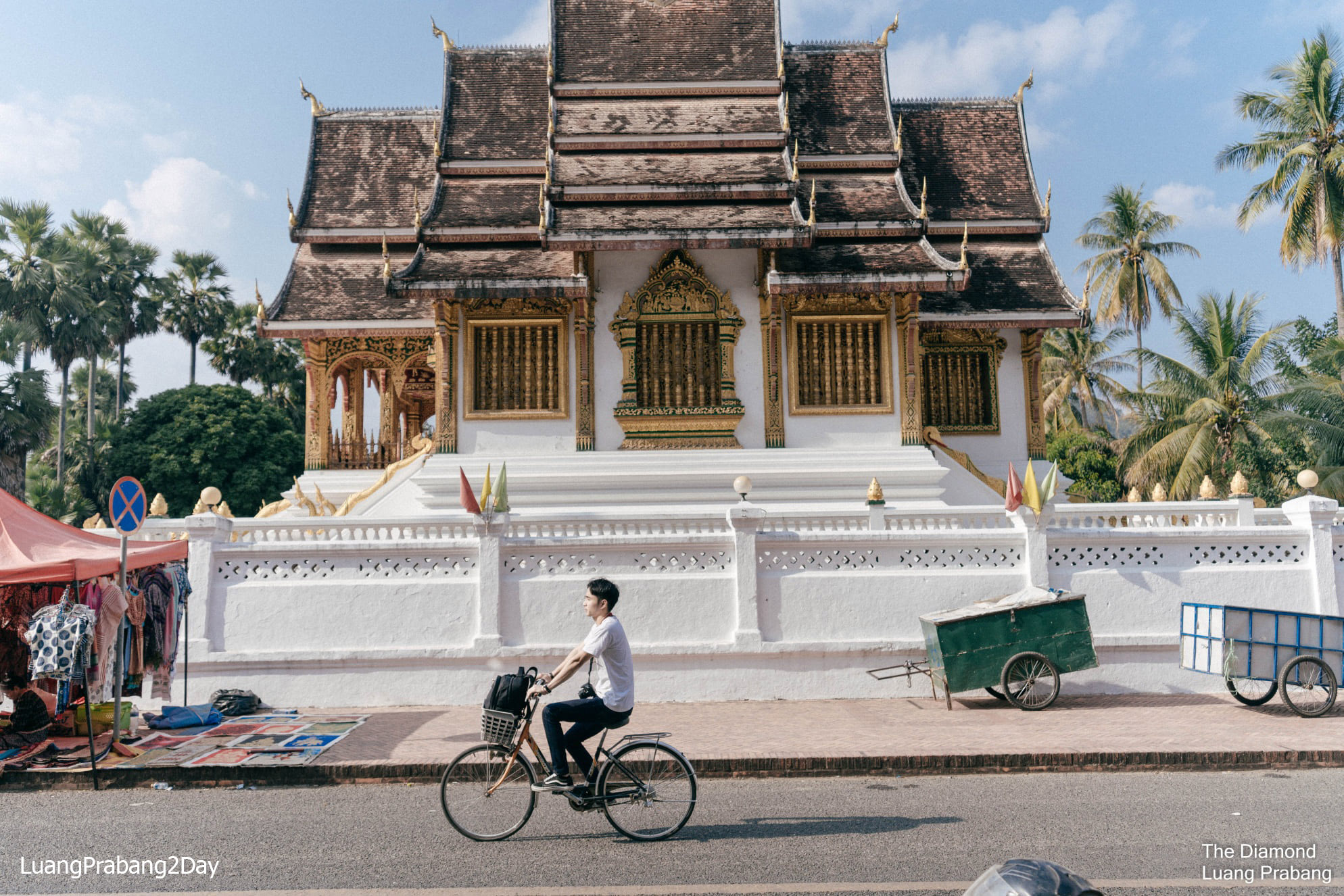
The day does not begin with urgency. It gathers itself slowly, as light spills gently across tiled rooftops and quiet streets. Footsteps appear one by one. A bicycle glides past with steady rhythm. A wooden door opens inward. Somewhere in the distance, a temple bell marks the morning not as an alarm, but as an invitation.
To walk here is to participate in a shared understanding — that time is not something to outrun, but something to accompany.
In many parts of the world, speed has become synonymous with progress. Efficiency is celebrated. Acceleration is admired. Stillness is often mistaken for delay. Yet in Luang Prabang, one encounters another interpretation of forward movement — one shaped not by haste, but by continuity.
The streets do not resist change. They simply refuse to abandon composure.
Along shaded lanes, elders sweep fallen leaves with measured gestures. Vendors arrange herbs gathered at dawn from forest and riverbank. Neighbors exchange greetings without interruption from passing traffic. Nothing appears staged. Nothing is amplified for effect. These moments are small, but they carry weight.
Walking without hurry allows these details to surface.
It reveals that a city’s character is not found in landmarks alone, but in intervals — the quiet transitions between one action and the next. The pause before a conversation begins. The unspoken courtesy of giving way. The patience required to open a shop each morning as it has been opened for decades.
Such gestures form an invisible architecture of respect.
For visitors, the experience can be subtle. The absence of urgency may feel unfamiliar at first. But gradually, something shifts. One’s breathing slows. Attention widens. The mind, no longer pulled forward by schedules and notifications, begins to notice textures: the grain of old wooden shutters, the filtered light beneath tamarind trees, the soft cadence of Lao language carried in conversation.
In this slower rhythm, observation becomes participation.
The city’s calm should not be mistaken for stagnation. Luang Prabang continues to evolve, welcoming new ideas and visitors from around the world. Modern conveniences coexist with centuries-old traditions. Young entrepreneurs open cafés beside historic temples. Contemporary garments are worn with pride alongside traditional textiles.
What distinguishes this evolution is not resistance to the present, but stewardship of identity.
Walking without hurry makes this balance visible.
It becomes clear that adaptation here is careful rather than abrupt. The present does not erase the past; it stands beside it. Wooden facades weather gently, yet remain in use. Rituals are observed not as performance, but as daily practice. Change arrives, but it is absorbed thoughtfully.
For younger generations navigating a world defined by constant motion, this pace offers a quiet form of reassurance.
There is dignity in composure. There is confidence in moving deliberately. Cultural continuity does not depend on speed; it depends on awareness.
In a time when visibility often equates to value, Luang Prabang proposes something different: that significance may reside in restraint. That depth may require patience. That listening can be more transformative than speaking.
To walk without hurry is not to withdraw from the world. It is to engage with it more attentively.
The act itself becomes a gentle discipline — an agreement between body and environment. Each step adjusts to uneven stone paths. Each turn of the head follows light rather than distraction. Even the act of waiting — at a crossing, at a market stall, at the edge of a temple courtyard — becomes part of a shared civic choreography.
No one appears rushed. No one appears idle.
The city moves, but it does so with deliberation.
This quality is not easily quantified. It does not announce itself in statistics or slogans. It is felt rather than measured. And perhaps this is why it endures. A rhythm too loud would eventually exhaust itself. A rhythm grounded in moderation can continue across generations.
Between destinations lies the true life of Luang Prabang.
It resides in the quiet exchanges that require no audience. In the continuity of daily rituals that need no explanation. In the respectful distance maintained between strangers who nonetheless share space with ease.
Walking without hurry becomes, in its own modest way, a gesture of cultural diplomacy — not between nations, but between eras. It acknowledges tradition without confining it to the past. It welcomes the future without allowing it to dominate the present.
The balance is delicate, yet persistent.
As the sun rises higher and the city gradually gathers momentum, one realizes that nothing extraordinary has occurred — and yet something essential has been understood.
Progress need not be loud.
Continuity need not resist change.
A city may grow while remaining gentle.
To walk through Luang Prabang without hurry is to encounter a philosophy expressed not in declarations, but in practice. It is to recognize that time, when treated with respect, expands rather than contracts.
And in that expansion, space is created — for observation, for memory, for quiet connection.
The footsteps continue. The bicycle passes again. The bell sounds once more in the distance.
There is no need to accelerate.
The city is already moving.
Softly.
ABOUT THE AUTHOR
Hello We are OddThemes, Our name came from the fact that we are UNIQUE. We specialize in designing premium looking fully customizable highly responsive blogger templates. We at OddThemes do carry a philosophy that: Nothing Is Impossible