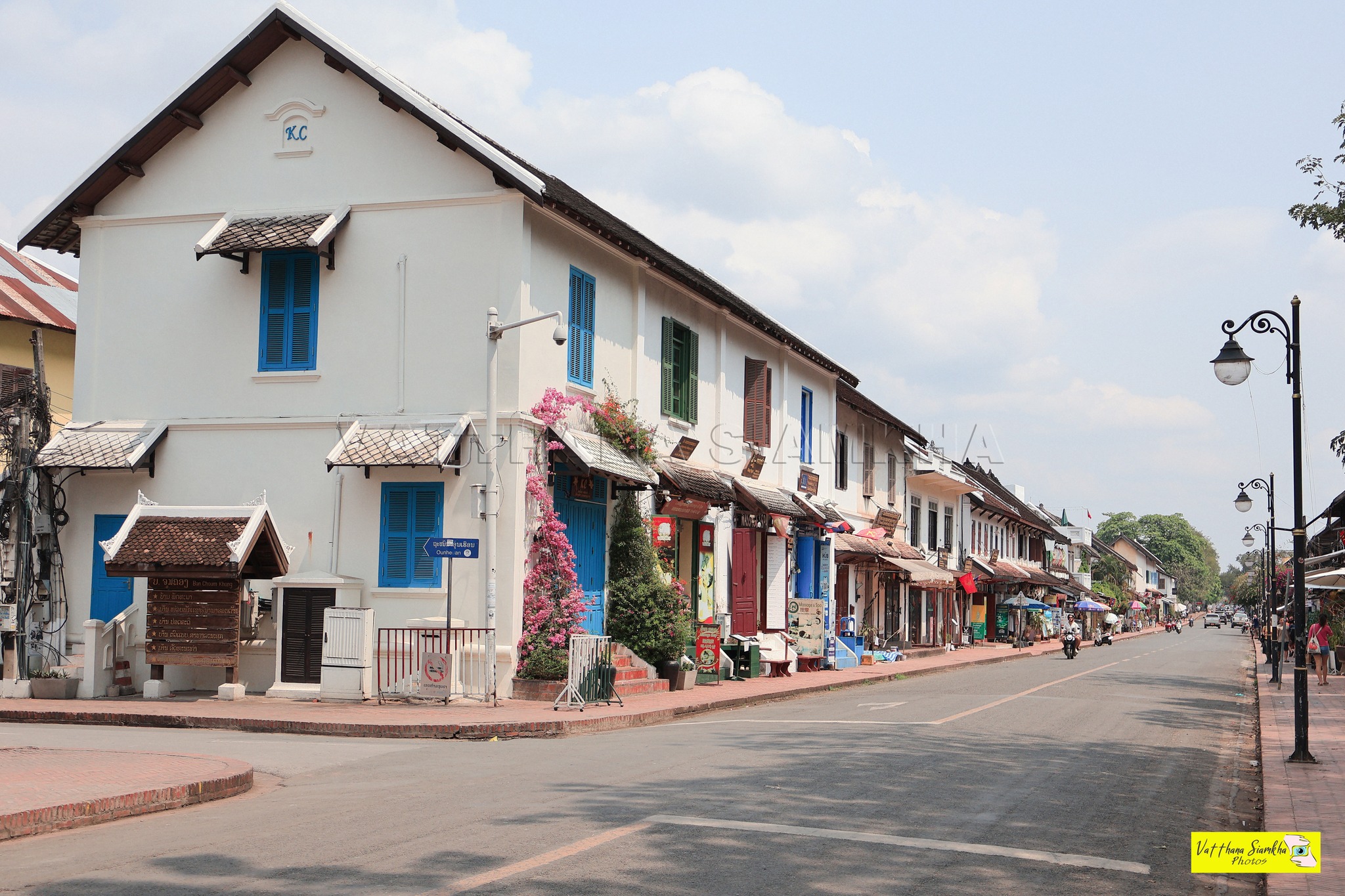
Where Time Stands Gently: The Street-Level Continuity of Luang Prabang
In many cities, change is visible at every corner. Buildings rise, storefronts transform, and the rhythm of daily life accelerates in response to an ever-moving world. Yet along the streets of Luang Prabang, a different atmosphere quietly endures—one where time does not stand still, but moves with intention, restraint, and grace.
At street level, the essence of Luang Prabang reveals itself not through grand monuments, but through the quiet consistency of everyday life. Rows of heritage buildings, softened by age and care, line the roads with a sense of harmony that feels neither accidental nor imposed. Wooden shutters open each morning as they have for decades. Small shops prepare for the day with unhurried precision. The street, in its simplicity, becomes a living expression of continuity.
This continuity is not defined solely by architecture. While the form of the buildings reflects a unique blend of cultural influences, their deeper significance lies in how they are used, maintained, and respected. The alignment of structures, the measured use of color, and the absence of visual excess together create a subtle balance—one that allows the city to remain coherent even as the world beyond it evolves.
To walk along these streets is to observe a rhythm that has been carefully sustained. Movement exists, but it is gentle. Change occurs, but it is guided. There is an understanding—shared quietly among residents, caretakers, and observers—that preservation is not about resisting the present, but about allowing the past to remain visible within it.
In this way, Luang Prabang offers a form of continuity that extends beyond physical space. It reflects a relationship between people and place, where daily actions contribute to a larger sense of cultural stewardship. A shopkeeper arranging goods with care, a resident tending to the façade of a family home, a passerby moving respectfully through the street—these moments, though small, are part of a broader pattern that sustains the identity of the city.
Such continuity requires neither proclamation nor attention. It is maintained through practice, through memory, and through a shared awareness of value. The result is a city that feels composed rather than constructed, where heritage is not displayed, but quietly lived.
As global interest in places of cultural depth continues to grow, Luang Prabang stands as a reminder that the most meaningful experiences are often found in what remains consistent. Not in spectacle, but in subtlety. Not in rapid transformation, but in the careful preservation of rhythm.
Where time stands gently, continuity is not something to be observed from a distance. It is something to be felt—through the pace of a walk, the quiet of a street, and the enduring presence of a city that continues, thoughtfully and gracefully, into the future.
Photo Credit: Vatthana Siamkha
ABOUT THE AUTHOR
Hello We are OddThemes, Our name came from the fact that we are UNIQUE. We specialize in designing premium looking fully customizable highly responsive blogger templates. We at OddThemes do carry a philosophy that: Nothing Is Impossible