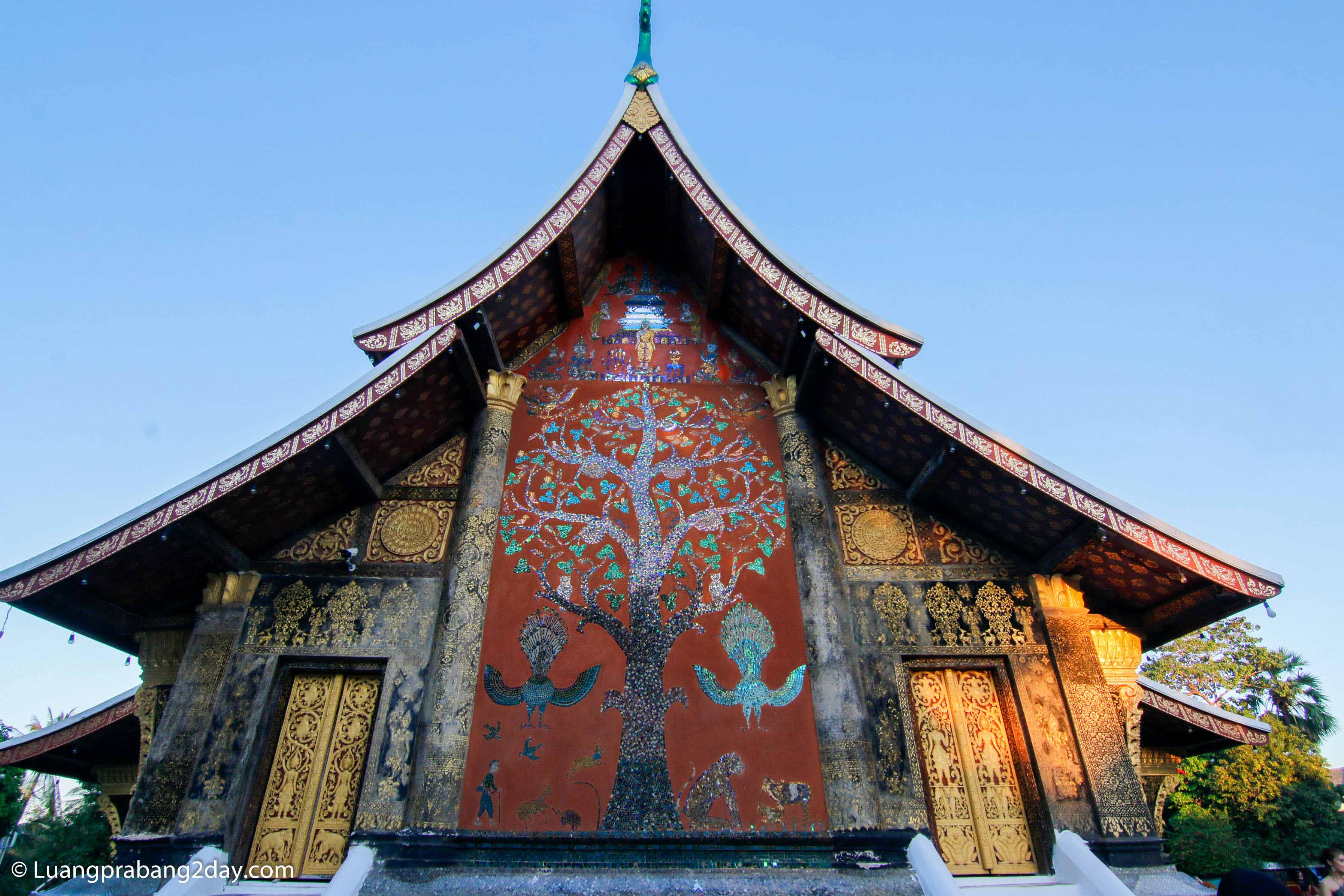
The Architecture of Continuity
Why Luang Prabang Is a Living System, Not a Destination
Before the city fully awakens, Luang Prabang exists within a moment that resists definition. The streets remain quiet — not empty, but attentive. Movement is present without urgency. The air carries the subtle awareness of activity about to unfold, yet nothing demands immediate attention. Light arrives slowly along temple walls, revealing surfaces shaped not only by craftsmanship but by repetition across generations.
At this hour, the city is not performing for visitors, nor presenting itself as heritage. It simply continues — as it has for centuries — within a rhythm shaped by continuity rather than spectacle.
This distinction is essential.
Luang Prabang does not begin each day as a new experience prepared for observation. It resumes an ongoing cultural process already in motion long before any observer arrives.
A destination prepares itself for arrival.
A living system persists regardless of who is watching.
Understanding this difference changes how the city must be approached.
The Global Image and the Experience of Arrival
Much of the world encounters Luang Prabang first through images. Photographs of saffron robes moving through dawn light, gilded temple roofs beneath pale skies, and quiet streets framed by colonial facades circulate widely across travel media and digital platforms. Over time, these images construct a shared global imagination of the city — serene, spiritual, and timeless.
These images are sincere. Their beauty is undeniable.
Yet beauty alone cannot explain why Luang Prabang feels coherent rather than curated, lived rather than staged.
Visitors often describe a sensation difficult to articulate: a feeling that the city possesses internal balance. Nothing appears forced. Activity unfolds without visible tension between past and present.
Many places preserve historic buildings. Few sustain an atmosphere where continuity feels natural.
The difference lies in structure — not architectural structure alone, but cultural structure.
Luang Prabang operates as an integrated system in which ritual organizes time, architecture communicates values, and everyday gestures reinforce shared memory. The visible city expresses deeper processes that remain largely invisible.
Heritage here is not maintained only through preservation policies.
It endures because it is practiced.
Architecture as Cultural Instruction
Architecture in Luang Prabang communicates meaning beyond design. Temples, monasteries, residences, and public spaces embody relationships between spiritual belief and social life.
Rooflines descend toward the street, maintaining human scale rather than monumentality. Courtyards encourage communal interaction. Materials age visibly, allowing time itself to become part of the aesthetic experience.
Unlike modern urban environments designed primarily for efficiency or expansion, the built environment here guides behavior subtly. Movement slows naturally. Sound softens. Awareness increases.
Architecture teaches without instruction.
As individuals move through the city, they learn appropriate rhythms intuitively — where to pause, how to approach sacred spaces, when silence feels appropriate. The environment communicates expectations before they are consciously understood.
Buildings therefore function as vessels of cultural memory. They preserve not only form but behavior.
The city’s physical landscape becomes an active participant in cultural continuity.
Ritual as Temporal Infrastructure
If architecture structures space, ritual structures time.
Daily almsgiving ceremonies, temple observances, seasonal festivals, and cycles of communal gathering establish rhythms that organize collective life. These rituals link present experience with inherited meaning, creating continuity beyond individual lifespans.
Modern societies rely on clock time — schedules defined by productivity and efficiency. Ritual time operates differently. It emphasizes recurrence rather than acceleration.
Through repetition, communities remember who they are.
Ritual acts as temporal infrastructure: an invisible framework coordinating behavior without enforcement. People know when to gather, when to celebrate, when restraint is required, and when reflection becomes necessary.
This coordination emerges through shared understanding rather than regulation.
The persistence of ritual stabilizes the city amid change. While economic and technological conditions evolve, ritual cycles maintain orientation.
The city moves forward without losing alignment.
Everyday Practice as Cultural Preservation
Heritage is often imagined as monumental — associated with temples, archives, or historic landmarks. In Luang Prabang, preservation occurs primarily through ordinary actions.
Sweeping temple grounds at dawn. Preparing offerings. Maintaining family traditions. Greeting neighbors with inherited gestures of respect.
These practices rarely attract attention, yet collectively they sustain continuity.
Preservation becomes behavioral rather than institutional.
Policies may protect buildings, but people protect meaning.
Because practices repeat daily, heritage remains active rather than symbolic. Culture is transmitted through participation rather than performance.
The past is not displayed.
It is lived.
The Living System Perspective
To understand Luang Prabang fully, it must be viewed as a living system rather than a destination.
A destination depends on external attention. Its identity becomes shaped by visitor expectations and promotional narratives.
A living system depends on internal relationships.
In Luang Prabang:
-
ritual structures communal time,
-
architecture shapes interaction,
-
social norms regulate behavior,
-
shared memory sustains identity.
These components interact continuously, forming a cultural ecology capable of adaptation without dissolution.
Remove one element, and coherence begins to weaken.
The city survives not because individual parts are preserved, but because relationships between parts remain functional.
Cultural Diplomacy as Method of Encounter
Approaching such a system requires a different form of attention — one that may be described as cultural diplomacy.
Here diplomacy is not political negotiation but respectful engagement between observer and place.
Cultural diplomacy begins with humility. Meaning exists before interpretation. The observer enters an environment already rich with internal logic.
Listening precedes explanation.
Patience replaces immediacy.
Understanding emerges gradually through repeated encounters — observing seasonal changes, returning to familiar spaces, recognizing patterns initially unnoticed.
Through this process, observation becomes relationship.
The city reveals itself slowly.
Modern Visibility and Structural Tension
Global connectivity has transformed heritage cities into globally mediated spaces. Images circulate instantly, shaping expectations before arrival.
Visibility brings opportunity: economic vitality, cultural exchange, and international recognition.
Yet visibility also introduces tension. Places admired globally risk adapting to external expectations. Representation influences behavior. Rituals may subtly transform into performances. Spaces may become valued primarily as imagery.
The risk is rarely sudden loss.
It is gradual adjustment.
A city may become more famous while becoming less internally coherent.
Managing this tension requires awareness — balancing openness with continuity.
Preservation Beyond Conservation
Conservation protects physical form.
Continuity protects meaning.
A building may remain intact while its cultural function fades. A ceremony may continue outwardly while losing internal significance if reduced to spectacle.
True preservation therefore depends on sustaining relationships between people, place, and practice.
Luang Prabang demonstrates that heritage survives most effectively when preservation emerges from participation rather than external control.
Participation becomes preservation.
Learning to Enter the Rhythm
To encounter Luang Prabang fully is not to arrive with conclusions but to enter a rhythm already unfolding.
Visitors often experience adjustment — perception slows, attention deepens, expectations recalibrate. Meaning emerges through repetition rather than novelty.
Gradually, patterns appear: shared silences, recurring gestures, subtle coordination between space and behavior.
Understanding becomes experiential rather than informational.
The city teaches through presence.
Continuity as Architecture
Luang Prabang may therefore be understood as an architecture composed not only of structures but of relationships.
Architecture provides form.
Ritual provides rhythm.
Community provides continuity.
Together they sustain a living system capable of adaptation without loss of identity.
This architecture persists quietly through collective care rather than spectacle.
Beyond Destination
To call Luang Prabang a destination describes only how outsiders approach it.
To understand it as a living system explains how it endures.
Its future depends less on promotion than on maintaining alignment between belief, practice, and environment. Recognition alone cannot sustain continuity; participation can.
Approaching Luang Prabang therefore becomes an ethical act of attention — requiring patience, humility, and willingness to learn from rhythms already present.
The city continues whether observed or not.
And within that quiet persistence lies its deepest meaning.
ABOUT THE AUTHOR
Hello We are OddThemes, Our name came from the fact that we are UNIQUE. We specialize in designing premium looking fully customizable highly responsive blogger templates. We at OddThemes do carry a philosophy that: Nothing Is Impossible