The Sacred Heart of Lan Xang: Why Cultural Work Requires Responsibility, Not Just Observation
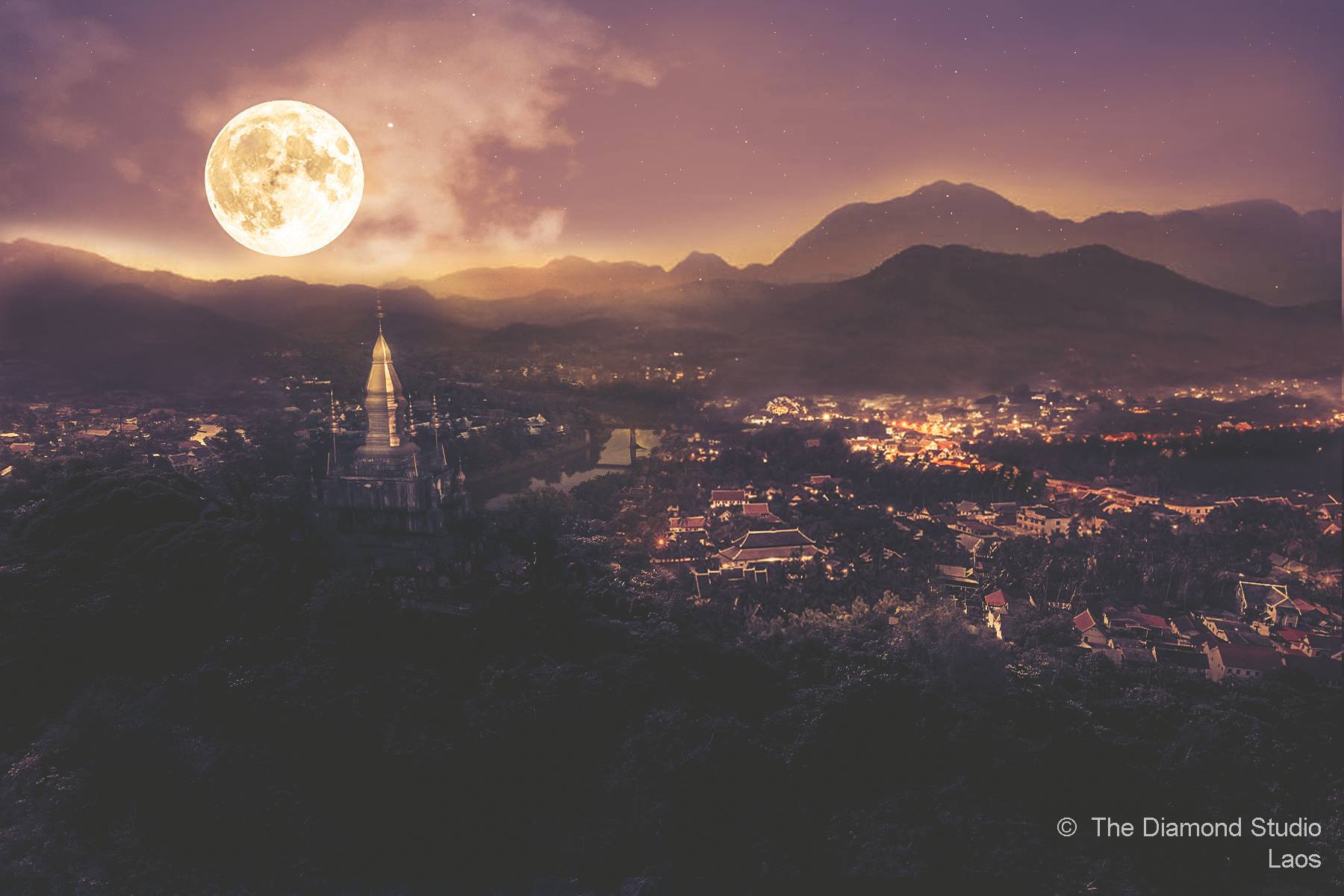
The Sacred Heart of Lan Xang: Why Cultural Work Requires Responsibility, Not Just Observation
“Oh, Xiengthong of Lan Xang, imprinted on the heart of the entire Lao nation.
You stand majestic and proud — the whole Lao nation feels alive because of you.”
— From the song Sabaidee Luang Prabang
The Weight of Heritage
In the heart of Southeast Asia lies a city where time moves according to a quieter rhythm. Luang Prabang, the historic capital of the ancient Lan Xang Kingdom, is not merely a destination marked on maps or travel itineraries. It is a living cultural landscape shaped by spirituality, collective memory, and continuity across centuries.
Unlike cities defined primarily by modern expansion, Luang Prabang exists through balance — between past and present, sacred and ordinary, movement and stillness. Its temples do not stand only as architectural achievements; they function as active centers of meaning. Rituals are not historical reenactments but ongoing expressions of belief embedded within everyday life.
The song Sabaidee Luang Prabang captures this emotional reality through poetic language, describing Xiengthong as imprinted upon the heart of the Lao nation. The imagery reflects more than admiration. It expresses belonging — a recognition that Luang Prabang represents a cultural center through which identity itself is experienced.
To encounter such a place is to encounter accumulated time. Every street carries memory. Every ceremony carries inherited intention. The city’s beauty emerges not only from physical preservation but from collective participation sustained across generations.
For those who document this heritage, the privilege of witnessing such continuity carries responsibility. Creative work does not occur in neutral space. It unfolds within a cultural environment regarded as ศักดิ์สิทธิ์ — sacred — where meaning exceeds appearance.
In such a setting, observation alone is insufficient.
Beyond the Lens: The Ethics of Engagement
Photography and storytelling have long been associated with observation — the act of witnessing and recording reality. Yet within living heritage environments, observation represents only the beginning of engagement.
Observation allows distance. Responsibility requires relationship.
When photographers, filmmakers, or writers document Luang Prabang, they enter a cultural dialogue already in motion. Rituals continue regardless of cameras. Communities maintain rhythms independent of external attention. Creative practitioners therefore become participants within an existing cultural system rather than neutral observers.
This distinction reshapes the ethics of creative work.
The morning alms procession, for example, is often admired visually: saffron robes moving through dawn light, silence shaping atmosphere. Yet its meaning lies not in aesthetics but in reciprocity — a spiritual exchange between monastic and lay communities that reinforces humility and interdependence.
When viewed only as imagery, such rituals risk becoming detached from purpose.
Responsible cultural engagement asks creators to move beyond visual fascination toward contextual understanding.
It requires recognizing that documentation influences perception, and perception influences behavior.
Creative work therefore carries consequence.
Recognizing Sacredness
Sacredness in Luang Prabang is not confined to designated monuments. It extends through spatial relationships, gestures of respect, and shared awareness cultivated over generations.
Certain spaces invite participation; others request quiet observation. Some rituals welcome presence; others depend upon discretion.
These distinctions are rarely communicated through explicit instruction. They are learned through sensitivity — observing how communities interact with their environment and adapting behavior accordingly.
Recognizing sacredness means acknowledging that not everything meaningful must be captured or shared.
In contemporary visual culture, where visibility often equates to value, restraint becomes an ethical practice. Choosing not to photograph certain moments may express deeper respect than documenting them.
Sacredness teaches creators that presence itself carries responsibility.
Respecting Ritual Over Aesthetics
Modern creative industries frequently prioritize visual impact. Composition, lighting, and emotional immediacy guide artistic decision-making.
In heritage environments, however, aesthetics must remain secondary to ritual integrity.
Ritual exists for participants, not spectators. Its purpose is continuity, not performance. When creative activity interrupts or alters ritual flow, the cultural system experiences subtle disruption.
Responsible practitioners therefore adapt their work to ritual rather than adapting ritual to creative needs.
This may involve waiting longer, working quietly, or accepting limitations on access. Such adjustments do not weaken creativity; they deepen it.
Images created within respectful boundaries often carry greater authenticity because they arise from alignment rather than intrusion.
Beauty achieved through respect endures longer than beauty achieved through control.
Authentic Representation and the Legacy of Lan Xang
Authentic representation requires understanding historical context. The legacy of the Lan Xang Kingdom continues to shape cultural identity in Luang Prabang, influencing architecture, spiritual practice, and social values.
Representation that isolates visual elements from this historical continuity risks simplifying complex cultural realities.
Authenticity does not demand perfection. It requires honesty — portraying culture as lived rather than staged, dynamic rather than frozen.
External interpretation becomes problematic only when it replaces local meaning with external expectation.
Responsible cultural work therefore prioritizes listening before framing, understanding before interpretation.
Authenticity emerges not from technical accuracy alone but from relational awareness.
Cultural Stewardship in Practice
At The Diamond Luang Prabang, photography is approached as cultural stewardship rather than commercial production alone.
Working within a UNESCO World Heritage city requires recognition that creative output contributes to collective memory. Images travel globally, shaping how audiences imagine places they may never visit.
Stewardship asks creators to consider long-term impact:
Will this representation strengthen understanding?
Will it preserve dignity?
Will it remain respectful decades from now?
When guided by stewardship, photography becomes a form of care.
Light, composition, and timing remain important, but they serve a deeper purpose — conveying atmosphere, presence, and cultural spirit rather than extracting visual novelty.
Creative practice becomes aligned with preservation.
Responsibility as Creative Transformation
Choosing responsibility transforms artistic intention.
The objective shifts from producing striking imagery toward sustaining meaningful representation. Creativity expands rather than contracts, because understanding reveals layers invisible to surface observation.
Patience becomes part of artistic skill. Silence becomes compositional awareness. Relationship becomes narrative depth.
Through responsibility, creative work evolves from documentation into interpretation grounded in respect.
The resulting images do not merely show Luang Prabang; they resonate with its rhythm.
A Living Legacy
To walk through Luang Prabang with a camera is to move within living history. Every temple courtyard, alleyway, and riverside path forms part of an unfolding narrative rather than a completed past.
Heritage here is not static preservation. It is continuity — sustained through participation, belief, and shared responsibility.
The stories told today influence how future generations encounter the city. Images shape memory before experience occurs.
When responsibility guides cultural work, representation strengthens continuity rather than replacing it.
Luang Prabang remains not simply an admired image but a living reality — majestic, proud, and deeply alive.
Responsibility as the Path to Authentic Beauty
In sacred environments such as Xiengthong, responsibility does not limit creativity. It clarifies purpose.
Authenticity emerges when creators align with cultural rhythm rather than imposing external narratives. Beauty becomes lasting because it arises from understanding.
The sacred heart of Lan Xang endures through collective care — monks maintaining ritual cycles, communities preserving traditions, and cultural workers choosing respect over immediacy.
Creative practitioners become part of this continuity when they recognize their role not only as observers but as stewards.
Because the deepest form of cultural work is not observation alone.
It is responsibility.
ABOUT THE AUTHOR
Hello We are OddThemes, Our name came from the fact that we are UNIQUE. We specialize in designing premium looking fully customizable highly responsive blogger templates. We at OddThemes do carry a philosophy that: Nothing Is Impossible