Responsible Cultural Collaboration: More Than Partnership, A Shared Responsibility
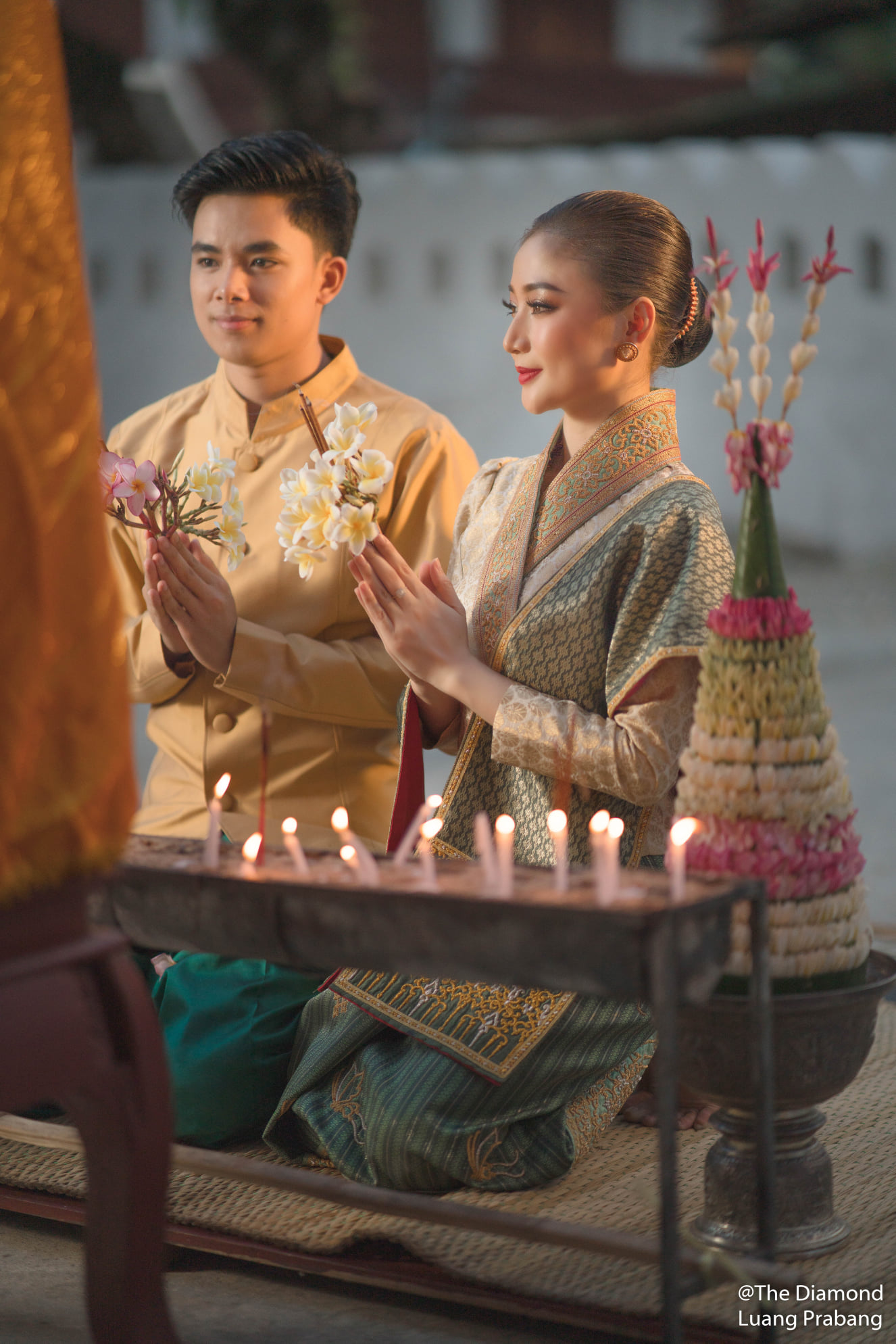
Responsible Cultural Collaboration: More Than Partnership, A Shared Responsibility
Rethinking Creative Work in a Living Heritage City
In a heritage city like Luang Prabang, every creative project carries meaning beyond its immediate purpose.
Photography sessions, documentaries, research initiatives, artistic collaborations, and media productions rarely exist as isolated activities. Each project participates — consciously or not — in shaping how the city is understood, represented, and remembered. Creative work becomes part of a larger narrative that extends far beyond the moment of production.
Collaboration here is therefore not simply an exchange of services or ideas. It is a relationship built upon trust, cultural understanding, and long-term responsibility.
Success cannot be measured only by visibility, audience reach, or production scale. A project’s deeper value lies in how respectfully it engages local communities and how carefully it represents living traditions.
Responsible cultural collaboration ensures that creativity contributes to continuity — allowing heritage to remain alive, relevant, and respected across generations rather than reduced to temporary content.
In this context, collaboration becomes not a method of working, but an ethical position.
Collaboration Beyond Participation
True collaboration begins not with production, but with listening.
In culturally sensitive environments, local communities are not subjects to be documented or aestheticized. They are partners in interpretation. Their understanding of place emerges from lived experience — daily practices, social rhythms, inherited knowledge, and subtle cultural meanings that cannot be fully grasped through short visits or external observation alone.
Listening requires patience. It also requires humility: the recognition that technical expertise does not automatically equal cultural understanding.
When creative professionals approach collaboration as a learning process rather than a directive process, projects gain depth. Conversations replace assumptions. Context replaces simplification.
Creative outcomes then evolve organically from shared understanding rather than predetermined concepts.
Such collaboration transforms creative work into shared narrative. The resulting images, stories, or films carry authenticity because they emerge from relationship rather than extraction.
Participation alone is not collaboration.
Collaboration begins when interpretation becomes collective.
The Time Dimension of Trust
Trust in heritage environments develops slowly.
Unlike commercial collaborations defined by timelines and deliverables, cultural relationships unfold through repeated interaction. Communities observe intentions over time. Respect is demonstrated through consistency rather than statements.
This temporal dimension is often overlooked in fast-paced creative industries, where efficiency and immediacy dominate professional expectations. Yet in places shaped by tradition, time itself becomes part of ethical practice.
Taking time to understand local rhythms — ceremonial calendars, social etiquette, or community sensitivities — allows creative work to align with cultural continuity rather than interrupt it.
Slowness, in this sense, becomes a form of professionalism.
Projects developed through trust tend to achieve outcomes that cannot be replicated through rapid production. Access becomes more meaningful, stories become more nuanced, and representation becomes more accurate.
Trust transforms collaboration from transaction into relationship.
Understanding the Difference Between Collaboration and Extraction
In heritage contexts, the distinction between collaboration and extraction can appear subtle, yet its consequences are profound.
Collaboration invests in relationships.
It creates dialogue.
It acknowledges local agency.
It considers long-term cultural impact.
Extraction, by contrast, prioritizes short-term visibility. Stories, images, or experiences are gathered quickly, circulated widely, and disconnected from the communities that enabled them.
Extraction often occurs unintentionally. Creative professionals may act with admiration or curiosity while remaining unaware of how representation affects cultural perception over time.
The difference ultimately rests on one question:
Who benefits after the project ends?
If local communities remain strengthened — culturally, socially, or economically — collaboration has occurred.
If visibility increases but relationships disappear, extraction has taken place.
Responsible cultural collaboration requires awareness not only of creative intention but of lasting consequence.
Why Heritage Cities Require a Different Approach
Luang Prabang is not a static museum preserved outside of time. It is a living environment where tradition and modern life coexist through careful balance.
Daily rituals continue alongside contemporary commerce. Sacred spaces exist within active neighborhoods. Cultural meaning is negotiated continuously rather than frozen historically.
Creative projects therefore carry implicit influence. Representation shapes perception — both internationally and locally. Images can redefine expectations, and expectations can gradually reshape behavior.
For this reason, heritage cities require approaches distinct from conventional production environments.
Working responsibly often means slowing down:
-
allowing time for consultation,
-
understanding ceremonial boundaries,
-
recognizing spaces that invite participation and those that request distance,
-
adapting creative plans in response to cultural context.
Respectful pacing is not an obstacle to creativity. It is part of the creative process itself.
The most meaningful work often emerges when creators allow context to guide direction rather than imposing pre-designed narratives.
Cultural Sensitivity as Professional Competence
In many creative industries, professionalism is measured through technical skill — camera mastery, storytelling ability, or production efficiency.
In heritage environments, professionalism expands to include cultural sensitivity.
Cultural sensitivity is not merely politeness. It is an applied form of awareness combining observation, ethical reflection, and adaptive decision-making.
It involves recognizing:
-
when documentation is appropriate,
-
when presence should remain unobtrusive,
-
when explanation is necessary,
-
and when silence communicates greater respect.
These decisions cannot be standardized through universal rules. They emerge through dialogue and attentiveness.
Creative professionals working in heritage cities therefore act as cultural intermediaries. Their work translates local realities to global audiences, carrying responsibility for accuracy and dignity.
When cultural sensitivity becomes integrated into professional practice, creativity strengthens rather than disrupts cultural continuity.
Shared Responsibility for Representation
Every photographer, filmmaker, writer, organization, or institution contributes to shaping how Luang Prabang is perceived globally.
Representation accumulates. Individual projects may seem small, yet together they construct the narrative through which the city becomes known.
This creates shared responsibility.
Creative collaboration must therefore consider not only artistic goals but cultural implications:
-
Does the project reinforce understanding or stereotype?
-
Does it contextualize tradition or isolate imagery?
-
Does it support dignity or unintentionally simplify complexity?
Responsible collaboration acknowledges that representation is never neutral. Each project participates in defining cultural memory for audiences who may never visit the place itself.
When guided by respect and transparency, creative work becomes a bridge — connecting perspectives rather than extracting experiences.
Collaboration as Cultural Stewardship
At its deepest level, cultural collaboration becomes stewardship.
Stewardship recognizes that heritage belongs not only to the present but also to future generations. Creative professionals temporarily engage with traditions that communities sustain continuously.
This awareness transforms collaboration into responsibility.
Stewardship encourages creators to ask:
-
How will this work age over time?
-
Will it remain respectful decades from now?
-
Does it contribute to understanding rather than consumption?
Projects shaped by stewardship strengthen cultural resilience. They support continuity instead of merely documenting it.
Building Sustainable Creative Relationships
Sustainable collaboration extends beyond single projects.
Long-term partnerships foster shared learning and mutual growth. Communities gain confidence in collaborators who return, listen, and adapt. Creative professionals gain deeper insight and more meaningful access.
Such relationships generate cumulative trust — an intangible yet powerful resource that enhances both cultural protection and creative quality.
Sustainability in collaboration therefore mirrors sustainability in heritage itself: continuity built through repeated care.
Toward an Ethical Framework of Cultural Collaboration
Responsible cultural collaboration rests upon several guiding principles:
-
Respect — acknowledging cultural boundaries and lived realities.
-
Transparency — communicating intentions clearly.
-
Participation — involving communities as interpreters, not subjects.
-
Reciprocity — ensuring mutual benefit.
-
Continuity — considering long-term cultural impact.
These principles do not restrict creativity. They provide structure that allows creativity to operate responsibly within sensitive cultural environments.
Ethical collaboration strengthens credibility — for creators, institutions, and the heritage city itself.
Understanding Before Representation
Luang Prabang remains a living heritage city not because it is frequently documented, but because it is continuously lived.
Creative work becomes meaningful when it begins with understanding rather than production.
Responsible collaboration recognizes that heritage is not a resource to be used but a relationship to be respected.
The future of cultural storytelling depends not on greater exposure alone, but on deeper awareness — the willingness to approach collaboration as shared responsibility.
Because the most sustainable creative practice is not extraction.
It is relationship.
And the most enduring form of cultural collaboration is not partnership alone.
It is shared responsibility.
— The Diamond Luang Prabang
Independent Cultural Media Platform
ABOUT THE AUTHOR
Hello We are OddThemes, Our name came from the fact that we are UNIQUE. We specialize in designing premium looking fully customizable highly responsive blogger templates. We at OddThemes do carry a philosophy that: Nothing Is Impossible