Luang Prabang — Romantic Destination Wedding in a UNESCO City
Luang Prabang blends UNESCO heritage charm with riverside scenery — an exquisite setting for destination weddings and honeymoons. Historic villas, elegant temples, and boutique hotels craft intimate ceremonies with Laos’s signature warmth and grace.
From sunrise blessings to golden hour on the Mekong, love stories glow here.
Updated 2025 • Originally published on LuangPrabang2Day since 2007
🌐 LuangPrabang2Day.com —
Discover stories of UNESCO World Heritage, culture, festivals, and people of Luang Prabang.
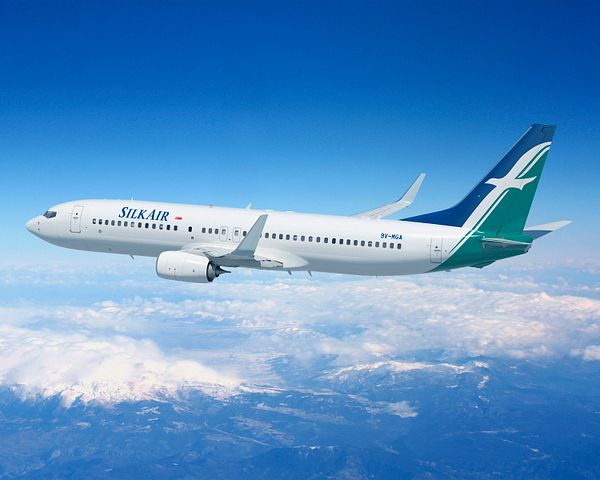
SilkAir, the regional wing of Singapore Airlines, will launch services to two new destinations, Vientiane and Luang Prabang in Laos later this year. With the commencement of these new flights, SilkAir, together with its parent airline, Singapore Airlines will effectively fly to all countries within Southeast Asia.*
From 31 October 2016, subject to applicable approvals, SilkAir will offer thrice weekly flights on Mondays, Thursdays and Saturdays. Flights will operate in a circular routing and will depart from Singapore for Vientiane, followed by Luang Prabang, before heading back to Singapore.
Following the launch of Vientiane and Luang Prabang, the number of destinations in SilkAir’s route network will increase to 51 destinations in 14 countries, which now include: Australia, Cambodia, China, India, Indonesia, Laos, Malaysia, Maldives, Myanmar, Nepal, Philippines, Thailand, Vietnam and Singapore.
The new services will be operated with SilkAir's Airbus A320 aircraft, featuring both Business and Economy class cabins. Customers will be provided with a full service experience, including in-flight meals, in-flight entertainment on SilkAir Studio, baggage allowance of 40kg and 30kg for Business and Economy class respectively, as well as through check-in if they are connecting to or from another SilkAir or Singapore Airlines point via Singapore.
"Southeast Asia has always been an important market for us and with the start of flights to Vientiane and Luang Prabang, we will offer travellers connectivity to every country in Southeast Asia. We believe that this new service has great potential, as more travellers turn their interest to Southeast Asia and destinations such as Laos. This new service will also allow Laotians increased connectivity to the rest of the world via Singapore," said SilkAir Chief Executive, Mr Leslie Thng.
The new service will connect Laos with the joint Singapore Airlines – SilkAir network of over 100 cities worldwide via the Singapore hub.
Flights will be available for booking on a progressive basis through the SilkAir website, call centres and travel agents in the coming weeks.
The detailed schedules are as follows (all times stated are local):
Flight
Routing
Days of Operation
Departure
Arrival
MI788
Singapore- Vientiane
Mon, Thu, Sat
Singapore
14:20
Vientiane
16:15
MI788
Vientiane- Luang Prabang
Mon, Thu, Sat
Vientiane
17:05
Luang Prabang
18:00
MI788
Luang Prabang- Singapore
Mon, Thu, Sat
Luang Prabang
18:50
Singapore
23:05
The capital of Laos, Vientiane is characterized by its wide tree-lined boulevards and French styled buildings which have been restored to house numerous eateries and boutique hotels. It is home to Patuxai also known as the victory gate, which is largely reminiscent of Paris's Arc de Triomphe, numerous temples and stupas such as Wat Si Saket and Wat Si Muang.
The northern city of Luang Prabang is known for its mix of traditional Lao and European influenced architecture and the town has been declared a UNESCO World Heritage site. Kuang Si falls and Pak Ou caves are also some of the famous natural sites around the city. Historical sites such as the Haw Kham Royal Palace Museum and Wat Xieng Thong are also popular tourist attractions.
LUANG PRABANG, Laos — It is officially described as the best-preserved city in Southeast Asia, a bygone seat of kings tucked into a remote river valley of Laos. Luang Prabang weaves a never-never land spell on many a visitor with its tapestry of French colonial villas and Buddhist temples draped in a languid atmosphere.
But most of the locals don’t live here anymore. They began an exodus from this seeming Shangri-La after their hometown was listed a UNESCO World Heritage Site in 1995, and sold itself wholesale to tourism.
It’s not an uncommon pattern at some of the 1,031 sites worldwide designated as places of “outstanding universal value” by the U.N. cultural agency: The international branding sparks mass tourism, residents move out as prices escalate or grab at new business opportunities, hastening the loss of their hometown’s authentic character to hyper-commercialization. But locals may also prosper and some moribund communities are injected with renewed energy.
“If you open the door you will have some fresh wind, but you will also get mosquitoes,” says Prince Nithakhong Tiaoksomsanith, a leader in preserving Luang Prabang’s artistic heritage.
Since UNESCO helped lay down the town’s welcome mat, its longtime residents have been replaced by wealthy Lao outsiders, an ever-growing influx of tourists and enough French, Australian, American and other expatriates catering to their needs to have locals rhyme Luang Prabang with “Meuang Falang” — meaning either French or Western town.
Luang Prabang’s rich architectural heritage, protected by UNESCO’s regulations, has been spared the eradication of countless historic sites across Asia. But virtually every home and mom-and-pop store in the historic centre has been converted into a guesthouse, restaurant, cafe, bar or travel agency. The former prison was recently transformed into a luxury hotel and the French Cultural Center has become the Hibiscus Massage Parlor.
Scenes of workaday life are rare because as prices shot up — a small plot of land that sold for $8,000 three years ago now goes for $120,000 — residents moved into surrounding areas, selling or renting their properties to the newcomers. As former UNESCO consultant and longtime resident Francis Engelmann has said, “We have saved Luang Prabang’s buildings but we have lost its soul.”
Similar criticism has been levelled at UNESCO’s worldwide program, along with praise for having rescued irreplaceable man-made and natural treasures in 163 countries since its inception in 1972.
Calling it “UNESCOcide,” Italian writer on urban development Marco d’Eramo has said that whenever a city is named a heritage site, it “dies out, becoming the stuff of taxidermy. a mausoleum with dormitory suburbs attached.”
Viewing UNESCO’s program in a broader context, Dallen Timothy, a cultural tourism expert at Arizona State University, said indigenous heritage worldwide has become the commodity of outsiders “rather than remaining in control of the people whose cultural heritage it really is. It’s a matter of powerful versus the powerless.”
The director of UNESCO’s World Heritage Program, Mechtild Rossler, acknowledged that a very fine line existed “between the benefits which need to be shared with the local community and the rights of the visitors.” In a phone interview from the agency’s headquarters in Paris, she said UNESCO currently stresses preservation of “intangible culture” rather than just bricks and stones.
Some argue that sites like the Pyramids, Grand Canyon and Stonehenge would draw crowds whether they were on UNESCO’s list or not, that mass tourism is simply a 21st century phenomenon. But especially in developing countries, the designation can ignite a surge in visitors.
From a trickle, Luang Prabang, a town of some 50,000, attracted more than 530,000 foreign and domestic tourists in 2014 and all projections show steep increases. Rossler said tourists to Japan’s Tomioka Silk Mills have soared by 400 per cent since they were named a UNESCO site two years ago.
Governments and tourist operators are keenly aware of the benefits a UNESCO imprimatur can bring, and use it as a marketing strategy. A tourist sub-group, the “WHS baggers,” has even emerged. Els Slots, one of them, says her life’s goal is to visit every site, having already notched 587. The Dutch IT executive runs a website about UNESCO’s program.
Laos last month marked the 20th anniversary of Luang Prabang’s inscription with a 6,000-strong parade accompanied by 20 elephants.
“Emerging countries have bombarded us with new nominations, especially China and India, in addition to European countries, which have always been interested,” said Rossler. “Their economic impact is tremendous, even in Europe.”
As political pressure is exerted, some sites are approved well before they are properly prepared, Rossler said. The listing is finalized not by UNESCO itself but a World Heritage Committee with members from 21 nations.
In Luang Prabang, the prince said residents, tour operators and Buddhist monks were not ready to cope with the sudden influx. While flyers urging tourists to respect local customs are passed out, some offensive behaviour continues. One foreigner wanted the prince to arrange sunset cocktails at a hilltop temple and other tourists point their cameras inches from the faces of monks as they pass by on their dawn rounds to collect alms.
“This is a religious procession, not Disneyland,” the prince said.
Compared to many places, Luang Prabang has generally abided by UNESCO’s regulations, which here include forbidding pane glass and using only traditional materials when restoring temples.
Currently, 48 sites are on a UNESCO “danger list” for being seriously degraded by humans or nature — ranging from the birthplace of Jesus in Bethlehem to Florida’s Everglades National Park — while two have been delisted for gross violations. Many long-listed sites have yet to present required conservation management plans.
“UNESCO should be a bit tougher on enforcing the regulations. Some of the sites in danger should be delisted, which would provide an impetus for their host countries to wake up and work on fixing what’s wrong,” said Arizona State’s Timothy.