

Follow us

Luang Prabang Today

Luang Prabang Today

  • Home
  • Editorial Framework
  • MEDIA CHARTER
  • Cultural Governance
  • Ritual Infrastructure
  • Professional Standards
  • Stewardship
  • About
Home Archive for 2026


Living Heritage | Luang Prabang, Lao PDR

19–27 October 2026

As night falls, Luang Prabang takes on another character.

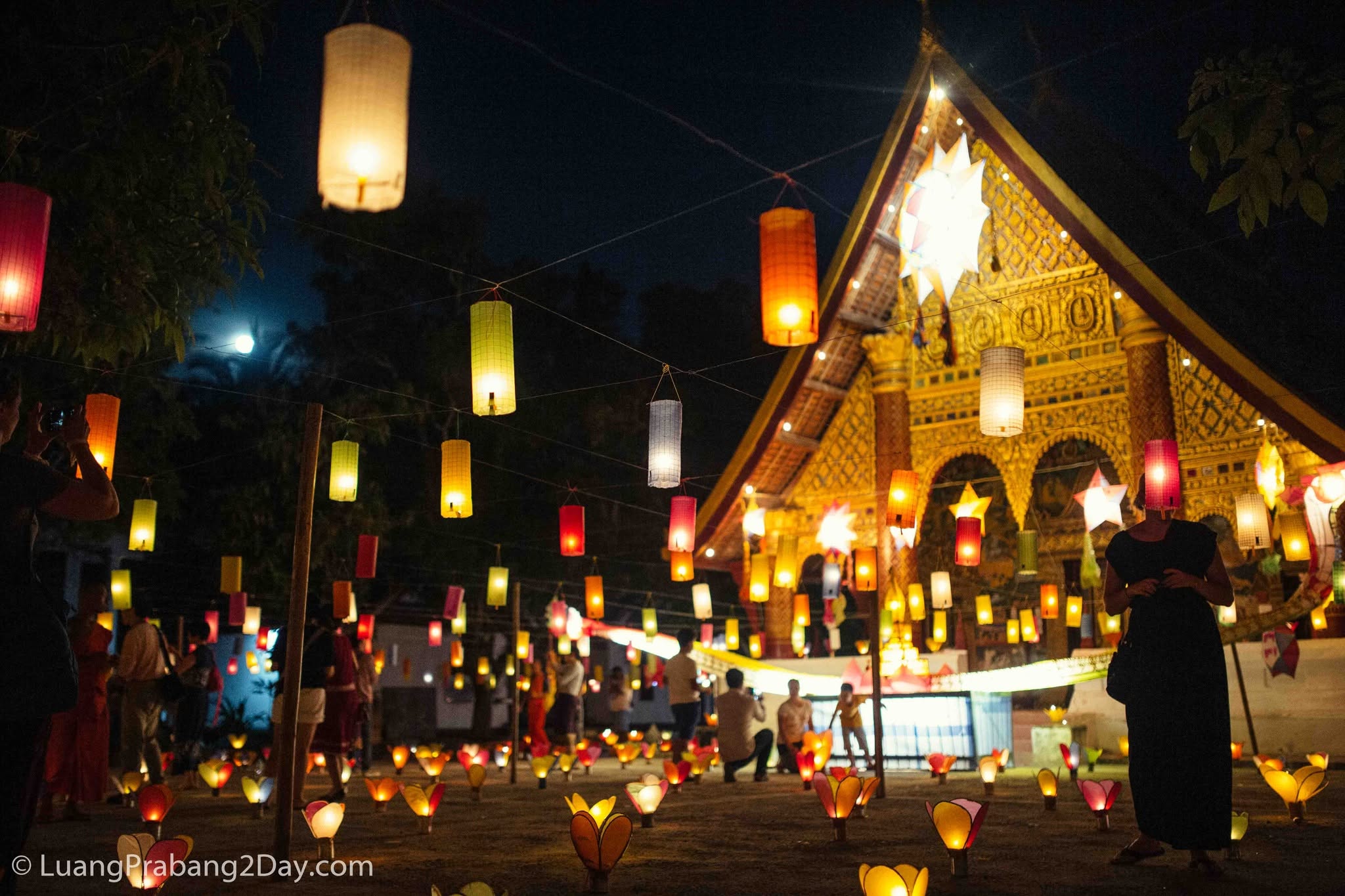
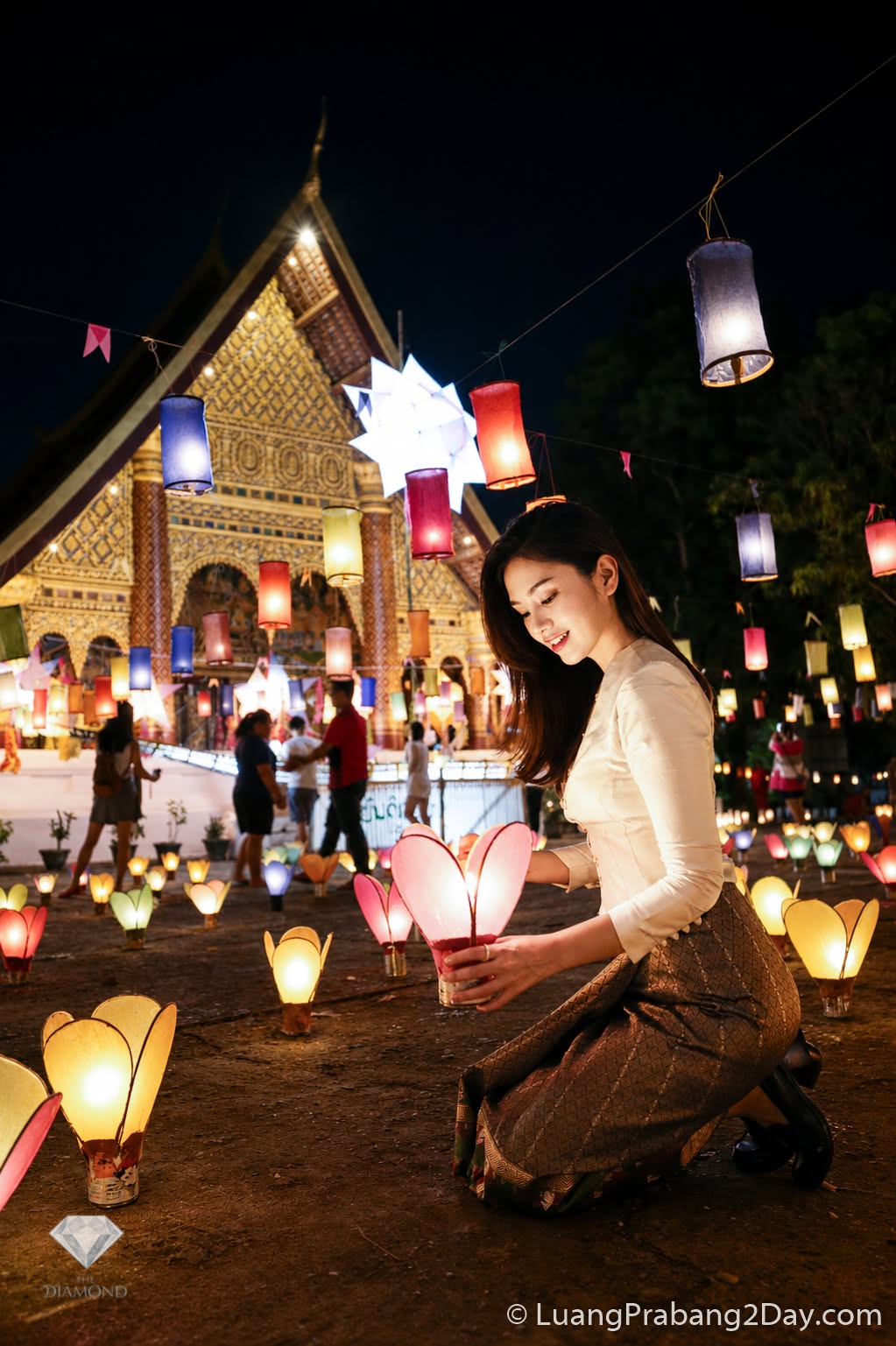
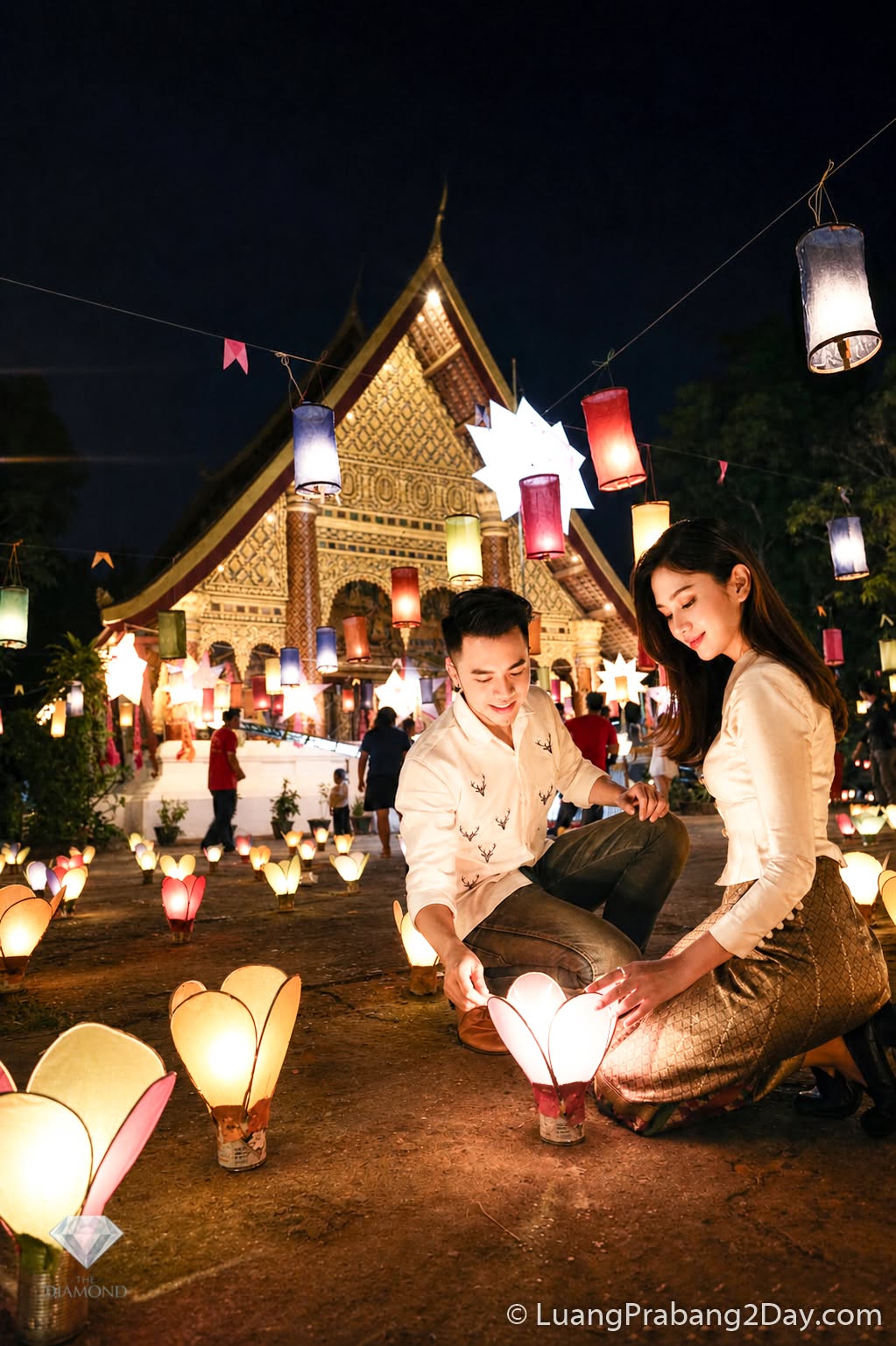
Ancient temples glow beneath the warm light of candles and lanterns. Colorful decorations illuminate the old town, while families, local residents, and visitors gather among the lights that transform the city after dark.

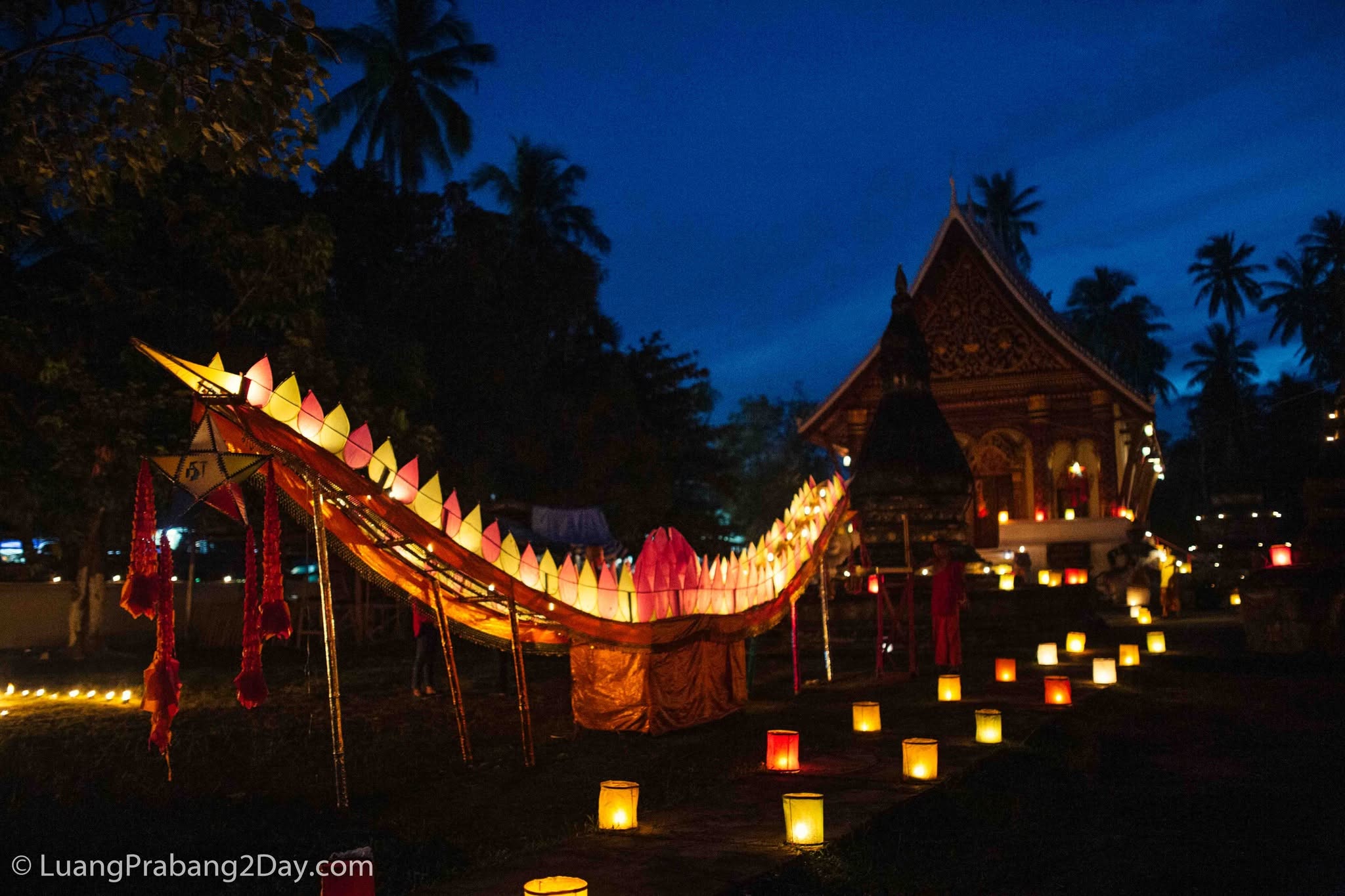
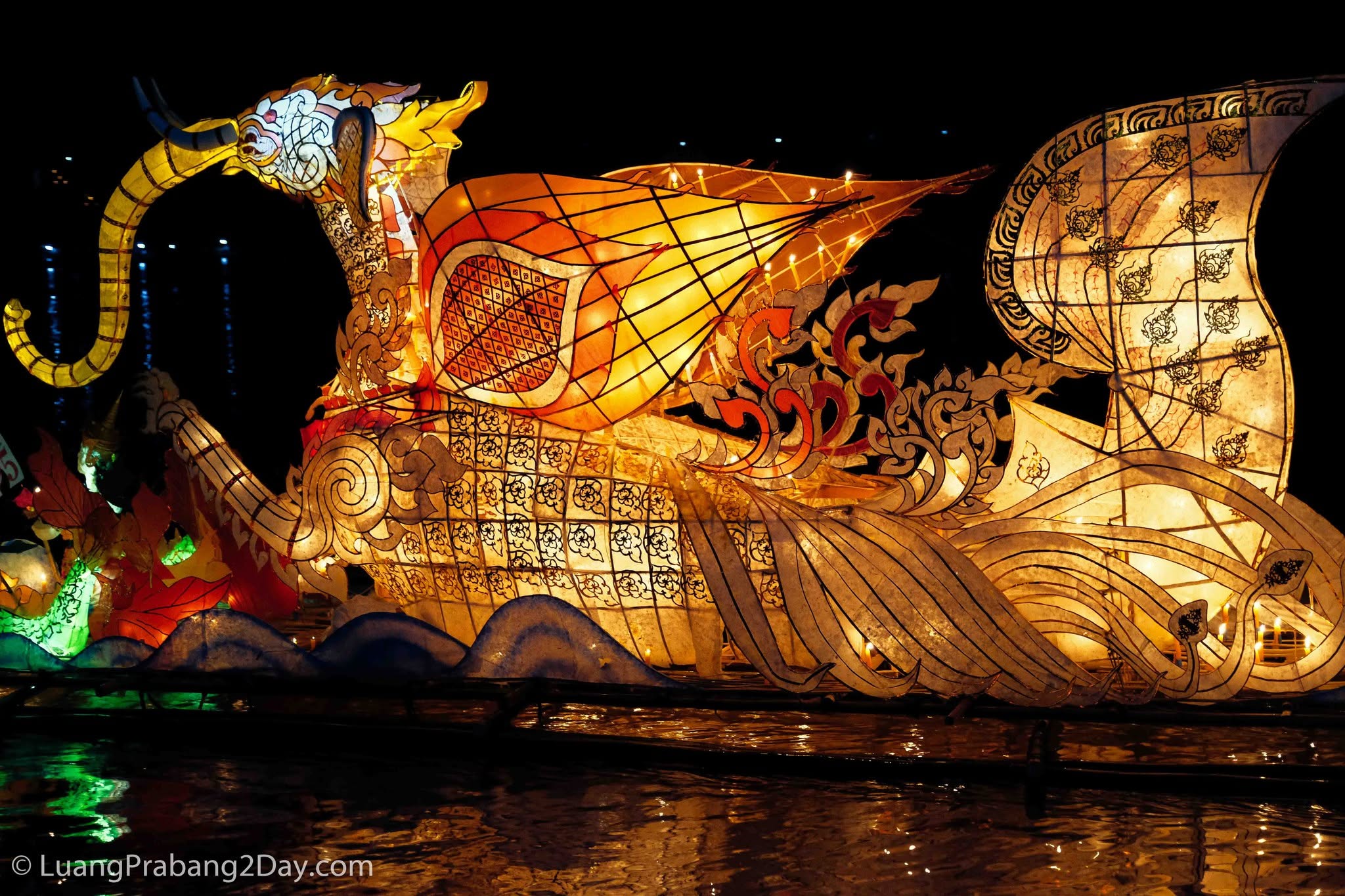
Along the Mekong River, illuminated ceremonial boats bring another dimension to the celebration. Carefully crafted and decorated with lights and candles, these traditional creations reflect the devotion, craftsmanship, and collective effort that make the annual Boat Lighting Festival an important part of Luang Prabang's cultural life.

For a few nights, the city becomes a landscape of light—where architecture, spirituality, community, and the river come together.

A City Transformed by Light

During the festival period, lanterns hang above streets and temple courtyards, while candlelight reveals the intricate details of traditional Lao architecture.

Golden temple facades, colorful handmade decorations, and the soft glow of illuminated offerings create an atmosphere that is both spectacular and intimate.

Yet the significance of these nights extends beyond their visual beauty. The celebrations are connected to Boun Ork Phansa, the end of Buddhist Lent, and the traditions of Boun Lai Heua Fai, the Boat Lighting Festival.

These occasions bring religious practice and community participation into the public life of the city. They mark a meaningful moment in the Buddhist calendar and reflect the enduring relationship between Luang Prabang's people, temples, and river.

The People Behind the Light

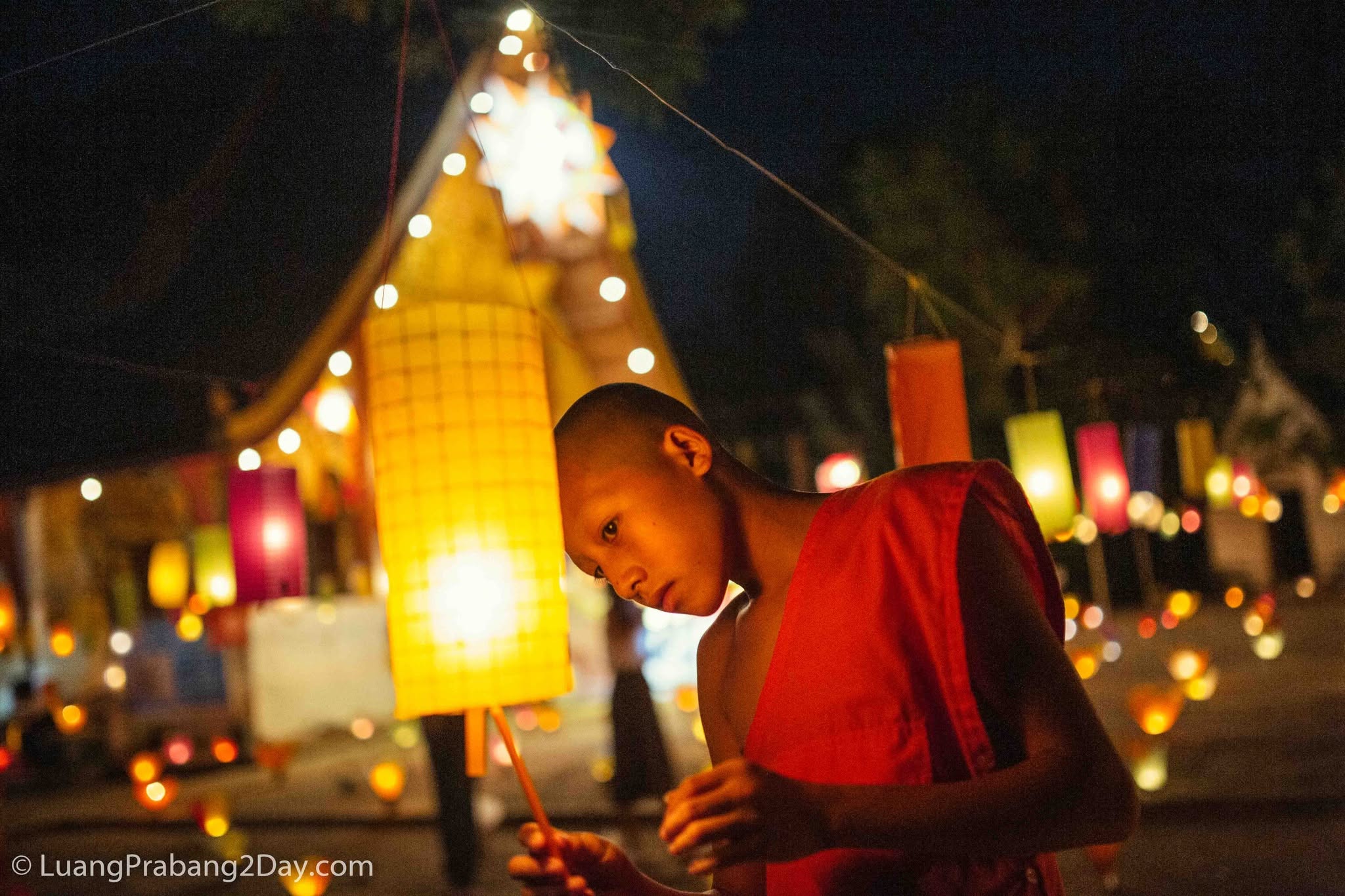
Every illuminated lantern tells a story of preparation.

Someone has made it by hand. Someone has carried it into the temple courtyard. Someone has carefully placed a candle inside and watched as its light began to glow.

These gestures may appear small, but together they create the atmosphere that defines the festival.

The people who prepare offerings, decorate temple grounds, arrange lanterns, and participate in the celebrations are not simply part of the scene. They are the people who keep the tradition alive.

Through their participation, cultural knowledge passes from one generation to another. The festival continues not only because its lights are beautiful, but because people continue to give its rituals meaning.

Tradition in the Temple Courtyard

At night, the temple courtyard becomes a place where architecture, devotion, and everyday community life meet.

People gather around candlelit decorations and floral offerings, creating moments of reflection and shared participation. Traditional buildings stand beneath colorful lanterns, while the surrounding darkness makes each light seem even more vivid.

For photographers, these scenes offer extraordinary contrasts of light, color, and texture. For the people taking part, they are moments connected to belief, custom, and belonging.

Understanding the festival means looking beyond the photograph to recognize the traditions and relationships that give each scene its deeper significance.

The Mekong and the Boats of Light

The illuminated boats are among the most distinctive expressions of Lai Heua Fai.

Their preparation brings together craftsmanship, creativity, and community effort. Once illuminated, the boats create striking displays of color against the night sky and the dark waters of the Mekong.

The river is more than a scenic setting. It forms part of Luang Prabang's living cultural landscape, connecting the town's history, spiritual life, and generations of people who have lived beside its waters.

As the festival reaches its principal celebrations, the lights of the boats bring the community's work into public view. Their beauty is inseparable from the hands that created them and the traditions that give them meaning.

Living Heritage Beyond the Spectacle

Luang Prabang's cultural heritage is not preserved only in monuments, historic buildings, or photographs. It continues through people who practice traditions, share skills, prepare offerings, and gather for celebrations that remain meaningful in their lives.

The Boat Lighting Festival makes this continuity visible.

Its lanterns illuminate the temples and streets, but the deeper story is found in the people behind them—in the craftsmanship, devotion, and shared experiences that connect the past with the present.

As the festival period draws to a close, the lanterns will eventually come down and the city will return to its quieter rhythm. Yet the knowledge, memories, and community relationships carried through the celebration remain.

When the boats of light return to the river, what remains is the living heritage of the people who made them.

For a few nights, Luang Prabang becomes a city of light. For generations, its people have helped keep that light alive.


Festival Information

Event: Boun Lai Heua Fai — Luang Prabang Boat Lighting Festival
Festival period: 19–27 October 2026
Location: Luang Prabang, Lao PDR

The broader date range refers to the festival's illuminated atmosphere and related activities. Boun Ork Phansa falls on 26 October, with the main boat-lighting celebration expected on 27 October 2026.


Contributors & Credits

Pavenaphone Boupha — Nang Sangkhan 2008
Atsaryaphong Boupha — Artist, Actor & Singer

Produced by: The Diamond Luang Prabang

Editorial Platform: www.LuangPrabang2Day.com

Independent cultural documentation of Luang Prabang.

Photography © The Diamond Luang Prabang / LuangPrabang2Day.com


More photos please visit The Diamond Luang Prabang, Facebook fan page,

Living Heritage | Luang Prabang, Lao PDR

As October draws to a close, Luang Prabang begins to glow with the warm light of candles, handmade lanterns and illuminated ceremonial boats. From 19 to 27 October 2026, the town’s streets, temples and homes become part of a seasonal celebration that connects Buddhist faith, traditional craftsmanship and community life.

Known locally as Boun Lai Heua Fai (ບຸນໄຫຼເຮືອໄຟ), the Festival of Light Boats is one of Luang Prabang’s most distinctive annual cultural traditions. The celebrations accompany the end of Buddhist Lent, known as Boun Ork Phansa, which falls on 26 October this year. The illuminated boat procession is scheduled for 27 October. Source: The Star

A Town Illuminated by Tradition

In the evenings leading up to the main celebration, the historic town takes on a different character. Colourful lanterns hang above streets and temple courtyards, while small candlelit displays illuminate the darkness. Their reflections appear across the Mekong River, creating a landscape shaped by light, water and the silhouettes of traditional Lao architecture.

Yet the significance of these displays extends beyond their visual beauty. They are expressions of a cultural tradition maintained through the participation of local communities, temples, schools and other groups.

The preparations themselves form an important part of the celebration. Paper lanterns are assembled, decorative structures are carefully constructed, and individual communities contribute their time and skills to the annual observance.

The Craftsmanship of the Fire Boats

Among the festival’s most striking features are the large illuminated boats, many designed in the form of nagas, mythical serpentine beings deeply rooted in Lao cultural imagination.

Constructed using materials such as bamboo, paper and banana trunks, these elaborate structures combine traditional techniques with artistic interpretation. Their intricate patterns and illuminated surfaces reveal the patience and collective effort required to bring each design to life.

The boats are not simply decorative objects. They represent the work of the people and communities who create them, bringing together generations of knowledge, artistic expression and shared participation.

As night falls on the main procession, the illuminated vessels move through the historic town towards the Mekong River. The spectacle is both a public celebration and an expression of the cultural relationships connecting Luang Prabang’s temples, communities and river landscape.

Candles, Faith and the River

The festival’s smaller offerings provide a more intimate perspective on the celebration.

Families and individuals prepare small candlelit floats, often decorated with flowers and other offerings. When placed upon the river, these lights carry personal hopes and wishes, reflecting traditions associated with making merit, expressing gratitude and letting go of misfortune.

Within Luang Prabang’s Buddhist cultural landscape, the river is more than a geographical feature. It is part of the environment in which spiritual beliefs, community practices and everyday life have developed over generations.

The sight of small floating lights alongside the larger ceremonial boats captures this relationship between individual devotion and collective cultural expression.

The People Behind the Light

The enduring character of Boun Lai Heua Fai rests not only in its illuminated boats or spectacular evening displays, but also in the people who sustain it.

Monks and novices, craftspeople, students, families and local communities contribute to different aspects of the celebrations. Their participation connects the festival to the living traditions of Luang Prabang rather than leaving it as a spectacle remembered only through photographs.

The work of building a boat, preparing a temple courtyard or arranging hundreds of candles may receive less attention than the final procession. Yet these activities are essential to understanding how cultural heritage continues to exist in practice.

Each year, familiar traditions are renewed through the hands of those who prepare, participate in and pass them forward.

Beyond the Spectacle: Luang Prabang as Living Heritage

Luang Prabang is internationally recognised for its historic architecture and cultural significance. However, the meaning of its heritage cannot be understood through buildings and monuments alone.

Its living heritage is also found in seasonal rituals, religious observances, craftsmanship, community relationships and the rhythms that continue to shape local life.

Boun Lai Heua Fai brings these dimensions together. The temples provide places of preparation and devotion; the communities contribute creative knowledge and collective effort; and the Mekong becomes the setting for a shared cultural expression.

For visitors, the festival offers an opportunity to observe this living cultural landscape. Experiencing it respectfully means recognising that the ceremonies are not staged solely for an audience. They belong first to the communities whose traditions give them meaning.

When the Lights Fade

As the celebrations reach their conclusion on 27 October, the illuminated boats and floating candles will gradually disappear into the darkness of the river. The lanterns will eventually be taken down, and the town will return to its ordinary rhythms.

But the end of the festival does not mark the end of the tradition.

Its continuity depends on the knowledge, skills, faith and participation carried forward by local people. Each year’s celebration becomes another chapter in a cultural history that remains active in the present.

In Luang Prabang, light is more than an image reflected across the Mekong. It is a reminder of the relationships between people, place and memory.

When the boats of light return to the river, what remains is the living heritage of the people who made them.


Luang Prabang | Lao PDR | October 2026

Editorial: LuangPrabang2Day.com — Living Heritage

Photography © LuangPrabang2Day.com


จากรถไฟลาว–จีน สู่การเชื่อมต่อใหม่กับเวียดนามและไทย รถไฟกำลังเปลี่ยนวิธีที่ลาวเชื่อมโยงกับภูมิภาค

เป็นเวลาหลายทศวรรษที่ลาวมักถูกอธิบายผ่านสิ่งที่ประเทศ ไม่มี — นั่นคือ ไม่มีทางออกสู่ทะเล

ภูมิศาสตร์ทำให้ลาวตั้งอยู่ท่ามกลางประเทศเศ

รษฐกิจขนาดใหญ่กว่าอย่างจีน ไทย และเวียดนาม ขณะที่การค้าระหว่างประเทศจำนวนมากต้องพึ่งพาถนนและด่านชายแดน

แต่ภาพนั้นกำลังเปลี่ยนไป

เรื่องราวรถไฟของลาวในวันนี้ไม่ได้มีเพียงการมาถึงของ รถไฟลาว–จีนในปี 2021 อีกต่อไป ในปี 2026 กำลังเกิดภาพของเครือข่ายที่ใหญ่ขึ้น — มีรถไฟที่เชื่อมลาวกับจีนอยู่แล้ว การเชื่อมต่อกับไทยกำลังขยายตัว และมีแผนพัฒนาเส้นทางใหม่ไปยังชายฝั่งเวียดนาม

ดังนั้น คำถามสำคัญจึงไม่ใช่เพียงว่า ลาวมีทางรถไฟกี่กิโลเมตร

แต่คือ เส้นทางเหล่านี้อาจเปลี่ยนตำแหน่งของลาวในภูมิภาคเอเชียตะวันออกเฉียงใต้ภาคพื้นทวีปได้อย่างไร


รถไฟสายที่เปลี่ยนลาวไปแล้ว

รถไฟลาว–จีนเปิดให้บริการในเดือนธันวาคม 2021 เชื่อมเมืองคุนหมิงในมณฑลยูนนานของจีนกับนครหลวงเวียงจันทน์

ในช่วงแรก รถไฟสายนี้มักถูกพูดถึงในฐานะเส้นทางสำหรับผู้โดยสารและการท่องเที่ยวเป็นหลัก

แต่บทบาทของรถไฟกำลังขยายตัวมากขึ้น

ตามรายงานของสำนักข่าว KPL ของลาว รถไฟสายนี้ขนส่งสินค้ามากกว่า 90 ล้านตัน แล้วจนถึงเดือนสิงหาคม 2026 รวมถึงสินค้าข้ามพรมแดนมากกว่า 21 ล้านตัน มีขบวนรถไฟขนส่งสินค้ามากกว่า 80,000 ขบวน โดยในจำนวนนี้เป็นขบวนข้ามพรมแดนมากกว่า 23,000 ขบวน

ปัจจุบันสินค้าที่เดินทางผ่านระบบรถไฟสามารถเข้าถึงตลาดใน 19 ประเทศและภูมิภาค รวมถึงไทย เวียดนาม มาเลเซีย สิงคโปร์ เมียนมา กัมพูชา และบังกลาเทศ ตามรายงานของ KPL จำนวนประเภทสินค้าที่ขนส่งเพิ่มขึ้นจากเพียงกว่า 10 ประเภทในช่วงเริ่มต้น เป็นมากกว่า 4,000 ประเภท

ตัวเลขเหล่านี้มีความสำคัญ เพราะแสดงให้เห็นว่ารถไฟไม่ได้เป็นเพียงเส้นทางระหว่างสองประเทศอีกต่อไป

แต่กำลังกลายเป็นส่วนหนึ่งของ เครือข่ายโลจิสติกส์ระดับภูมิภาค

การค้ากำลังเติบโต

ในช่วงครึ่งแรกของปี 2026 มูลค่าการนำเข้าและส่งออกที่ขนส่งผ่านรถไฟลาว–จีนอยู่ที่ 17.17 พันล้านหยวน เพิ่มขึ้น 33.8% เมื่อเทียบกับช่วงเดียวกันของปีก่อน ตามข้อมูลของ KPL

สิ่งนี้ทำให้ความสำคัญของรถไฟแตกต่างจากเพียงการช่วยลดระยะเวลาเดินทาง

รถไฟกำลังกลายเป็นส่วนหนึ่งของระบบที่สินค้าถูกเคลื่อนย้าย ผ่านลาว


จำนวนผู้โดยสารก็เพิ่มขึ้นเช่นกัน

ในด้านผู้โดยสาร รถไฟยังคงเติบโตอย่างต่อเนื่อง

ภายในเดือนมิถุนายน 2026 รถไฟลาว–จีนมีผู้โดยสารใช้บริการรวมมากกว่า 73.38 ล้านคน นับตั้งแต่เปิดให้บริการ โดยในจำนวนนี้เป็นผู้เดินทางข้ามพรมแดนมากกว่า 840,000 คน

จำนวนผู้โดยสารในฝั่งลาวยังคงเพิ่มขึ้น ขณะที่บริการรถไฟระหว่างประเทศโดยตรงระหว่างคุนหมิงและเวียงจันทน์ได้สร้างทางเลือกใหม่สำหรับการเดินทางเพื่อการท่องเที่ยวและธุรกิจ

เรื่องนี้มีความสำคัญโดยเฉพาะกับ หลวงพระบาง

รถไฟได้เปลี่ยนภูมิศาสตร์ของการเข้าถึงเมือง

หลวงพระบางไม่ได้เชื่อมต่อกับระบบคมนาคมระดับภูมิภาคผ่านถนนและสนามบินเพียงอย่างเดียวอีกต่อไป

รถไฟได้กลายเป็นอีกหนึ่งประตูสำคัญของเมือง

และสิ่งนี้กำลังเปลี่ยนความสัมพันธ์ระหว่างหลวงพระบางกับภูมิภาคโดยรอบ


รถไฟสายต่อไป: สู่เวียดนาม

ส่วนสำคัญต่อไปของเรื่องราวยังอยู่ข้างหน้า

เมื่อวันที่ 31 มีนาคม 2026 ลาวและเวียดนามได้ลงนามในข้อตกลงสัมปทานสำหรับโครงการ รถไฟท่าแขก–มูยา (Thakhek–Mu Ya Railway) ซึ่งจะเชื่อมท่าแขกในแขวงคำม่วนกับด่านมูยาทางฝั่งเวียดนาม

โครงการนี้เป็นส่วนหนึ่งของแผนการเชื่อมต่อทางรถไฟที่กว้างขึ้นระหว่างเวียงจันทน์กับพื้นที่ หวุงอ๋าง (Vung Ang) ของเวียดนาม

ความสำคัญของโครงการอยู่ที่เรื่อง ภูมิศาสตร์

รถไฟลาว–จีนทำให้ลาวมีเส้นทางรถไฟขนาดใหญ่ไปทางเหนือ

ขณะที่รถไฟลาว–เวียดนามที่เสนอจะสร้างเส้นทางอีกทิศทางหนึ่ง:

เวียงจันทน์ → ท่าแขก → เวียดนาม → หวุงอ๋าง

แทนที่จะมองลาวว่าเป็นเพียงประเทศที่อยู่ “ปลายทาง” ของเส้นทางรถไฟ การเชื่อมต่อเหล่านี้เปิดความเป็นไปได้ให้ลาวกลายเป็น จุดเชื่อมระหว่างระบบรถไฟและระบบโลจิสติกส์หลายแห่ง

รัฐบาลลาวอธิบายโครงการนี้ว่าเป็นส่วนหนึ่งของเป้าหมายระยะยาวในการเปลี่ยนประเทศจาก “landlocked” สู่ “land-linked”

หรือจากประเทศที่ไม่มีทางออกทะเล ไปสู่ประเทศที่ใช้ตำแหน่งทางภูมิศาสตร์ของตนเป็น จุดเชื่อมโยง


รถไฟสู่ทะเล

หนึ่งในประเด็นสำคัญที่สุดของรถไฟลาว–เวียดนาม คือความสัมพันธ์กับชายฝั่งทะเลของเวียดนาม

การเชื่อมต่อไปยังหวุงอ๋างจะทำให้ลาวมีอีกหนึ่งเส้นทางสู่การค้าทางทะเล

ไม่ได้หมายความว่าลาวจะหยุดใช้ถนน ท่าเรือเดิม หรือเส้นทางรถไฟอื่น ๆ

แต่หมายถึงการมี ทางเลือกเพิ่มขึ้น

สำหรับธุรกิจ ผู้ให้บริการโลจิสติกส์ และผู้ส่งออก การมีเส้นทางหลายทางอาจมีความสำคัญอย่างมาก

รถไฟที่เชื่อมภาคกลางของลาวกับเวียดนามอาจเปลี่ยนวิธีการเคลื่อนย้ายสินค้าระหว่าง:

จีน → ลาว → เวียดนาม

และ

ไทย → ลาว → เวียดนาม

อย่างไรก็ตาม ผลกระทบทางเศรษฐกิจที่แท้จริงจะขึ้นอยู่กับหลายปัจจัย เช่น การก่อสร้าง ขั้นตอนชายแดน ต้นทุนการขนส่ง ความสามารถของท่าเรือ และการเชื่อมต่อระหว่างระบบรถไฟต่าง ๆ

แต่ทิศทางของการเปลี่ยนแปลงนั้นเริ่มมองเห็นได้แล้ว


ไทยกำลังกลายเป็นส่วนหนึ่งของภาพเดียวกัน

ส่วนที่สามของเรื่องราวคือการเชื่อมต่อทางรถไฟระหว่างลาวกับไทย

ในปี 2026 การขยายรถไฟลาว–ไทยระยะที่ 2 ทำให้บริการรถไฟเข้าใกล้ใจกลางนครหลวงเวียงจันทน์มากขึ้นผ่าน สถานีคำสะหวาด (Khamsavath Station) แห่งใหม่

KPL รายงานว่าการทดลองให้บริการรวมถึงเส้นทางรถไฟตรง กรุงเทพฯ–เวียงจันทน์ ขณะที่สถานีแห่งใหม่มีสิ่งอำนวยความสะดวกสำหรับศุลกากร ตรวจคนเข้าเมือง และการกักกันโรคสำหรับการเดินทางข้ามพรมแดน

สิ่งนี้สร้างอีกหนึ่งทิศทางที่สำคัญ:

ไทย ↔ เวียงจันทน์ ↔ รถไฟลาว–จีน

กล่าวอีกอย่างหนึ่งคือ รถไฟของลาวไม่ได้พัฒนาอย่างโดดเดี่ยว

แต่กำลังค่อย ๆ เชื่อมต่อเข้ากับระบบรถไฟของประเทศเพื่อนบ้าน


ลาวกำลังกลายเป็นจุดเชื่อมต่อ

ตรงนี้เองที่เรื่องราวเริ่มใหญ่กว่าโครงสร้างพื้นฐานทางรถไฟ

ลองมองภูมิศาสตร์:

จีน

↓

หลวงพระบาง

↓

เวียงจันทน์

↓

ไทย

และอาจมีอีกเส้นทางหนึ่ง:

เวียงจันทน์

↓

ท่าแขก

↓

เวียดนาม / หวุงอ๋าง

ผลที่เกิดขึ้นคือประเทศที่มีเส้นทางรถไฟเชื่อมออกไปหลายทิศทาง

นี่เป็นตำแหน่งที่แตกต่างจากลาวในช่วงต้นทศวรรษ 2000 อย่างมาก

รถไฟไม่ได้ลบข้อจำกัดทางภูมิศาสตร์

แต่กำลัง เปลี่ยนวิธีที่ลาวใช้ประโยชน์จากภูมิศาสตร์ของตนเอง


แล้วสิ่งนี้หมายถึงอะไรสำหรับหลวงพระบาง?

สำหรับหลวงพระบาง คำถามนี้น่าสนใจเป็นพิเศษ

เมืองตั้งอยู่บนแนวรถไฟลาว–จีนทางตอนเหนือ ระหว่างเวียงจันทน์กับมณฑลยูนนานของจีน

ตำแหน่งนี้ทำให้หลวงพระบางอยู่ภายในเส้นทางการเคลื่อนย้ายผู้คน สินค้า และการลงทุนที่มีขนาดใหญ่กว่าตัวเมืองเอง

แต่การเชื่อมต่อที่มากขึ้นก็สามารถนำมาทั้ง โอกาสและแรงกดดัน

ผู้มาเยือนที่เพิ่มขึ้นสามารถสนับสนุนโรงแรม ร้านอาหาร ธุรกิจการเดินทาง ผู้ประกอบการด้านวัฒนธรรม และผู้ผลิตท้องถิ่น

ขณะเดียวกัน การเข้าถึงที่ง่ายขึ้นอาจเร่งให้เกิด:

  • การพัฒนาการท่องเที่ยว
  • การเปลี่ยนแปลงการใช้ที่ดิน
  • การลงทุนด้านอสังหาริมทรัพย์
  • การจราจร
  • แรงกดดันต่อพื้นที่มรดก
  • การเปลี่ยนแปลงของธุรกิจท้องถิ่น
  • การเคลื่อนย้ายผู้คนและสินค้า

สำหรับเมืองที่คุณค่าของเมืองเชื่อมโยงอย่างลึกซึ้งกับภูมิทัศน์เมืองประวัติศาสตร์และวัฒนธรรมที่ยังมีชีวิตอยู่ การเชื่อมต่อจึงไม่ใช่เพียงคำถามทางเศรษฐกิจ

แต่ยังเป็น คำถามทางวัฒนธรรม

เมืองประวัติศาสตร์จะเปลี่ยนไปอย่างไร เมื่อผู้คนสามารถเดินทางเข้าถึงเมืองได้ง่ายขึ้น?


จากโครงการรถไฟ สู่ระบบระดับภูมิภาค

ดังนั้น สิ่งที่น่าสนใจที่สุดเกี่ยวกับการพัฒนารถไฟของลาวอาจไม่ใช่รถไฟสายใดสายหนึ่ง

แต่คือการเกิดขึ้นของ “เครือข่าย”

รถไฟลาว–จีนเปิดให้บริการแล้ว

การเชื่อมต่อกับไทยกำลังขยายตัว

รถไฟลาว–เวียดนามกำลังได้รับการพัฒนาให้เป็นเส้นทางในอนาคต

และเส้นทางอื่น ๆ ที่อยู่ในแผนการพัฒนาอาจเพิ่มการเชื่อมโยงข้ามภูมิภาคเอเชียตะวันออกเฉียงใต้ภาคพื้นทวีปในอนาคต

รัฐบาลลาวยังแสวงหาความร่วมมือด้านเทคนิคและการลงทุนระหว่างประเทศเพื่อพัฒนาโครงสร้างพื้นฐาน รวมถึงการสนับสนุนโครงการรถไฟลาว–เวียดนาม โดยในเดือนกันยายน 2026 ลาวและเกาหลีใต้ได้หารือความร่วมมือด้านเทคโนโลยีสมัยใหม่และการพัฒนาโครงสร้างพื้นฐาน โดยฝ่ายลาวได้ร้องขอการสนับสนุนเพิ่มเติมสำหรับโครงการรถไฟลาว–เวียดนาม

ผลลัพธ์ระยะยาวยังไม่สามารถรับประกันได้

รถไฟต้องมีผู้โดยสาร มีสินค้า มีการลงทุน มีการบำรุงรักษา ระบบชายแดนที่มีประสิทธิภาพ และการเชื่อมต่อกับท่าเรือและถนนที่ทำงานร่วมกันได้

แต่ ทิศทางของการเปลี่ยนแปลงนั้นชัดเจนขึ้นเรื่อย ๆ


ลาวหลังยุครถไฟ

ท้ายที่สุดแล้ว เรื่องราวของรถไฟไม่ได้เป็นเพียงเรื่องของรถไฟ

แต่มันคือเรื่องของ “การเข้าถึง”

การเข้าถึงตลาด

การเข้าถึงท่าเรือ

การเข้าถึงประเทศเพื่อนบ้าน

การเข้าถึงสำหรับนักเดินทาง

การเข้าถึงสำหรับธุรกิจ

และการเชื่อมโยงระหว่างสถานที่ที่ในอดีตถูกแยกออกจากกันด้วยภูมิประเทศที่ยากลำบากและการเดินทางทางถนนที่ใช้เวลานาน

สำหรับหลวงพระบาง การเปลี่ยนแปลงนี้มองเห็นได้แล้ว

สำหรับลาวโดยรวม การเปลี่ยนแปลงครั้งใหญ่อาจยังอยู่ข้างหน้า

ประเทศไม่ได้เพียงถามอีกต่อไปว่าจะเอาชนะข้อจำกัดจากการไม่มีทางออกทะเลได้อย่างไร

แต่กำลังถามมากขึ้นว่า จะใช้ ตำแหน่งทางภูมิศาสตร์ของตนเอง เพื่อเป็นจุดเชื่อมระหว่าง จีน ไทย เวียดนาม และภูมิภาคเอเชียตะวันออกเฉียงใต้ที่กว้างขึ้น ได้อย่างไร

รถไฟไม่ใช่จุดหมายปลายทาง

มันกำลังกลายเป็นส่วนหนึ่งของโครงสร้างพื้นฐานของ “ลาวอีกแบบหนึ่ง”


แหล่งข้อมูล

  • KPL — China-Laos Railway cargo transport exceeds 90 million tonnes, 20 August 2026
  • KPL — China–Laos Railway Records Strong Growth in Cross-Border Passenger Traffic, 2 June 2026
  • KPL — Laos, Vietnam Sign Concession Agreement for Thakhek–Mu Ya Railway, 1 April 2026
  • KPL — Laos–Thai Railway Extends Service to Khamsavath Station, 10 March 2026
  • KPL — Laos, Republic of Korea Strengthen Cooperation on Sustainable Infrastructure, 17 September 2026


From the China–Laos Railway to new connections with Vietnam and Thailand, rail is changing how Laos connects to the region.

For decades, Laos was described primarily by what it did not have: a coastline.

Its geography placed the country between larger economies—China, Thailand and Vietnam—while much of its international trade depended on roads and border crossings.

That picture is changing.

The railway story in Laos is no longer simply about the arrival of the China–Laos Railway in 2021. In 2026, a larger network is beginning to emerge: an operating railway connecting Laos with China, expanding connections with Thailand, and plans for a new line toward Vietnam's coast.

The important question is therefore not simply how many kilometres of railway Laos has.

It is what these connections could mean for the country's position in mainland Southeast Asia.


The railway that already changed Laos

The China–Laos Railway opened in December 2021, connecting Kunming in China's Yunnan Province with Vientiane.

In its first years, it was often discussed primarily as a passenger and tourism connection.

Its role has since become much broader.

According to Laos' official KPL news agency, the railway had transported more than 90 million tonnes of cargo by August 2026, including more than 21 million tonnes of cross-border cargo. More than 80,000 freight trains had operated on the line, including over 23,000 cross-border services.

The railway now carries goods to and from a much wider regional market. KPL reports that cargo transported through the railway reaches 19 countries and regions, including Thailand, Vietnam, Malaysia, Singapore, Myanmar, Cambodia and Bangladesh. The number of commodity categories has expanded from just over 10 when operations began to more than 4,000.

The numbers are significant because they show that the railway is becoming more than a transport line between two countries.

It is becoming part of a wider logistics network.

Trade is growing

In the first half of 2026, imports and exports transported through the China–Laos Railway were valued at 17.17 billion yuan, an increase of 33.8% year-on-year, according to KPL.

That gives the railway a different significance from simply reducing travel time.

It is becoming part of how goods move through Laos.


Passengers are growing too

The passenger side of the railway has also continued to expand.

By June 2026, the China–Laos Railway had carried more than 73.38 million passengers since opening, including more than 840,000 cross-border travellers. Passenger traffic on the Lao section had continued to increase, while direct international services between Kunming and Vientiane provided a new alternative for tourism and business travel.

This matters for places such as Luang Prabang.

The railway has changed the geography of access to the city. Luang Prabang is no longer connected to the regional transport system only through roads and its airport.

Rail has become another major gateway.

And that changes the relationship between Luang Prabang and the rest of the region.


The next railway: toward Vietnam

The next major part of the story is still ahead.

On 31 March 2026, Laos and Vietnam signed a concession agreement for the Thakhek–Mu Ya railway project, linking Thakhek in Khammouane Province with the Mu Ya border crossing toward Vietnam.

The project is part of a broader planned railway connection between Vientiane and Vietnam's Vung Ang area.

The significance is geographical.

The China–Laos Railway gives Laos a major rail connection toward the north.

The proposed Laos–Vietnam railway would provide another direction:

Vientiane → Thakhek → Vietnam → Vung Ang

Instead of thinking about Laos as a country at the end of a railway, this creates the possibility of Laos becoming a link between different railway and logistics systems.

The Lao government describes the project as part of its long-term objective of moving from “landlocked” to “land-linked.”

That phrase captures the larger transformation.


The railway to the sea

One of the most important aspects of the Laos–Vietnam railway is its relationship with Vietnam's coast.

A connection toward Vung Ang would give Laos another route toward maritime trade.

That does not mean Laos will suddenly stop using roads, existing ports or other railway corridors.

Instead, it creates another option.

For businesses, logistics operators and exporters, having multiple routes can matter.

A railway connecting central Laos to Vietnam could potentially change the way goods move between:

China → Laos → Vietnam

and

Thailand → Laos → Vietnam

The actual economic impact will depend on construction, border procedures, freight costs, port capacity and how effectively the different railway systems are integrated.

But the strategic direction is already visible.


Thailand is becoming part of the picture too

The third part of the story is the railway connection between Laos and Thailand.

In 2026, the Lao–Thai Railway's Phase 2 expansion brought services closer to central Vientiane through the new Khamsavath Station.

KPL reported that trial operations included direct Bangkok–Vientiane services, while the new station incorporates customs, immigration and quarantine facilities for cross-border travel.

This creates another important direction:

Thailand ↔ Vientiane ↔ Laos–China Railway

In other words, the railways of Laos are not developing independently.

They are gradually becoming connected to neighbouring railway systems.


Laos is becoming a crossroads

This is where the story becomes bigger than railway infrastructure.

Consider the geography:

China
↓
Luang Prabang
↓
Vientiane
↓
Thailand

And potentially:

Vientiane
↓
Thakhek
↓
Vietnam / Vung Ang

The result is a country with railway connections pointing in several directions.

That is a very different position from the Laos of the early 2000s.

The railway does not erase geography.

It changes how geography is used.


What does this mean for Luang Prabang?

For Luang Prabang, the question is particularly interesting.

The city sits on the northern part of the China–Laos Railway, between Vientiane and China's Yunnan Province.

That gives Luang Prabang a position within a much larger movement of people, goods and investment.

But connectivity can bring both opportunities and pressure.

More visitors can support hotels, restaurants, transport operators, cultural businesses and local producers.

At the same time, greater accessibility can accelerate:

  • tourism development
  • land-use change
  • property investment
  • traffic
  • pressure on heritage areas
  • changes in local businesses
  • movement of people and goods

For a city whose value is strongly connected to its historic urban landscape and living cultural traditions, connectivity is therefore not simply an economic question.

It is also a cultural question.

How does a historic city change when it becomes easier to reach?


From railway project to regional system

The most interesting development in Laos may therefore not be any single railway.

It is the emergence of a network.

The China–Laos Railway is already operating.

The Lao–Thai connection is expanding.

The Laos–Vietnam railway is being developed as a future corridor.

And other proposed connections could eventually add further links across mainland Southeast Asia.

The Lao government is also seeking international technical expertise and investment for infrastructure development, including support for the Laos–Vietnam railway project. In September 2026, Laos and South Korea discussed cooperation involving modern technology and infrastructure development, with the Lao side specifically requesting greater support for the Laos–Vietnam railway.

The long-term outcome is not guaranteed.

Railways need passengers, freight, investment, maintenance, efficient borders and functioning connections to ports and roads.

But the direction is clear.


Laos after the railway

The railway story is ultimately about more than trains.

It is about access.

Access to markets.

Access to ports.

Access to neighbouring countries.

Access for travellers.

Access for businesses.

And access between places that were previously separated by difficult terrain and long road journeys.

For Luang Prabang, the transformation is already visible.

For Laos as a whole, the bigger transformation may still be ahead.

The country is no longer simply asking how to overcome its landlocked geography.

It is increasingly asking how to use that geography as a connection between China, Thailand, Vietnam and the wider Southeast Asian region.

The railway is not the destination.

It is becoming part of the infrastructure of a different Laos.


Sources

  • KPL, China-Laos Railway cargo transport exceeds 90 million tonnes, 20 August 2026.
  • KPL, China–Laos Railway Records Strong Growth in Cross-Border Passenger Traffic, 2 June 2026.
  • KPL, Laos, Vietnam Sign Concession Agreement for Thakhek–Mu Ya Railway, 1 April 2026.
  • KPL, Laos–Thai Railway Extends Service to Khamsavath Station, 10 March 2026.
  • KPL, Laos, Republic of Korea Strengthen Cooperation on Sustainable Infrastructure, 17 September 2026.


From Ferry Crossing to Regional Connectivity

When Luang Prabang Enters a New Network Between Thailand, Laos and China

Luang Prabang Today — Infrastructure and Living Heritage

For Luang Prabang, the Mekong has never been simply a line dividing two sides.

It is a route, a landscape, and part of the rhythm of everyday life.

Today, the relationship between Luang Prabang and Chomphet is entering a new chapter. On 8 September 2026, the Thai Cabinet approved financial assistance to the Lao PDR totaling THB 1,783,671,500 for the Chiangman–Luang Prabang Bridge Construction Project.

This decision forms part of an ongoing infrastructure cooperation between Thailand and the Lao PDR. The project has already gone through years of feasibility study, detailed design and coordination between the two sides. The Lao Ministry of Finance formally requested technical assistance from Thailand in 2018, followed by feasibility studies and detailed project design.

By 2024, the detailed design process had reached the stage of presenting and handing over the study results, with representatives from Thailand and the Luang Prabang provincial Public Works and Transport authorities involved in the process.

The 2026 financial approval therefore represents another significant step in a cooperation process moving toward the project's next stage.


A Bridge Across the Mekong

The Chiangman–Luang Prabang Bridge is intended to connect the Chiangman area of Chomphet District with Luang Prabang and link into the northern road network of Laos.

The route forms part of a wider connection:

Northern Thailand → Huai Kon Border → Hongsa → Chomphet → Chiangman → Luang Prabang

The road between Hongsa and Chiangman has already been developed, but reaching Luang Prabang still requires crossing the Mekong by vehicle ferry, creating limitations in travel time and continuity.

If the new bridge is built as planned, the crossing will shift from waiting for a ferry and moving across the river to a more continuous road connection.

The Thai government estimates that the project could reduce travel time between Nan and Luang Prabang by approximately 30–45 minutes, while making the movement of goods easier, more convenient and safer.

At the local level, this is about reducing travel time.

At the regional level, however, the meaning of the bridge may be much larger.


From a Bridge to a Larger Network

The Chiangman–Luang Prabang Bridge does not exist in isolation.

One direction connects toward northern Thailand.

Another enters Laos's road network.

And from Luang Prabang, the Laos–China Railway provides another major layer of connectivity between Laos and China.

As roads, bridges and railways become increasingly connected, Luang Prabang may begin to occupy a different position.

From a destination

to a connection point.

From a place people travel to

to a place through which people, goods, tourism and economic activity can move.

This is a change in economic geography that may be more significant than the bridge itself.


Tourism May Only Be the Beginning

The most visible impact of improved connectivity may be tourism.

Travelers from northern Thailand could reach Luang Prabang more easily. At the same time, travelers from China can arrive by railway and connect onward to Luang Prabang and other parts of Laos and the region.

In the future, travel routes may increasingly be understood beyond the boundaries of a single country.

A journey could look like:

Northern Thailand → Luang Prabang → Northern Laos → China

Or in the opposite direction:

China → Luang Prabang → Chomphet → Northern Thailand

As these routes become more connected, Luang Prabang has an opportunity to become part of a broader regional tourism circuit.

The Thai government estimates that during the first five years, the project could contribute an average of approximately 80,000 additional visitors per year to Nan Province, generating an estimated THB 360 million in additional annual revenue.

These are projections, not results that have already occurred.

But the more interesting question may be what happens to the pattern of travel.

When movement between places becomes easier, a traveler may no longer experience Thailand, Laos and China as completely separate journeys.


When Connectivity Attracts Investment

Tourists are not the only ones who follow new routes.

Capital does too.

When people, goods and services can move more easily, places that were previously outside major corridors can become more visible to businesses and investors.

For Luang Prabang and Chomphet, this could create opportunities across a range of sectors:

  • Hotels and accommodation
  • Restaurants and local food
  • Transport and logistics
  • Handicrafts
  • Local products
  • Creative industries
  • Tourism experiences
  • Service businesses
  • Real estate

But connectivity does not mean that every form of investment will necessarily be appropriate for the city.

Capital can create jobs, income and new opportunities.

At the same time, it can change land prices, patterns of land use and the structure of local communities.

The question therefore should not only be:

“How much investment will come?”

It should also be:

“What kind of investment can create long-term value for Luang Prabang and its communities?”


Luang Prabang on a New Economic Geography

Looking at the wider picture, a new network is beginning to emerge between three major areas.

Northern Thailand

Markets, travelers, goods and economic activity

↓

Luang Prabang and Northern Laos

Tourism, culture, trade and services

↓

China

A large market, trade, capital and railway connectivity

Within this picture, the Chiangman–Luang Prabang Bridge could become another piece of a growing regional connectivity system.

Its importance may therefore extend beyond saving 30–45 minutes of travel.

It may change where Luang Prabang sits on the economic map of the region.

In another 10 or 20 years, will Luang Prabang remain primarily a cultural destination?

Or could it become one of the important connection points within the economic geography of the Upper Mekong region?

There is no answer yet.

But new infrastructure is making the question increasingly relevant.


But Connectivity Should Not Become the Identity of the City

Perhaps this is the most important question of all.

Luang Prabang is not a city frozen in the past.

It has always changed through trade, travel, religion, people and relationships with the outside world.

Development therefore does not have to be the opposite of preservation.

What matters is how change is managed.

Luang Prabang's heritage does not exist only in temples, historic buildings and monuments.

It also lives in:

The river.

Communities.

Markets.

Food.

Crafts.

Rituals.

The landscape.

And everyday life.

This is Living Heritage.

As connectivity increases, these things will not simply disappear overnight.

But the conditions that allow them to continue can change.

And that is what Luang Prabang needs to watch carefully.


From Ferry to Bridge

Today, crossing the Mekong still has its own rhythm.

Waiting for the ferry.

Boarding.

Moving across the water.

Looking back toward the city from the other side.

A bridge would make the journey faster, easier and more connected if the project proceeds to construction.

At the same time, it could bring the two sides of the Mekong closer together economically than ever before.

From a local route

to a regional corridor.

From a destination

to a regional connection point.

From connecting two sides of the river

to a wider network between Thailand, Laos and China.

This is an opportunity.

But it is also a responsibility.

Because Luang Prabang does not have value simply because it can be reached more easily.

People come here because something remains.

Something that has survived change.

Something that continues to live.

So perhaps the question of the future is not simply:

“How many more people will the bridge bring to Luang Prabang?”

But the more important question may be:

“When people, capital and trade can move through Luang Prabang more easily, what do we want those connections to change this city into?”


LuangPrabang2Day — documenting continuity, interpretation and cultural diplomacy.

Official Sources

  • Royal Thai Government — Cabinet Resolution, 8 September 2026: Financial assistance of THB 1,783,671,500 and projected benefits related to connectivity, trade and tourism.
  • Neighboring Countries Economic Development Cooperation Agency (NEDA): Project information and detailed design work for the Chiangman–Luang Prabang Bridge.
  • NEDA: Documentation of cooperation with Luang Prabang provincial Public Works and Transport authorities during the project design process.

Editorial Note

This article reports on Thailand's financial assistance decision and considers the project within the wider context of regional connectivity. It does not imply that construction has already begun.

The Chiangman–Luang Prabang Bridge has been subject to feasibility studies, detailed design and continuing coordination between Thai and Lao authorities. The latest financial decision should therefore be understood as another step in an ongoing cooperation process toward the project's next stage.

Image Note

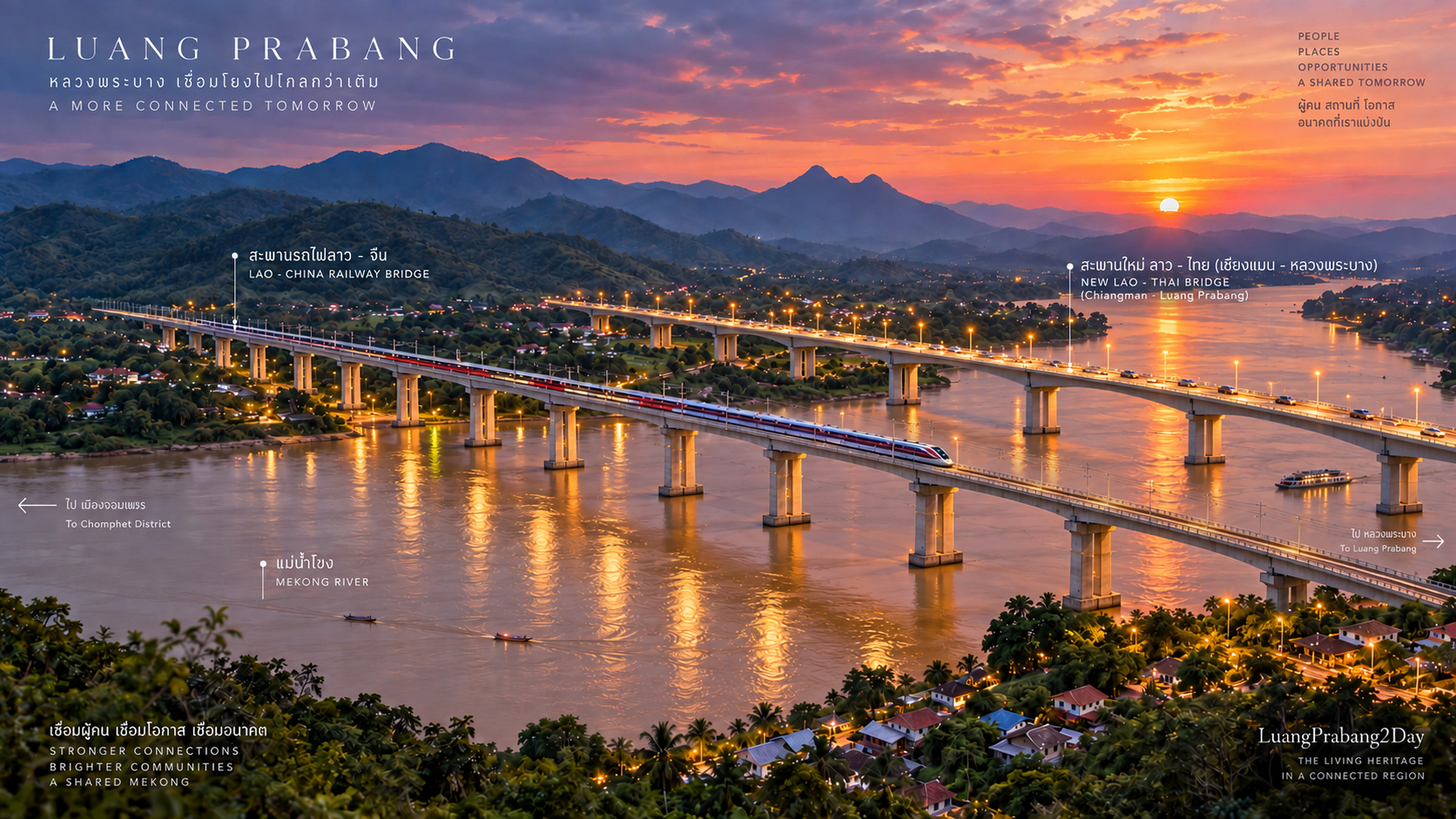
Image for Illustration Only

AI-generated conceptual visualization by LuangPrabang2Day. It is not an actual photograph or an official project rendering.


จากแพข้ามฟาก สู่การเชื่อมต่อระดับภูมิภาค

เมื่อหลวงพระบางกำลังเข้าสู่เครือข่ายใหม่ระหว่างไทย ลาว และจีน

หลวงพระบางวันนี้ — โครงสร้างพื้นฐานและมรดกที่มีชีวิต

สำหรับหลวงพระบาง แม่น้ำโขงไม่เคยเป็นเพียงเส้นแบ่งระหว่างสองฝั่ง

แม่น้ำคือเส้นทาง เป็นภูมิทัศน์ และเป็นส่วนหนึ่งของจังหวะชีวิตของผู้คน

วันนี้ ความสัมพันธ์ระหว่างหลวงพระบางกับฝั่งเมืองจอมเพชรกำลังเข้าสู่บทใหม่ เมื่อคณะรัฐมนตรีไทยมีมติเห็นชอบการให้ความช่วยเหลือทางการเงินแก่รัฐบาล สปป.ลาว วงเงินรวม 1,783,671,500 บาท สำหรับโครงการก่อสร้าง สะพานเชียงแมน–หลวงพระบาง เมื่อวันที่ 8 กันยายน 2569

มติของฝ่ายไทยครั้งนี้เป็นส่วนหนึ่งของความร่วมมือด้านโครงสร้างพื้นฐานระหว่างไทยและ สปป.ลาว ซึ่งมีการศึกษา ออกแบบ และประสานงานร่วมกันมาอย่างต่อเนื่อง โครงการนี้เริ่มต้นจากการที่กระทรวงการเงิน สปป.ลาว ขอรับความช่วยเหลือทางวิชาการจากฝ่ายไทยอย่างเป็นทางการตั้งแต่ปี 2561 และต่อมามีการจัดทำการศึกษาความเป็นไปได้และออกแบบรายละเอียดโครงการ

ในปี 2567 งานออกแบบรายละเอียดโครงการได้ดำเนินมาถึงขั้นส่งมอบผลการศึกษา โดยมีผู้แทนจากฝ่ายไทยและหน่วยงานโยธาธิการและขนส่งของแขวงหลวงพระบางเข้าร่วมกระบวนการดังกล่าว

การเห็นชอบด้านการเงินของฝ่ายไทยในปี 2569 จึงถือเป็นอีกก้าวสำคัญของความร่วมมือที่กำลังเดินหน้าไปสู่การดำเนินโครงการในระยะต่อไป


สะพานข้ามแม่น้ำโขง

โครงการสะพานเชียงแมน–หลวงพระบางมีเป้าหมายเพื่อเชื่อมพื้นที่บ้านเชียงแมนในเมืองจอมเพชรกับหลวงพระบาง และเชื่อมต่อกับโครงข่ายถนนทางเหนือของลาว

เส้นทางนี้มีความสำคัญต่อการเชื่อมโยงจาก จังหวัดน่าน ผ่านด่านห้วยโก๋น เมืองหงสา เมืองจอมเพชร และบ้านเชียงแมน เข้าสู่หลวงพระบาง

ก่อนหน้านี้ ถนนจากเมืองหงสาไปยังบ้านเชียงแมนได้เปิดใช้งานแล้ว แต่การเดินทางเข้าสู่หลวงพระบางยังต้องข้ามแม่น้ำโขงด้วยแพขนานยนต์ ทำให้การเดินทางมีข้อจำกัดด้านเวลาและความต่อเนื่อง

หากสะพานแห่งใหม่เกิดขึ้นตามโครงการ การเดินทางระหว่างสองฝั่งจะเปลี่ยนจากการรอแพและข้ามแม่น้ำ ไปสู่การเดินทางบนโครงข่ายถนนที่ต่อเนื่องมากขึ้น

ฝ่ายไทยระบุว่า สะพานจะช่วยลดเวลาเดินทางระหว่างเส้นทางจังหวัดน่านกับหลวงพระบางลงประมาณ 30–45 นาที และช่วยให้การขนส่งสินค้าเดินทางได้ง่าย สะดวก และปลอดภัยมากขึ้น

ในระดับท้องถิ่น นี่คือการลดเวลาเดินทาง

แต่เมื่อมองในระดับภูมิภาค ความหมายของสะพานอาจกว้างกว่านั้น


จากสะพาน สู่เครือข่ายที่ใหญ่ขึ้น

สะพานเชียงแมน–หลวงพระบางไม่ได้เกิดขึ้นอย่างโดดเดี่ยว

ทางหนึ่งเชื่อมต่อกับภาคเหนือของประเทศไทย

อีกทางหนึ่งเข้าสู่เครือข่ายถนนของ สปป.ลาว

และจากหลวงพระบาง เครือข่าย รถไฟลาว–จีน ได้เพิ่มช่องทางสำคัญในการเดินทางและการขนส่งระหว่างลาวกับจีน

เมื่อถนน สะพาน และทางรถไฟเชื่อมโยงกันมากขึ้น เราอาจเริ่มมองหลวงพระบางในตำแหน่งที่แตกต่างออกไป

จากเมืองปลายทาง

สู่ จุดเชื่อมต่อ

จากสถานที่ที่ผู้คนเดินทางมาเยือน

สู่สถานที่ที่ผู้คน สินค้า การท่องเที่ยว และกิจกรรมทางเศรษฐกิจสามารถเดินทางผ่านและเชื่อมต่อกัน

นี่คือการเปลี่ยนแปลงทางภูมิศาสตร์ที่สำคัญกว่าตัวสะพานเพียงแห่งเดียว


การท่องเที่ยวอาจเป็นเพียงจุดเริ่มต้น

ผลที่เห็นได้ง่ายที่สุดของการเชื่อมต่อที่ดีขึ้นอาจอยู่ที่การท่องเที่ยว

นักเดินทางจากภาคเหนือของประเทศไทยสามารถเข้าถึงหลวงพระบางได้สะดวกขึ้น ขณะเดียวกัน นักเดินทางจากจีนสามารถเดินทางมายังหลวงพระบางด้วยรถไฟ และเชื่อมต่อไปยังพื้นที่อื่นของลาวและภูมิภาคโดยรอบ

ในอนาคต เส้นทางการเดินทางอาจไม่ได้ถูกมองเพียงในกรอบของประเทศใดประเทศหนึ่ง

แต่อาจเป็นเส้นทางเช่น

ภาคเหนือของประเทศไทย → หลวงพระบาง → ภาคเหนือของลาว → จีน

หรือในอีกทิศทางหนึ่ง

จีน → หลวงพระบาง → เมืองจอมเพชร → ภาคเหนือของประเทศไทย

เมื่อเส้นทางเหล่านี้เชื่อมต่อกันมากขึ้น หลวงพระบางก็มีโอกาสเข้าไปอยู่ใน วงจรการท่องเที่ยวระดับภูมิภาค ที่กว้างขึ้น

รัฐบาลไทยเองประเมินว่า ในช่วง 5 ปีแรก โครงการอาจช่วยเพิ่มจำนวนนักท่องเที่ยวที่เดินทางมายังจังหวัดน่านเฉลี่ยประมาณ 80,000 คนต่อปี และสร้างรายได้เพิ่มเฉลี่ยประมาณ 360 ล้านบาทต่อปี

ตัวเลขเหล่านี้เป็นการประมาณการของฝ่ายไทย ไม่ใช่ผลลัพธ์ที่เกิดขึ้นแล้ว

แต่สิ่งที่น่าสนใจกว่าตัวเลขอาจเป็นการเปลี่ยนแปลงของ รูปแบบการเดินทาง

เมื่อการเดินทางระหว่างพื้นที่ต่าง ๆ ง่ายขึ้น นักท่องเที่ยวหนึ่งคนอาจไม่ได้เดินทางเพียงประเทศเดียวอีกต่อไป


เมื่อการเชื่อมต่อดึงดูดการลงทุน

นักท่องเที่ยวไม่ใช่สิ่งเดียวที่เดินทางตามเส้นทางใหม่

เงินทุนก็สามารถเดินทางตามการเชื่อมต่อได้เช่นกัน

เมื่อการเดินทางของผู้คน สินค้า และบริการสะดวกขึ้น พื้นที่ที่เคยอยู่ห่างจากเส้นทางหลักอาจได้รับความสนใจมากขึ้นจากธุรกิจและนักลงทุน

สำหรับหลวงพระบางและเมืองจอมเพชร สิ่งนี้อาจสร้างโอกาสใหม่ในหลายด้าน

  • โรงแรมและที่พัก
  • ร้านอาหารและอาหารท้องถิ่น
  • การขนส่งและโลจิสติกส์
  • งานหัตถกรรม
  • สินค้าท้องถิ่น
  • เศรษฐกิจสร้างสรรค์
  • ประสบการณ์การท่องเที่ยว
  • ธุรกิจบริการ
  • การลงทุนด้านอสังหาริมทรัพย์

แต่ connectivity ไม่ได้หมายความว่าการลงทุนทุกประเภทจะเหมาะสมกับเมือง

เงินทุนสามารถสร้างงาน สร้างรายได้ และสร้างโอกาสใหม่

แต่ในเวลาเดียวกัน เงินทุนก็สามารถเปลี่ยนราคาที่ดิน รูปแบบการใช้พื้นที่ และโครงสร้างของชุมชนได้

คำถามจึงไม่ควรมีเพียงว่า

“จะมีการลงทุนเข้ามามากเท่าไร?”

แต่ควรถามด้วยว่า

“การลงทุนแบบใดที่สามารถสร้างคุณค่าให้กับหลวงพระบางและชุมชนในระยะยาว?”


หลวงพระบางบนภูมิศาสตร์เศรษฐกิจใหม่

เมื่อมองภาพกว้างขึ้น เราอาจเห็นเครือข่ายใหม่ที่กำลังก่อตัวขึ้นระหว่างสามพื้นที่

ภาคเหนือของประเทศไทย

ตลาด นักเดินทาง สินค้า และกิจกรรมทางเศรษฐกิจ

↓

หลวงพระบางและภาคเหนือของลาว

การท่องเที่ยว วัฒนธรรม การค้า และบริการ

↓

จีน

ตลาดขนาดใหญ่ การค้า เงินทุน และเครือข่ายรถไฟ

ในภาพนี้ สะพานเชียงแมน–หลวงพระบางอาจเป็นอีกหนึ่งชิ้นส่วนของระบบการเชื่อมต่อที่กำลังขยายตัวในภูมิภาค

ความสำคัญของสะพานจึงอาจไม่ได้อยู่เพียงการลดเวลาเดินทาง 30–45 นาที

แต่อยู่ที่การเปลี่ยน ตำแหน่งของหลวงพระบางบนแผนที่เศรษฐกิจของภูมิภาค

ในอีก 10 หรือ 20 ปีข้างหน้า หลวงพระบางจะยังคงเป็นเพียงเมืองปลายทางทางวัฒนธรรม หรือจะกลายเป็นหนึ่งในจุดเชื่อมต่อสำคัญของเศรษฐกิจลุ่มน้ำโขงตอนบน?

วันนี้ยังไม่มีคำตอบ

แต่โครงสร้างพื้นฐานใหม่กำลังทำให้คำถามนี้มีความสำคัญมากขึ้น


แต่การเชื่อมต่อไม่ควรกลายเป็นตัวตนของเมือง

นี่อาจเป็นคำถามที่สำคัญที่สุด

หลวงพระบางไม่ใช่เมืองที่หยุดนิ่งอยู่ในอดีต

เมืองเปลี่ยนแปลงมาโดยตลอด ผ่านการค้า การเดินทาง ศาสนา ผู้คน และความสัมพันธ์กับโลกภายนอก

ดังนั้น การพัฒนาไม่จำเป็นต้องถูกมองว่าเป็นฝ่ายตรงข้ามกับการอนุรักษ์

สิ่งสำคัญกว่าคือ เราจะจัดการกับการเปลี่ยนแปลงอย่างไร

มรดกของหลวงพระบางไม่ได้อยู่เฉพาะในวัด อาคารเก่า หรือสถานที่สำคัญ

มันยังอยู่ใน

แม่น้ำ

ชุมชน

ตลาด

อาหาร

งานฝีมือ

พิธีกรรม

ภูมิทัศน์

และวิถีชีวิตที่ยังคงดำเนินต่อไป

นี่คือ มรดกที่มีชีวิต

เมื่อ connectivity เพิ่มขึ้น สิ่งเหล่านี้ไม่ได้หายไปในทันที

แต่เงื่อนไขที่ทำให้สิ่งเหล่านี้ดำรงอยู่สามารถเปลี่ยนแปลงได้

และนั่นคือสิ่งที่หลวงพระบางจำเป็นต้องเฝ้ามอง


จากแพสู่สะพาน

วันนี้ การข้ามแม่น้ำโขงยังคงมีจังหวะของมันเอง

การรอแพ

การขึ้นเรือ

การข้ามน้ำ

การมองกลับไปยังเมืองจากอีกฝั่ง

สะพานจะทำให้การเดินทางเร็วขึ้น ง่ายขึ้น และเชื่อมต่อมากขึ้น หากโครงการเดินหน้าสู่การก่อสร้าง

ในเวลาเดียวกัน มันอาจทำให้พื้นที่ทั้งสองฝั่งของแม่น้ำเข้าใกล้กันในทางเศรษฐกิจมากกว่าที่เคย

จากเส้นทางท้องถิ่น

สู่ เส้นทางเชื่อมต่อระดับภูมิภาค

จากเมืองปลายทาง

สู่ จุดเชื่อมต่อระดับภูมิภาค

จากการเชื่อมสองฝั่งของแม่น้ำ

สู่เครือข่ายที่กว้างขึ้นระหว่าง ประเทศไทย ลาว และจีน

นี่คือโอกาส

แต่ก็เป็นความรับผิดชอบเช่นกัน

เพราะหลวงพระบางไม่ได้มีคุณค่าเพียงเพราะสามารถเดินทางมาถึงได้ง่าย

ผู้คนเดินทางมาที่นี่เพราะ มีบางสิ่งที่ยังคงอยู่

ดังนั้น คำถามในอนาคตอาจไม่ใช่เพียง

“สะพานจะนำผู้คนเข้ามาหลวงพระบางมากขึ้นเท่าไร?”

แต่อาจเป็นคำถามที่สำคัญกว่า

“เมื่อผู้คน เงินทุน และการค้าสามารถเดินทางผ่านหลวงพระบางได้ง่ายขึ้น เราต้องการให้สิ่งเหล่านั้นเปลี่ยนเมืองนี้ไปในทิศทางใด?”

LuangPrabang2Day — ว่าด้วยความต่อเนื่อง การนำเสนอ และการทูตทางวัฒนธรรม


แหล่งข้อมูลอย่างเป็นทางการ

  • รัฐบาลไทย — มติคณะรัฐมนตรี วันที่ 8 กันยายน 2569: ระบุการเห็นชอบความช่วยเหลือทางการเงินจำนวน 1,783,671,500 บาท และประโยชน์ด้านการเชื่อมโยง การค้า และการท่องเที่ยว
  • สำนักงานความร่วมมือพัฒนาเศรษฐกิจกับประเทศเพื่อนบ้าน (สพพ.) — ข้อมูลโครงการและงานออกแบบรายละเอียดสะพานเชียงแมน–หลวงพระบาง
  • สพพ. — ข้อมูลการทำงานร่วมกับหน่วยงานโยธาธิการและขนส่งของแขวงหลวงพระบางในกระบวนการออกแบบโครงการ

หมายเหตุจากกองบรรณาธิการ

บทความนี้รายงาน มติของฝ่ายไทยเกี่ยวกับความช่วยเหลือทางการเงิน และนำโครงการมาพิจารณาในบริบทของการเชื่อมต่อระดับภูมิภาค โดยไม่ได้หมายความว่าการก่อสร้างได้เริ่มต้นขึ้นแล้ว

โครงการสะพานเชียงแมน–หลวงพระบางมีการศึกษา ออกแบบ และประสานงานระหว่างหน่วยงานไทยและลาวมาอย่างต่อเนื่อง ดังนั้น มติด้านการเงินครั้งล่าสุดจึงควรมองเป็น อีกก้าวหนึ่งของกระบวนการความร่วมมือ ที่กำลังเดินหน้าอยู่

ภาพประกอบเพื่อการจินตนาการเท่านั้น
ภาพสร้างด้วย AI โดย LuangPrabang2Day เพื่อแสดงภาพเชิงแนวคิดของการเชื่อมต่อในอนาคต ภาพนี้ไม่ใช่ภาพถ่ายจริงหรือภาพจำลองอย่างเป็นทางการของโครงการ

Subscribe to: Posts ( Atom )

Pages

  • EDITORIAL FRAMEWORK
  • MEDIA CHARTER
  • CULTURAL GOVERNANCE
  • RITUAL INFRASTRUCTURE
  • PROFESSIONAL STANDARDS
  • STEWARDSHIP
  • ABOUT
  • CONTACT US
LaoSEO
Digital for Everyone
BUSINESS TECHNOLOGY & AI AUTOMATION
01
Remote IT Support
ໃຫ້ບໍລິການ Remote IT Help Desk ແກ້ໄຂບັນຫາ IT ຜ່ານລະບົບອອນໄລນ໌ ຕາມມາດຕະຖານສາກົນ ITIL 4 ຢ່າງວ່ອງໄວ ໂດຍບໍ່ຕ້ອງຖ້ານັກວິຊາການລົງພື້ນທີ່.
100% Remote Help Desk & Online IT Operations managed via ITIL 4 framework for fast response time.
Remote Help Desk • Incident Management • Problem Management • Service Requests • ITIL 4 Aligned
02
Network & Business Systems
ວາງລະບົບ, ກວດສອບ ແລະ ປັບປຸງ Network ພ້ອມລະບົບ IT ເຊັ່ນ PMS/POS ສຳລັບໂຮງແຮມ, ຮ້ານອາຫານ ແລະ ທຸລະກິດ.
Infrastructure setup & Optimization for Hotels, Restaurants, and Enterprise Systems.
Wi-Fi & Network • CCTV • Phone System • PMS / POS • Server & Cloud
03
Cybersecurity & Risk Control
ຊ່ວຍທຸລະກິດກວດສອບ, ປ້ອງກັນເງິນລົ່ວໄຫຼ ແລະ ຫຼຸດຄວາມສ່ຽງດ້ານ Cybersecurity ພ້ອມປົກປ້ອງຂໍ້ມູນສຳຄັນ.
System Audits, Risk Mitigation, Financial Leakage Protection, and Data Privacy.
Security Assessment • Risk & Controls • Firewall & VLAN • Backup • Security Awareness
04
AI, Data & Business Automation
ປ່ຽນວຽກເອກະສານ ແລະ ການປ້ອນຂໍ້ມູນດ້ວຍມື ໃຫ້ເປັນລະບົບອັດຕະໂນມັດດ້ວຍ AI + OCR, ເຊື່ອມຕໍ່ Excel/CSV ເຂົ້າ MySQL ແລະ ອອກລາຍງານ Real-time Dashboard.
AI Document OCR, Automated Data Entry to Excel & MySQL, API Integration, and Executive Analytics Dashboards.
AI Document Reading (OCR) • Excel Automation • MySQL Database • API Integration • Business Dashboards
05
Websites, SEO & AI Search
ສ້າງຕົວຕົນອອນລາຍ ແລະ ເພີ່ມຍອດຂາຍຜ່ານເວັບໄຊທີ່ຮອງຮັບ Google SEO, GEO ແລະ AI Search Engine ພ້ອມການສ້າງເນື້ອຫາດ້ວຍ AI.
Brand Visibility Expansion via Website Development, SEO, AI Content Generation, and Next-Gen AI Search Engine Optimization.
Website Development • SEO & GEO • AEO • AI Search • AI Content • Growth Automation
ຫຼຸດວຽກຊ້ຳໆ ເພີ່ມເວລາໃຫ້ທຸລະກິດດ້ວຍ AI
ປຶກສາການປັບປ່ຽນວຽກເອກະສານ ແລະ ລະບົບ IT ໃຫ້ເປັນອັດຕະໂນມັດ ໂດຍບໍ່ຕ້ອງປ່ຽນລະບົບເກົ່າທັງໝົດ.
ປຶກສາຟຣີຜ່ານ Facebook →
**History is meaningful only when it can be verified. Since 2007, LuangPrabang2Day — Luang Prabang Today has documented the evolving story of Luang Prabang through original documentary photography, community archives, editorial publications, and long-term field observation. This page presents verifiable evidence of the platform's continuous development over nearly two decades, including historical publications, archived community discussions, original photographic documentation, and publicly accessible digital archives. Together, these records demonstrate an ongoing commitment to documenting, understanding, and preserving the living cultural heritage of Luang Prabang.
  • Read More
  • Popular Posts

    • Lao New Year Documentary Collection — Set 3 The Hae Vor parade (ຂະບວນແຫ່ວໍ່) — Nang Sangkane 2026
    • Lao New Year Documentary Collection — Set 2 The Buddha Water Blessing Ceremony (ພິທີສົງນໍ້າພະ)
    • The Hae Vor Parade Lao New Year in Luang Prabang 2026
    • Lao New Year Documentary Collection — Set 1 Traditional Market Fair
    • Bangkok to Luang Prabang by Train (2026 Guide)
    • The Laos–China Railway Experience
    • Nang Sangkane 2025
    • The Two-Hour Shift: Chasing the Mekong Rhythms on the Laos–China Railway
    • กรุงเทพ → หลวงพระบาง โดยรถไฟ (คู่มือสมบูรณ์ 2026)
    • Why Luang Prabang Needs Cultural Diplomacy and Governance — Not More Promotion

    Blog Archive

    • ▼  2026 (75)
      • ▼  October (2)
        • The Spectacular Nights of Luang Prabang: The Boat ...
        • The End of Buddhist Lent: Luang Prabang’s Boat Lig...
      • ►  September (5)
        • ลาวกำลังสร้าง “เครือข่ายรถไฟ” ไม่ใช่แค่ “ทางรถไฟสา...
        • Laos Is Building a Railway Network, Not Just a Rai...
        • Boat Racing Festival 2026
        • From Ferry Crossing to Regional Connectivity
        • จากแพข้ามฟาก สู่การเชื่อมต่อระดับภูมิภาค
      • ►  August (2)
      • ►  July (9)
      • ►  June (4)
      • ►  May (1)
      • ►  April (9)
      • ►  March (21)
      • ►  February (13)
      • ►  January (9)
    • ►  2024 (27)
      • ►  December (3)
      • ►  November (1)
      • ►  September (23)
    • ►  2019 (10)
      • ►  November (5)
      • ►  October (2)
      • ►  July (3)
    • ►  2018 (15)
      • ►  August (2)
      • ►  July (1)
      • ►  June (11)
      • ►  March (1)
    • ►  2017 (18)
      • ►  December (4)
      • ►  November (4)
      • ►  May (1)
      • ►  April (1)
      • ►  March (4)
      • ►  February (4)
    • ►  2011 (5)
      • ►  December (4)
      • ►  February (1)
    • ►  2010 (13)
      • ►  October (1)
      • ►  September (1)
      • ►  July (2)
      • ►  April (4)
      • ►  March (5)
    • ►  2009 (10)
      • ►  September (2)
      • ►  July (1)
      • ►  May (1)
      • ►  April (3)
      • ►  March (2)
      • ►  February (1)
    • ►  2008 (24)
      • ►  December (1)
      • ►  October (1)
      • ►  August (1)
      • ►  July (1)
      • ►  June (2)
      • ►  May (2)
      • ►  April (5)
      • ►  March (4)
      • ►  February (4)
      • ►  January (3)
    • ►  2007 (44)
      • ►  December (2)
      • ►  November (6)
      • ►  October (12)
      • ►  September (9)
      • ►  August (15)

    MENU

  • Home
  • Editorial Framework
  • MEDIA CHARTER
  • Cultural Governance
  • Ritual Infrastructure
  • Professional Standards
  • Stewardship
  • About
  • Contact Us
  • Legacy Archive (Since 2007)

    LuangPrabang2Day (Luang Prabang Today) was established online in 2007 as one of the earliest independent digital communities dedicated to documenting the people, culture, and living heritage of Luang Prabang.

    Our early discussions and community archives remain preserved through the LuangPrabang2Day (Luang Prabang Today) Legacy Forum Archive , providing a historical record of the platform's origins and its continuing commitment to documenting Luang Prabang.

    Established online since 2007 • Legacy Archive

    History: LuangPrabang2Day (Luang Prabang Today) has continuously documented the people, culture, traditions, and living heritage of Luang Prabang since 2007. For historical reference, our original community discussions remain accessible through the LuangPrabang2Day (Luang Prabang Today) Legacy Forum Archive .

    External References

    • UNESCO World Heritage Centre – World Heritage Convention
    • ICOMOS – International Council on Monuments and Sites
    • UNESCO – Culture and Heritage
    • Tourism Laos – National Level
    • Lao E-Visa – Official Government Site
    • Vientiane Times – National News and Context
    • LuangPrabang2Day.com – Independent cultural documentation and editorial observation

    © Luang Prabang 2Day – Heritage, Culture & System Insight

    Powered by Blogger.

    Report Abuse

    Search This Blog

    © 2007–2026 LuangPrabang2Day.com, ——An independent editorial platform based in Luang Prabang, Lao PDR — documenting living heritage through long-term observation, editorial interpretation, and cultural diplomacy.———Luang Prabang Today.–––– About the Platform • Editorial Principles • Privacy Policy • Observation Archive About • Editorial Policy • Contact • Terms and Conditions • Disclaimer