
The Laos–China Railway Experience
A Modern Journey Through the Heart of Mainland Southeast Asia
The Laos–China Railway (LCR), also known as the Boten–Vientiane Railway, has transformed the geography of travel across Laos. For decades, journeys between the northern mountains and the Mekong plains required long hours on winding roads. Today, that same distance can be crossed in just a few hours.
Since its opening, the railway has reshaped how travelers experience the country—linking cities such as Vientiane, Vang Vieng, and Luang Prabang with an infrastructure system designed for the twenty-first century.
Yet the railway is more than a transportation corridor. For many travelers, it is also an encounter with the changing landscape of mainland Southeast Asia.
Stations: The New Gateways
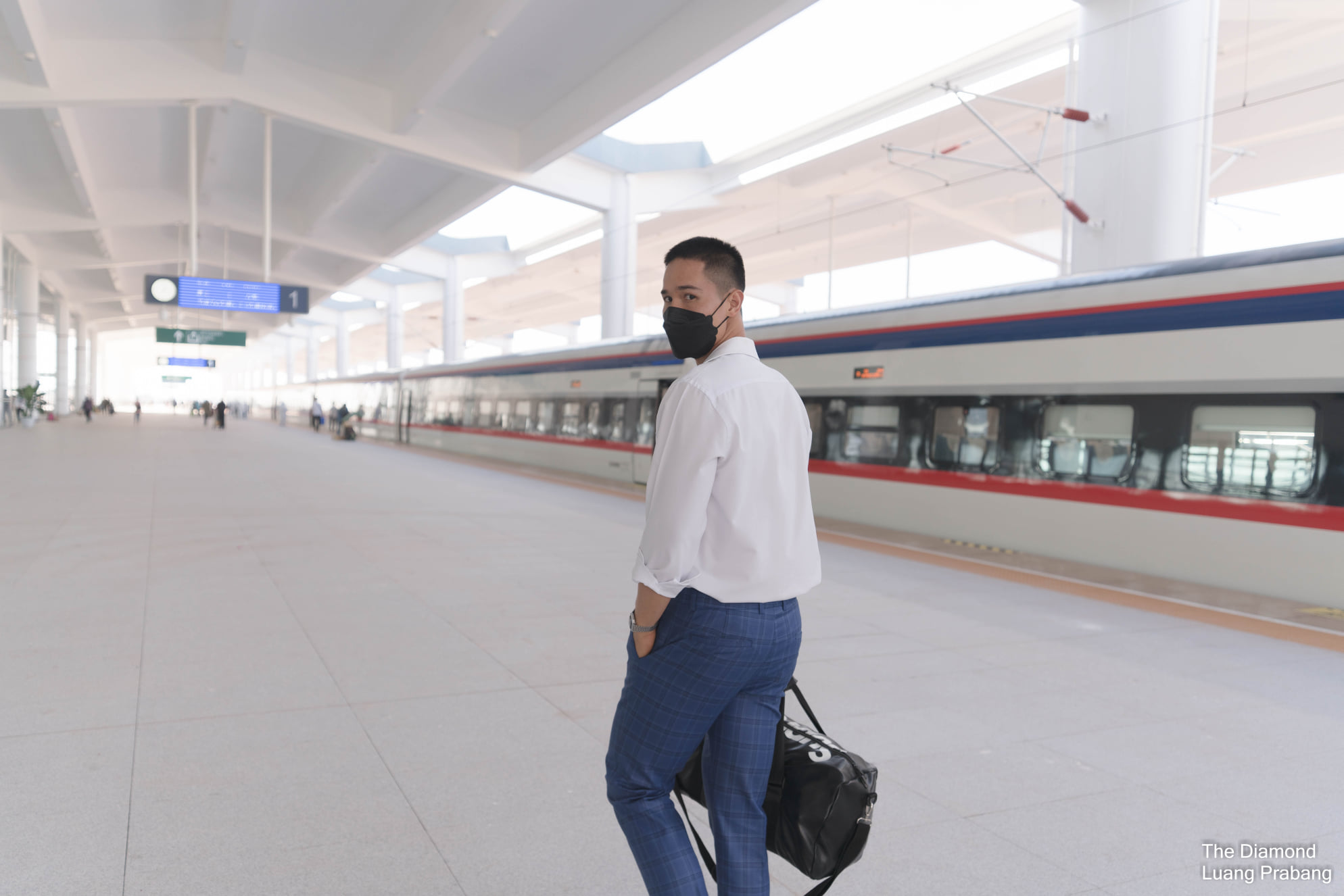
Arriving at an LCR station feels closer to entering an airport than a traditional train terminal.
Large modern structures stand at the edge of cities, combining Lao cultural design elements with contemporary engineering. Wide halls, digital departure boards, and structured passenger flows create an atmosphere of efficiency rarely seen in older regional railway networks.
Security procedures are strict. All baggage passes through scanning systems, and certain items—such as large knives, flammable liquids, and some aerosol products—are restricted.
Tickets are most easily purchased through the LCR Ticket mobile application, typically available three to seven days before departure.
Onboard the Lane Xang Trains
The trains themselves—known as Lane Xang EMU units—are designed for comfort and stability.
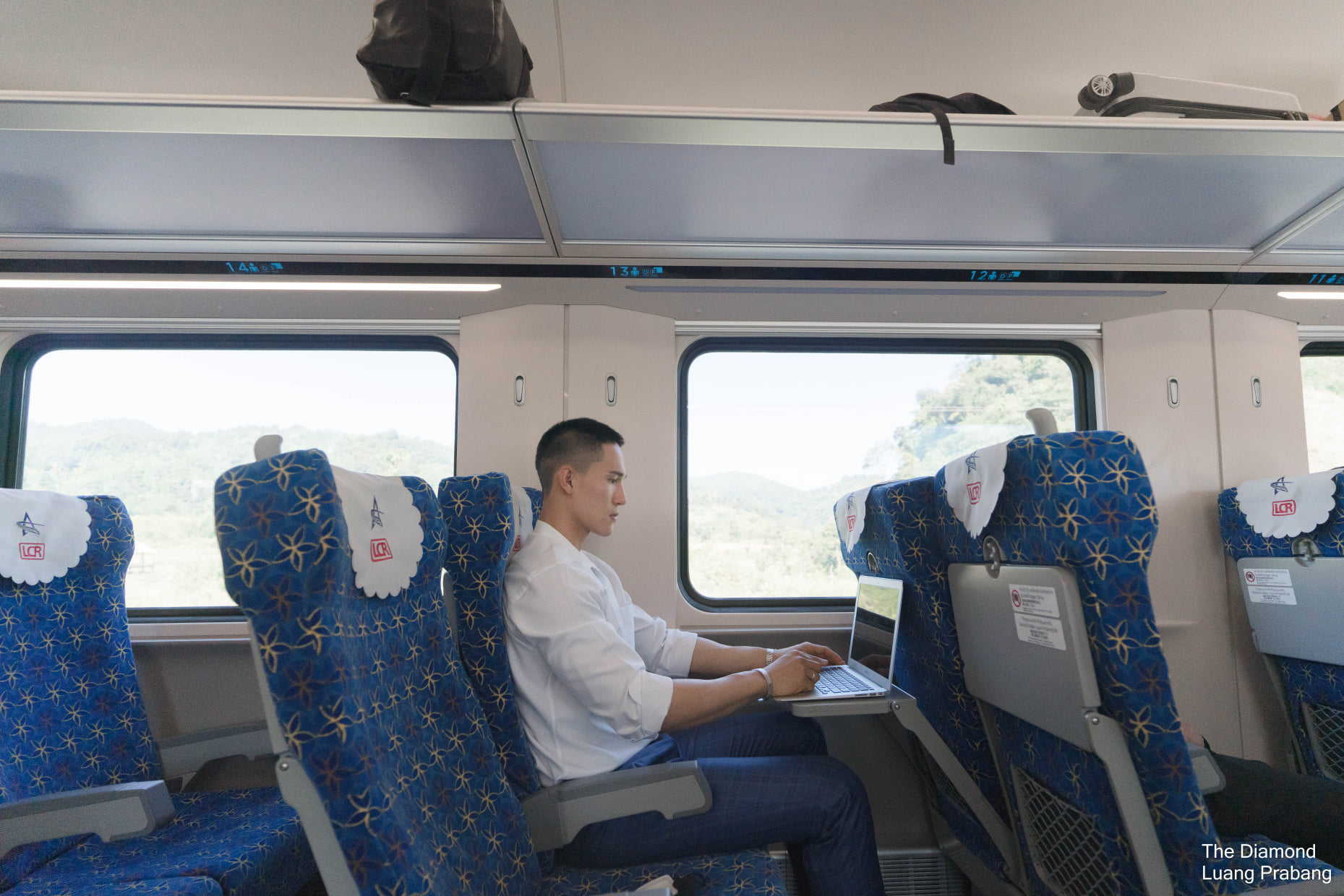
Inside the carriages, the environment is quiet and orderly. Air-conditioned cabins, wide seats, and electrical outlets make longer journeys comfortable for both work and leisure.
Two seating classes are available:
First Class offers a more spacious layout with quieter cabins.
Second Class uses a slightly denser seating configuration, though it remains comfortable and suitable for most travelers.
At cruising speeds of up to 160 km/h, the train moves smoothly through the mountainous terrain of northern Laos.
Announcements are provided in Lao, Chinese, and English, reflecting the international nature of the route.
Engineering Through the Mountains
Northern Laos is defined by rugged geography. Limestone karst formations rise sharply from the valleys, and dense forests cover the surrounding hills.
To overcome this terrain, the railway relies heavily on tunnels and bridges. More than half of the line passes either through mountains or across deep valleys.
For passengers, this creates a distinctive rhythm: long passages through tunnels followed by sudden openings where sunlight reveals dramatic landscapes outside the windows.
Between Vang Vieng and Luang Prabang, the scenery becomes particularly striking. Limestone peaks, forested slopes, and remote villages appear briefly between tunnels, offering glimpses of regions that were once extremely difficult to reach.
A Corridor Connecting Cultures
Perhaps the most significant impact of the railway lies in its ability to connect distant regions.
The route links the dynamic urban environment of Kunming in southern China with the slower, heritage-centered cities of Laos. Through this corridor, travelers move not only across borders, but across cultural and historical contexts.
At the international border stations of Mohan (China) and Boten (Laos), passengers complete immigration procedures before continuing their journey south or north.
By 2026, coordination between the two countries has streamlined these procedures, allowing most travelers to return to their seats and continue the journey with minimal delay.
Practical Notes for Travelers
Because many railway stations are located outside historic town centers, travelers should plan additional time for local transportation.
In Luang Prabang and Vientiane, shared vans and ride-hailing services such as LOCA connect stations with the city.
The trains include small refreshment services offering coffee and light snacks. However, passengers planning longer journeys may prefer to eat at the station beforehand.
For those interested in photography, window seats are recommended—especially along the segment between Vang Vieng and Luang Prabang, where mountain scenery becomes most dramatic.
Arrival
When the train finally slows at Luang Prabang station, the transition becomes immediately noticeable.
The modern infrastructure of the railway gradually gives way to the quieter atmosphere of the UNESCO-listed town. Within a short drive from the station, travelers find themselves among temple roofs, riverbanks, and tree-lined streets where the pace of life remains intentionally slower.
The railway has shortened distances across Laos.
But the spirit of Luang Prabang continues to move at its own rhythm.
ABOUT THE AUTHOR
Hello We are OddThemes, Our name came from the fact that we are UNIQUE. We specialize in designing premium looking fully customizable highly responsive blogger templates. We at OddThemes do carry a philosophy that: Nothing Is Impossible