The Two-Hour Shift: Chasing the Mekong Rhythms on the Laos–China Railway
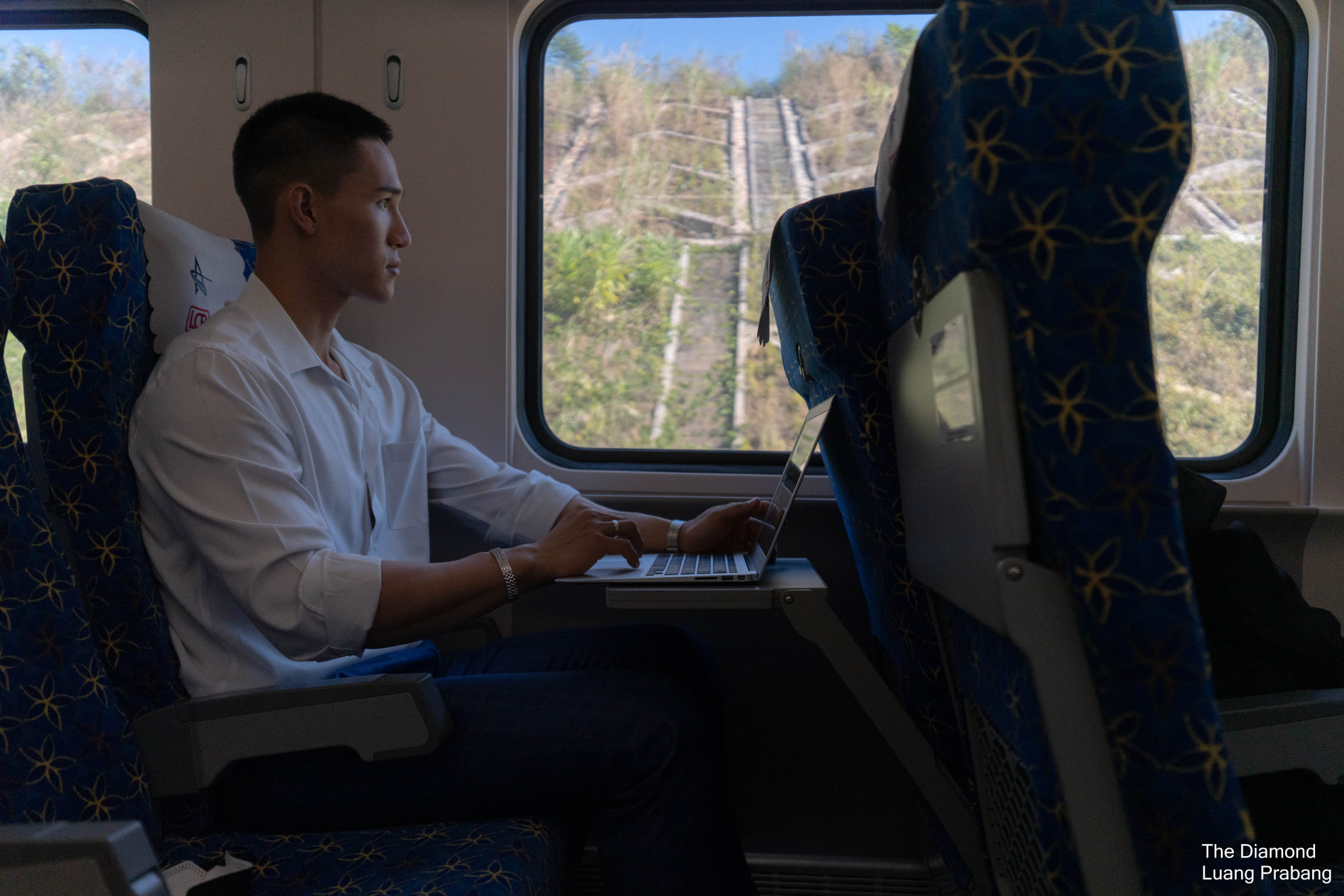
The Two-Hour Shift: Chasing the Mekong Rhythms on the Laos–China Railway
Editorial by LuangPrabang2Day
For decades, the journey from the administrative calm of Vientiane to the spiritual center of Luang Prabang was measured in winding mountain roads and long hours of travel. The road north was beautiful but demanding, crossing rivers, forests, and limestone passes that once defined the geography of northern Laos.
Today, that journey has quietly transformed.
As the morning light reaches the platforms of Vientiane Railway Station, a new rhythm begins. The soft mechanical hum of the electric train signals more than departure; it represents a new chapter in how Laos connects its landscapes, cities, and communities.
Within roughly two hours, the railway carries travelers from the capital into the mountainous heart of the country—arriving at Luang Prabang, a city whose cultural rhythms have evolved over centuries along the Mekong River.
The experience is not simply transportation. It is a transition between tempos of life.
The Gateway: Vientiane Railway Station
Located about 15 kilometers from the city center, Vientiane Railway Station stands as one of the most significant pieces of modern infrastructure in Laos. Its expansive hall, digital displays, and security systems reflect the technological scale of the Laos–China Railway.
Getting there is straightforward. Shuttle buses and taxis connect the station with the center of Vientiane in approximately thirty minutes.
Inside, the atmosphere resembles an international airport. Yet just beyond the station walls, rice fields and quiet villages remind visitors that they remain within a rural landscape shaped by agriculture and tradition.
Booking the Journey
For most travelers in 2026, train tickets are purchased through the LCR Ticket mobile application or at official railway counters.
Tickets generally become available three to seven days before departure, and popular departures often sell out quickly.
Second-class seats to Luang Prabang typically cost around 240,000 LAK, while first-class seating offers additional space and comfort at a higher fare.
Although the system is modern, travelers often discover that patience remains part of the experience—a small reminder that technological change and local rhythm continue to coexist.
Through the Mountains: A Moving Landscape
Once the train departs Vientiane, the flat plains surrounding the capital gradually give way to the dramatic terrain of northern Laos.
Karst mountains rise from the valleys, rivers carve through forested hillsides, and tunnels briefly interrupt the view before revealing new landscapes. The railway passes near Vang Vieng before continuing north through a series of bridges and tunnels that define this remarkable engineering corridor.
From the window, the journey becomes cinematic—an unfolding sequence of mountains, mist, and green valleys.
What once required an entire day of travel now becomes a fluid movement across geography.
Arrival in Luang Prabang
Luang Prabang Railway Station sits behind a ring of mountains approximately 25 minutes from the historic peninsula.
Outside the station, shared shuttle vans and taxis wait to transport passengers into the heritage district. The descent into town gradually reveals a different environment: red-tiled roofs, temple walls, frangipani trees, and streets that move at a noticeably slower pace.
The transition is immediate.
The train delivers travelers quickly, but the city receives them gently.
A Shift in Rhythm
The railway has shortened the distance between Vientiane and Luang Prabang, yet the cultural tempo of the city remains unchanged.
Morning alms ceremonies continue along quiet streets. Monasteries maintain their daily rhythms. The Mekong River flows past temple walls and wooden houses as it has for generations.
Arriving by train therefore offers a curious experience: a rapid journey into a place defined by patience and continuity.
The technology is new.
The rhythm of Luang Prabang is not.
Practical Train Information
| Train | Departure (Vientiane) | Arrival (Luang Prabang) | Notes |
|---|---|---|---|
| D88 | 08:08 | 09:53 | Early morning travelers |
| C92 | 09:50 | 11:51 | Mid-morning departure |
| C82 | 12:54 | 15:14 | Afternoon scenic ride |
Schedules may vary depending on operational adjustments, so travelers are encouraged to confirm current departures before travel.
Editorial Reflection
The Laos–China Railway has altered the geography of movement across the country. Distances have shortened, and access has expanded.
Yet Luang Prabang remains what it has always been: a place where time unfolds gently.
Two hours on the railway may bring you here.
Understanding the rhythm of the city may take much longer.
ABOUT THE AUTHOR
Hello We are OddThemes, Our name came from the fact that we are UNIQUE. We specialize in designing premium looking fully customizable highly responsive blogger templates. We at OddThemes do carry a philosophy that: Nothing Is Impossible