The Last Royal Silversmiths of Luang Prabang Documenting the Living Cultural Continuity of Lan Xang
The Last Royal Silversmiths of Luang Prabang
Documenting the Living Cultural Continuity of Lan Xang
A LuangPrabang2Day Original Documentary
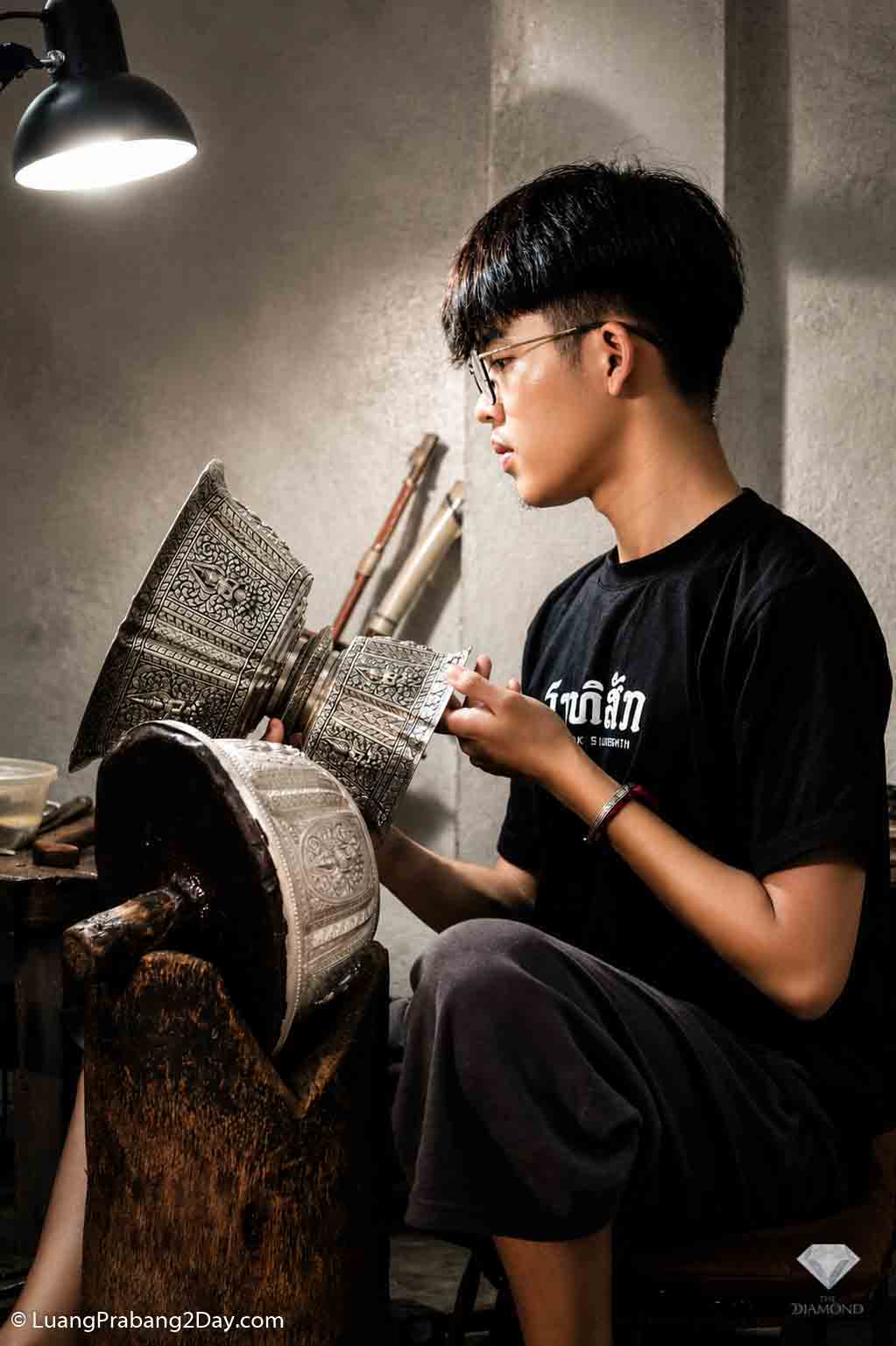
Caption
A single strike of the hammer is never merely a movement of the hand. It is the continuation of knowledge refined through generations of Lan Xang royal craftsmanship.
The Sound That Refuses to Disappear
The rhythmic sound of steel striking silver still echoes inside this modest workshop in the historic city of Luang Prabang.
Unlike the rapid pace of industrial production, every hammer strike here follows a rhythm inherited across generations. Each engraved line represents not only technical precision but also the continuation of a cultural language that has survived political change, economic transformation, and the arrival of modern manufacturing.
At Phothisak Rattanakorn Silver Workshop, craftsmanship remains entirely hand-made. Traditional hammers, chisels, punches, and hand-finishing techniques continue to shape every object, preserving a tradition whose roots reach deep into the former Royal Kingdom of Lan Xang.
The Royal Legacy
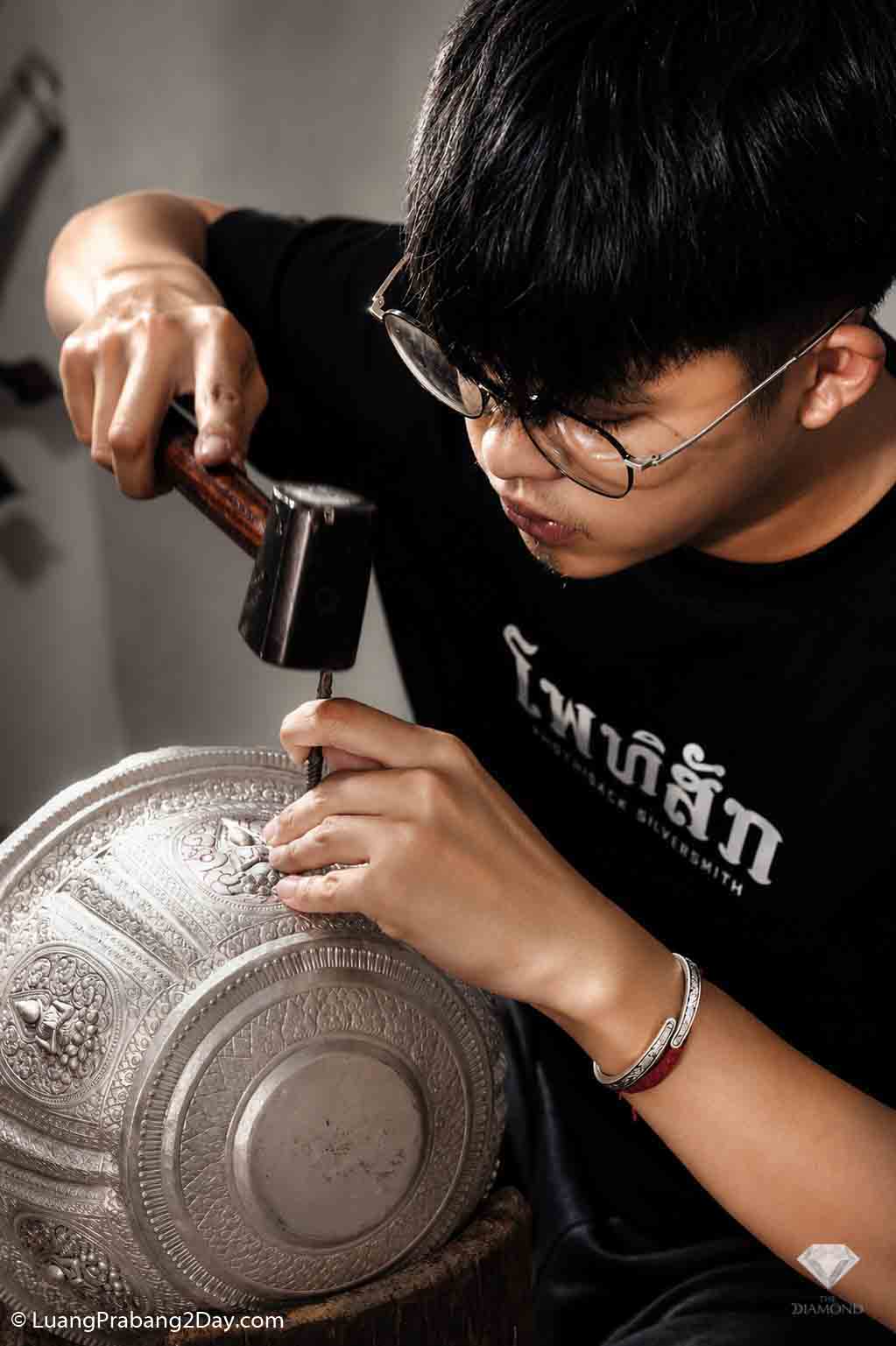
Caption
Every pattern begins with a single precise strike, repeated thousands of times until silver becomes heritage.
The history of this workshop extends beyond family tradition.
Its lineage traces back to
ທ່ານເພັຍສິດທິສັບພະຊ່າງ ເພັຍທອງ ຣັດຕະນະກອນ
who served as the Chief Royal Craftsman of the Royal Palace of Luang Prabang, entrusted with creating ceremonial gold and silver objects for the Lao royal court.
His workshop produced pieces that were not ordinary household objects, but ceremonial works associated with the monarchy, Buddhism, and state rituals.
Today, this artistic heritage continues through his great-grandchildren, who remain committed to preserving both the techniques and the philosophy inherited from their ancestors.
Rather than reproducing history, they continue living it.
The Rhythms of the Atelier
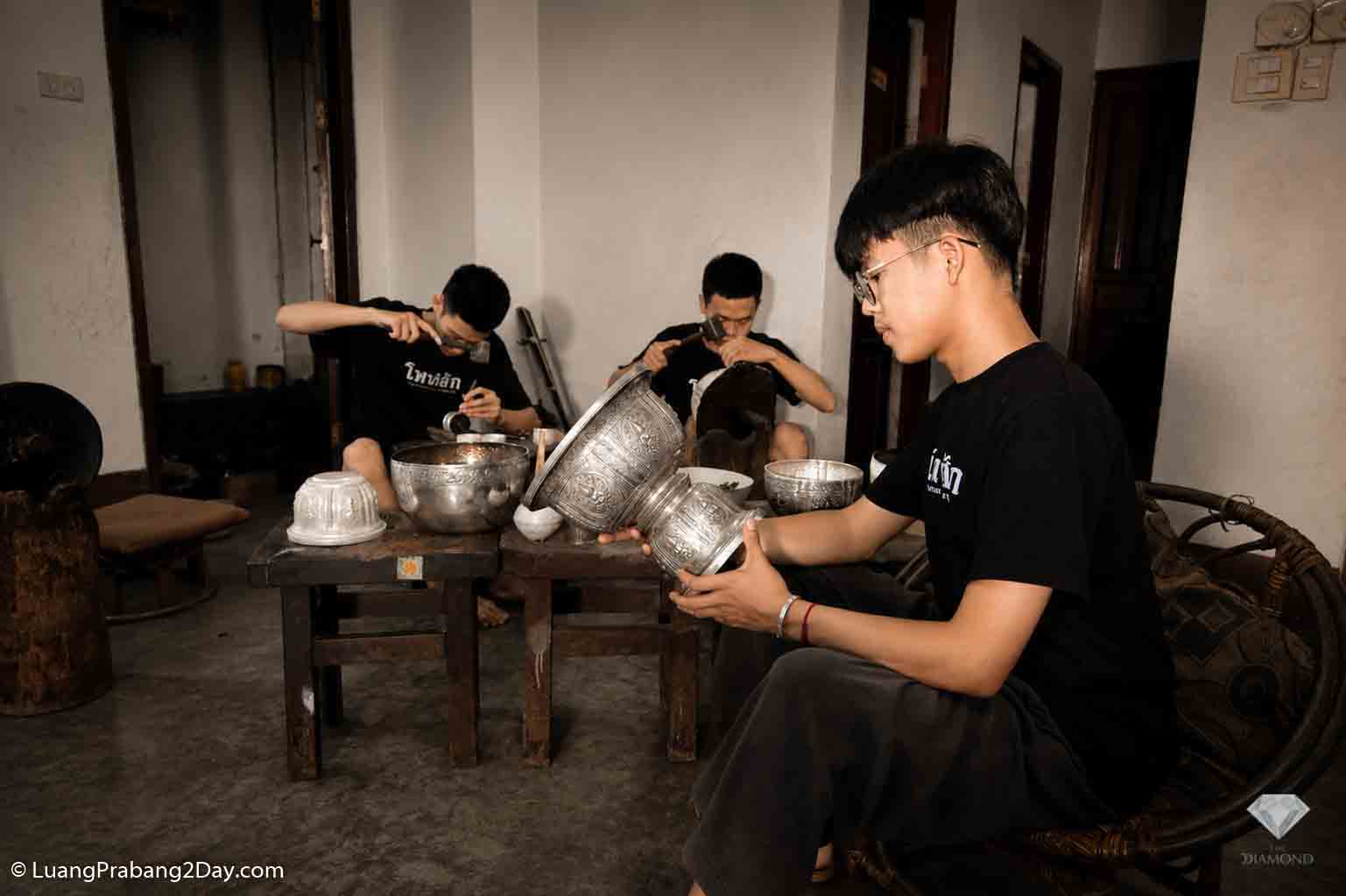
Caption
The workshop functions as a shared rhythm where every craftsman contributes to a larger tradition.
Walking inside the workshop reveals that silversmithing is never the work of a single individual.
One craftsman engraves.
Another shapes.
Another polishes.
Another inspects.
Each process requires different skills developed over many years.
Unlike industrial production lines designed for speed, this workshop is organized around patience, observation, and repetition.
Knowledge is transferred not primarily through written manuals, but through years of watching experienced craftsmen work beside younger apprentices.
The workshop itself becomes a living archive.
The Micro-Engineering of Silver
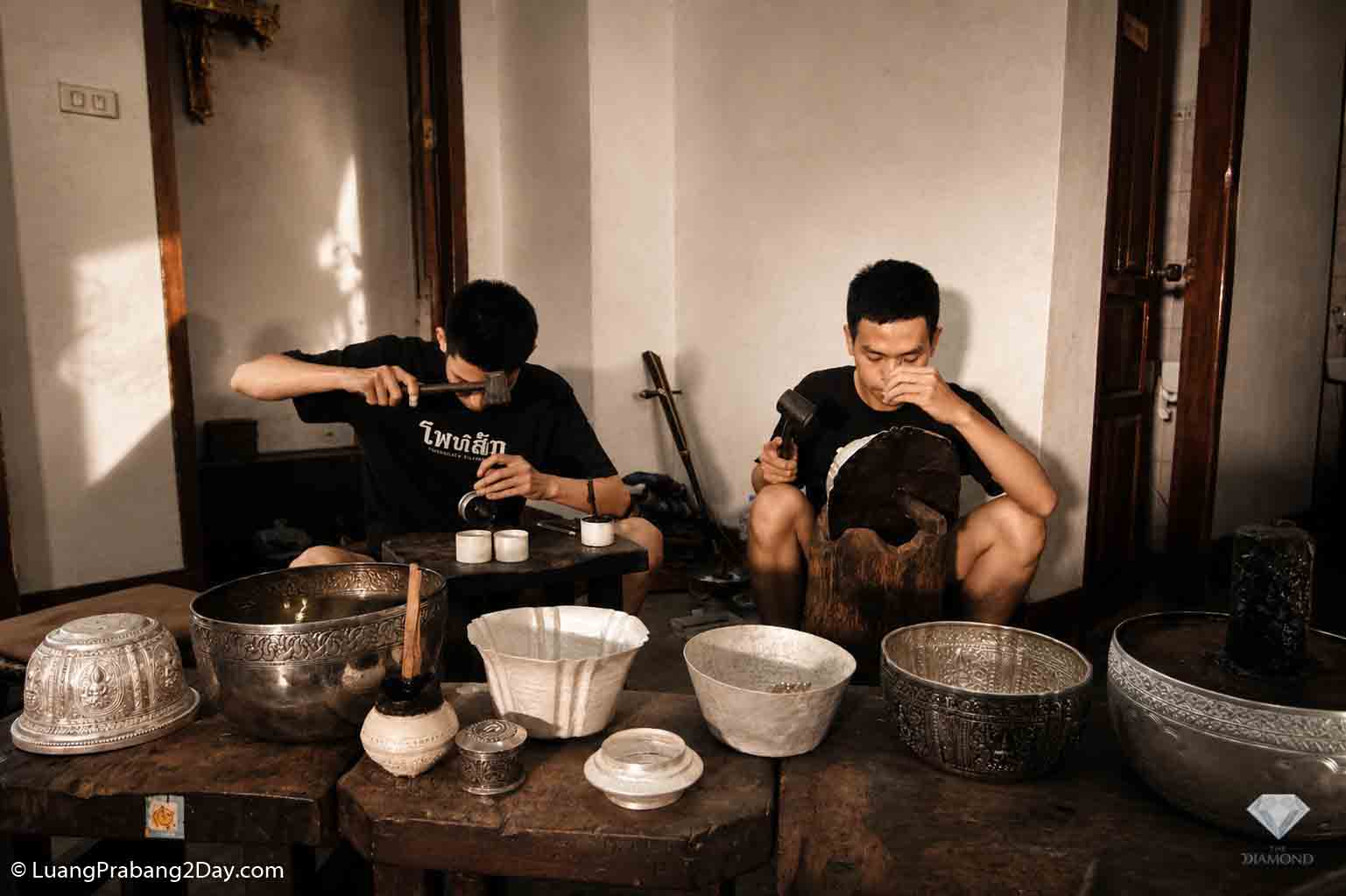
Caption
Centuries of craftsmanship survive through ordinary working days.
Many visitors admire the finished silverware without realizing the extraordinary level of precision required to create it.
Each decorative pattern is engraved individually.
Each line must maintain consistent depth.
Each curve must align with the surrounding ornament.
Mistakes cannot simply be erased.
The work demands concentration, steady breathing, and muscle memory developed through thousands of hours of practice.
The resulting objects embody both artistic beauty and technical mastery.
Objects That Carry Memory
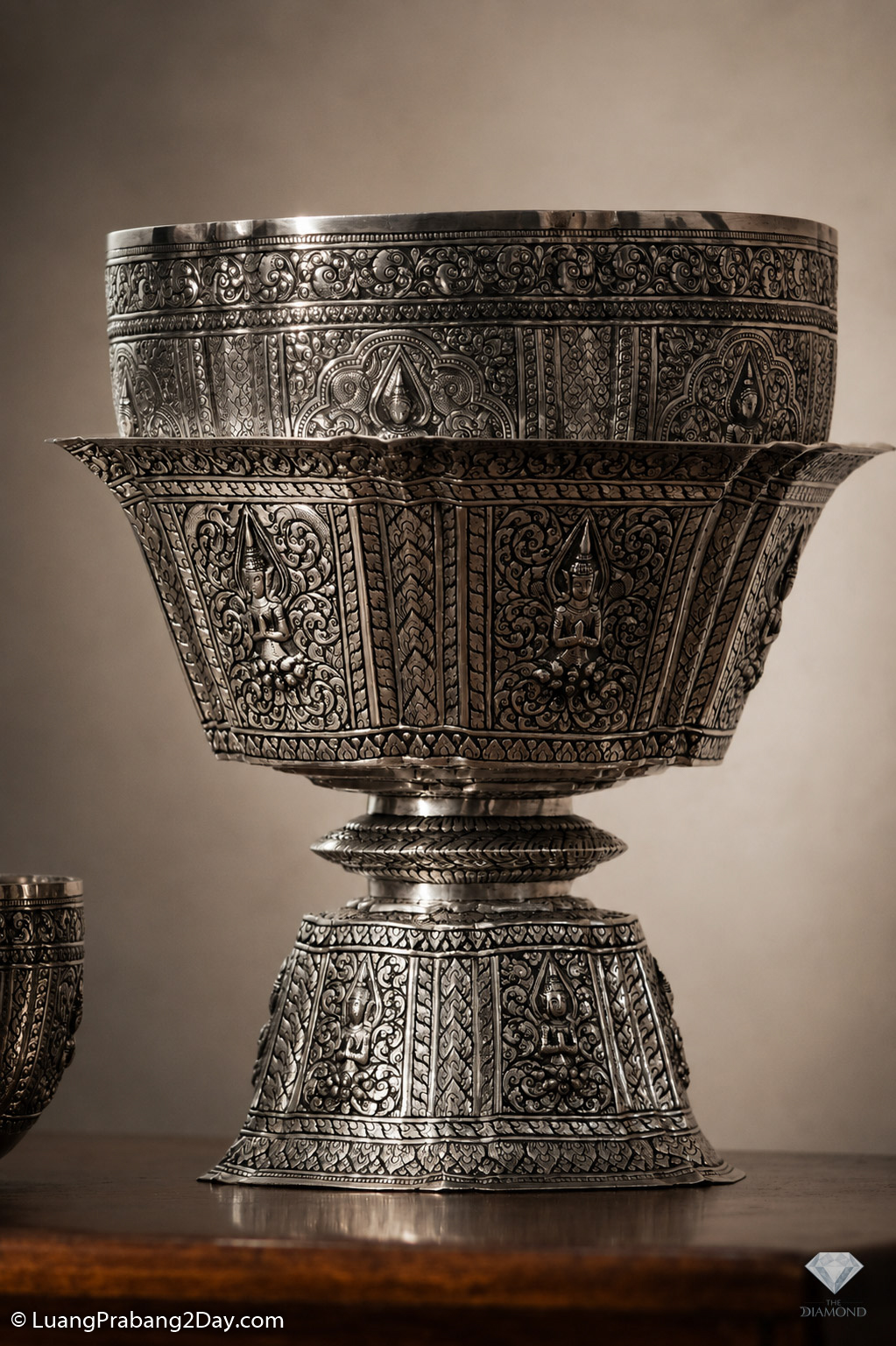
Caption
The finished vessel reflects not only artistic skill but generations of accumulated knowledge.
To many observers, these are beautiful silver bowls.
To the craftsmen, they are much more.
They represent inherited techniques, family history, Buddhist symbolism, and regional identity.
Every floral motif, every geometric border, and every sacred figure reflects a visual language developed over centuries within the Lan Xang cultural tradition.
These objects are therefore not simply decorative pieces.
They are cultural documents formed in silver.
A Living Collection
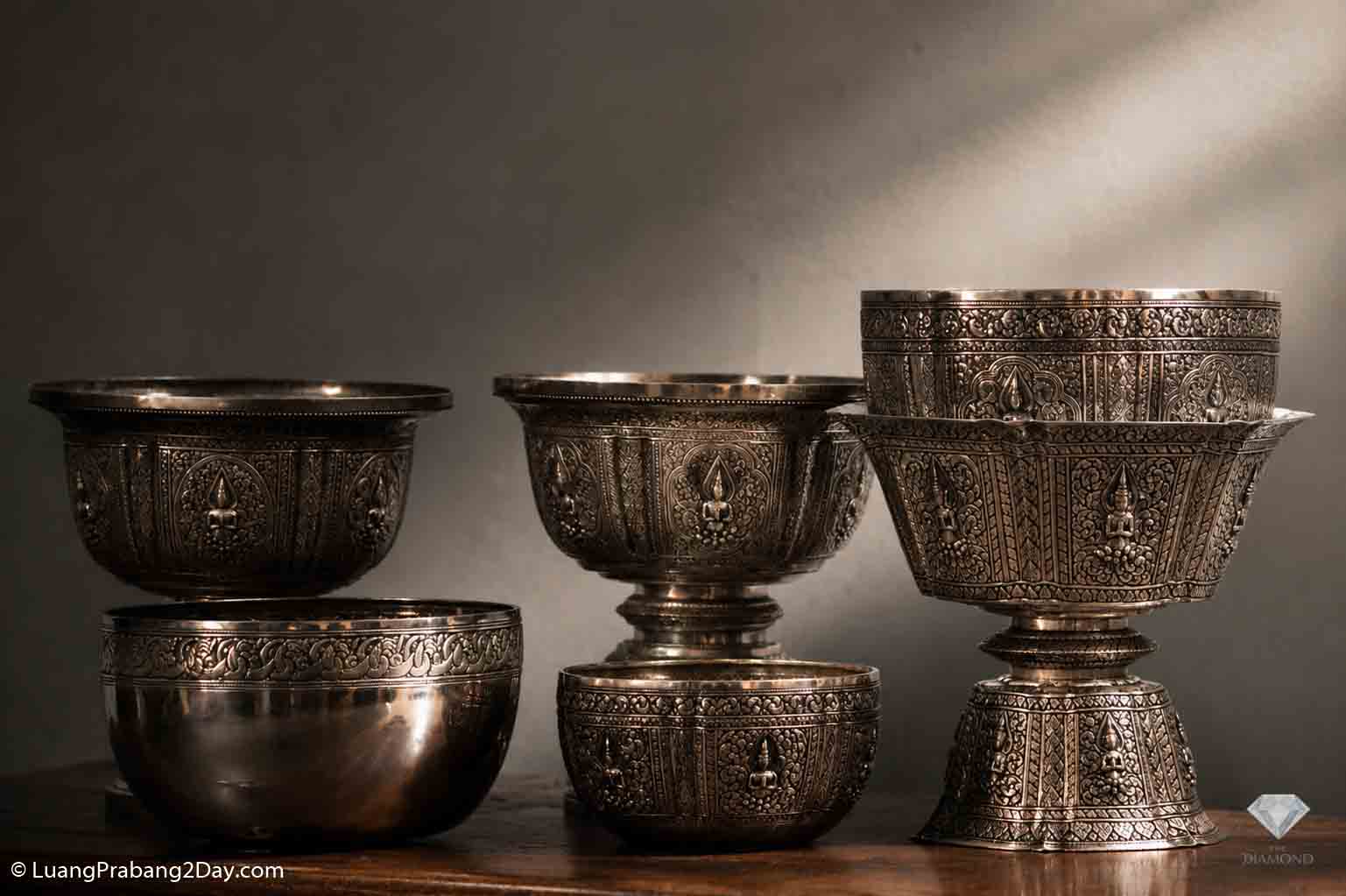
Together, these works illustrate the continuity of one of Luang Prabang's oldest surviving craft traditions.
Displayed together, the collection reveals remarkable consistency.
Although every object differs in form and function, they share common proportions, engraving styles, and aesthetic principles inherited through generations.
This continuity distinguishes traditional craftsmanship from contemporary imitation.
Each piece belongs to an unbroken chain of knowledge extending from the royal court to the present workshop.
Living Cultural Continuity
Today, machine production has become the global standard.
Handmade craftsmanship has become increasingly rare.
Yet inside this quiet workshop, traditional methods remain unchanged.
The sound of the hammer continues.
The silver continues to take shape.
The knowledge continues to pass from one generation to the next.
What survives here is not simply a profession.
It is a living cultural continuity.
It reminds us that heritage is preserved not only inside museums or historical archives, but also within the daily work of people who continue practicing their craft with patience, discipline, and respect for those who came before them.
In Luang Prabang, the legacy of the Royal Silversmiths remains not only remembered—
it remains alive.
Credits
A LuangPrabang2Day Original Documentary
Title
The Last Royal Silversmiths of Luang Prabang: Documenting the Living Cultural Continuity of Lan Xang
Featuring the Craftsmanship of
Neramith Phothisack
Photography & Documentary Direction
Lo Phettakoun (The Diamond)
Editorial Platform
LuangPrabang2Day
Website
www.luangprabang2day.com
Produced by The Diamond Luang Prabang
Luang Prabang, Lao PDR • July 2026
ABOUT THE AUTHOR
Hello We are OddThemes, Our name came from the fact that we are UNIQUE. We specialize in designing premium looking fully customizable highly responsive blogger templates. We at OddThemes do carry a philosophy that: Nothing Is Impossible