After the Rain — The Quiet Streets of Luang Prabang How Rain Changes the Atmosphere of a Living Heritage City
After the Rain — The Quiet Streets of Luang Prabang

How Rain Changes the Atmosphere of a Living Heritage City
Rain changes Luang Prabang quietly.

When the clouds begin to lift and the rain slows, the city does not immediately return to its usual rhythm. For a short time, the streets remain wet, the brick pavements deepen in colour, water gathers along old walls, and the surrounding mountains disappear behind layers of mist.

It is a different way of seeing Luang Prabang — not through monuments alone, but through atmosphere.


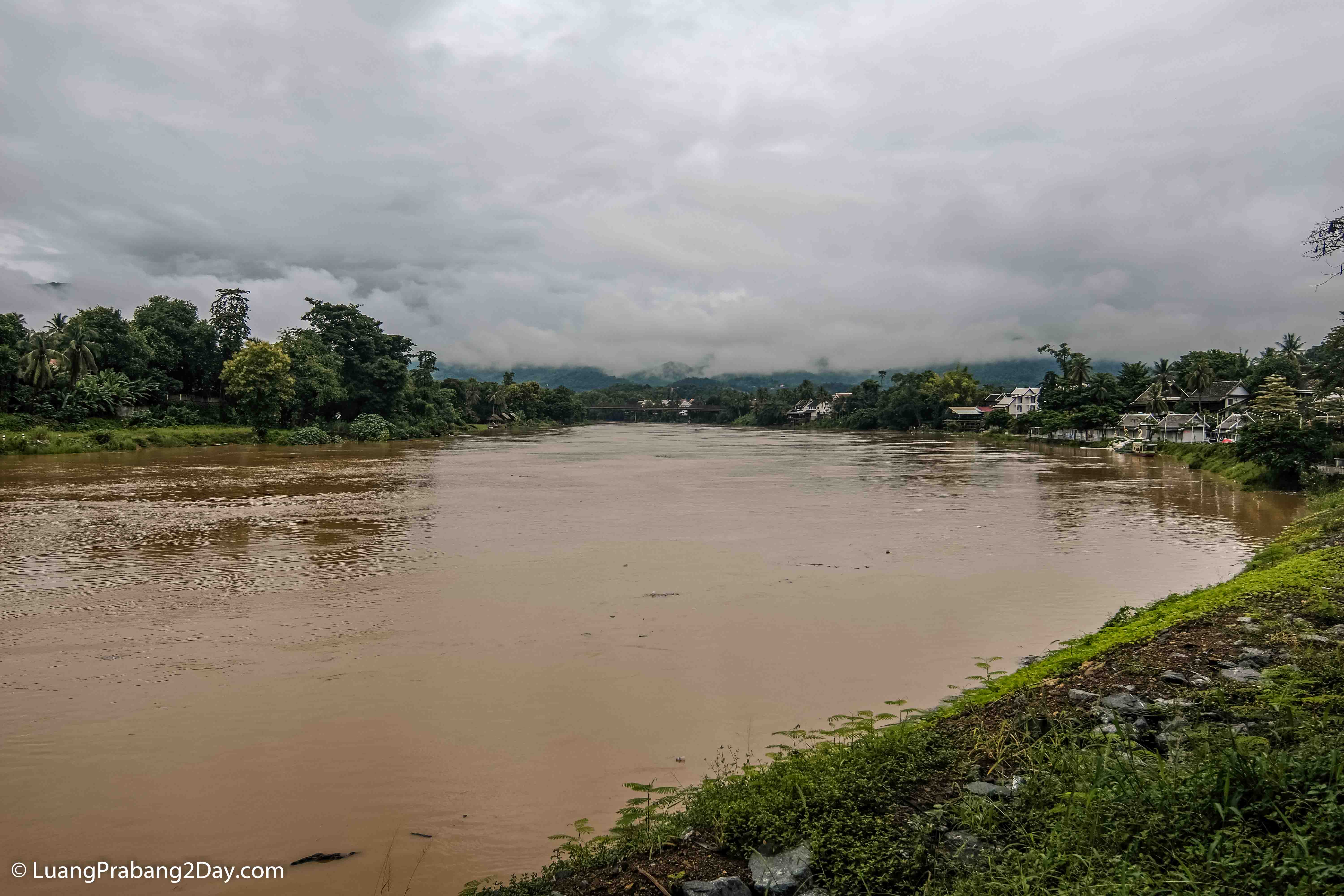
Low clouds settle over the Mekong landscape after the rain, connecting Luang Prabang’s historic town with the mountains and tropical environment that surround it.

A City Beneath the Clouds

Luang Prabang is shaped by water.

The historic town lies between the Mekong and Nam Khan rivers, while mountains rise beyond its urban landscape. During the rainy season, these geographical elements become especially visible. Clouds descend toward the hills, vegetation grows deeper in colour, and the rivers carry the season through the landscape.

Rain therefore changes more than the weather. It changes how the entire city is perceived.

From the riverbanks, the familiar landscape becomes softer and quieter. Distant mountains fade behind mist, while houses and trees along the water appear almost suspended between river and cloud.

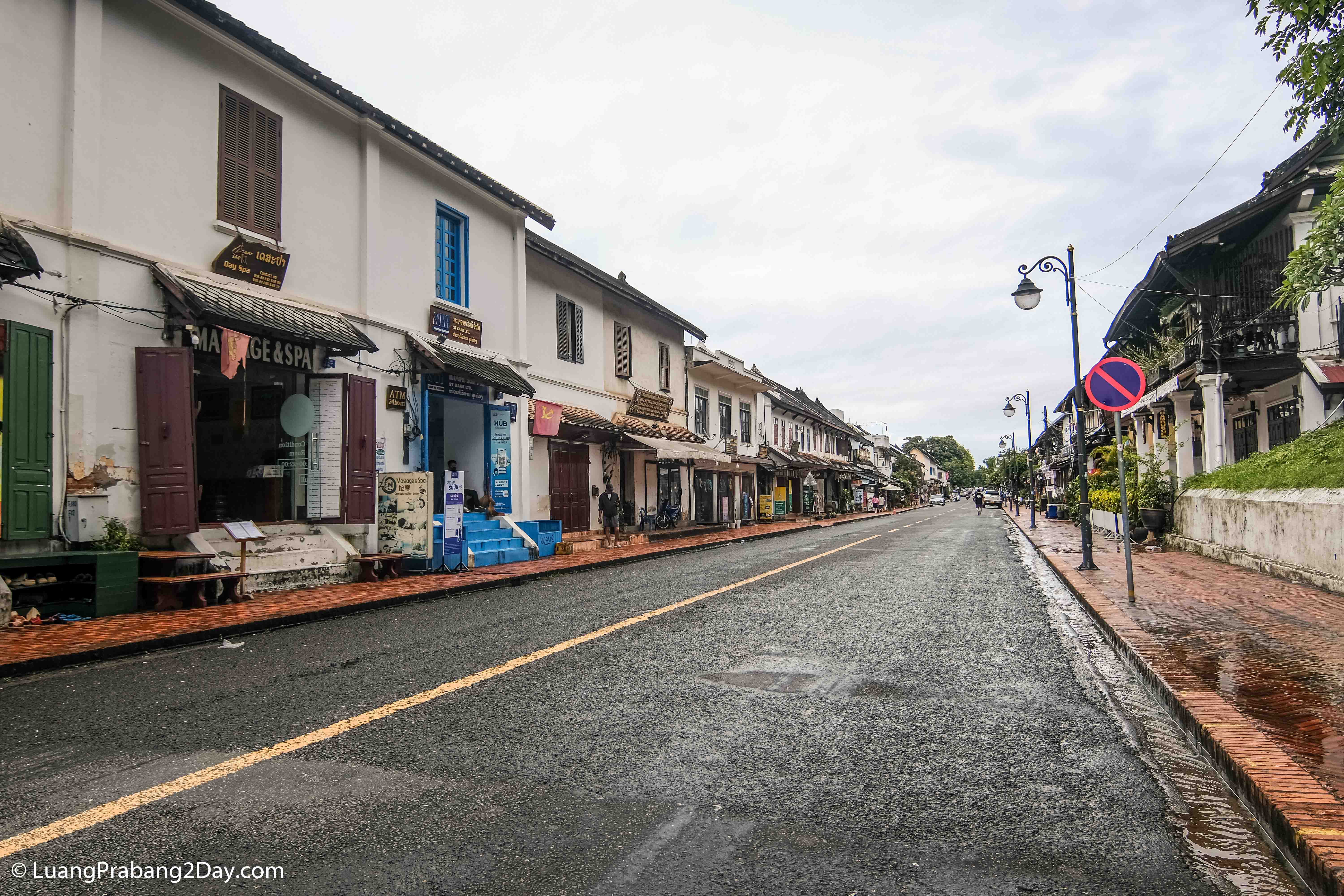
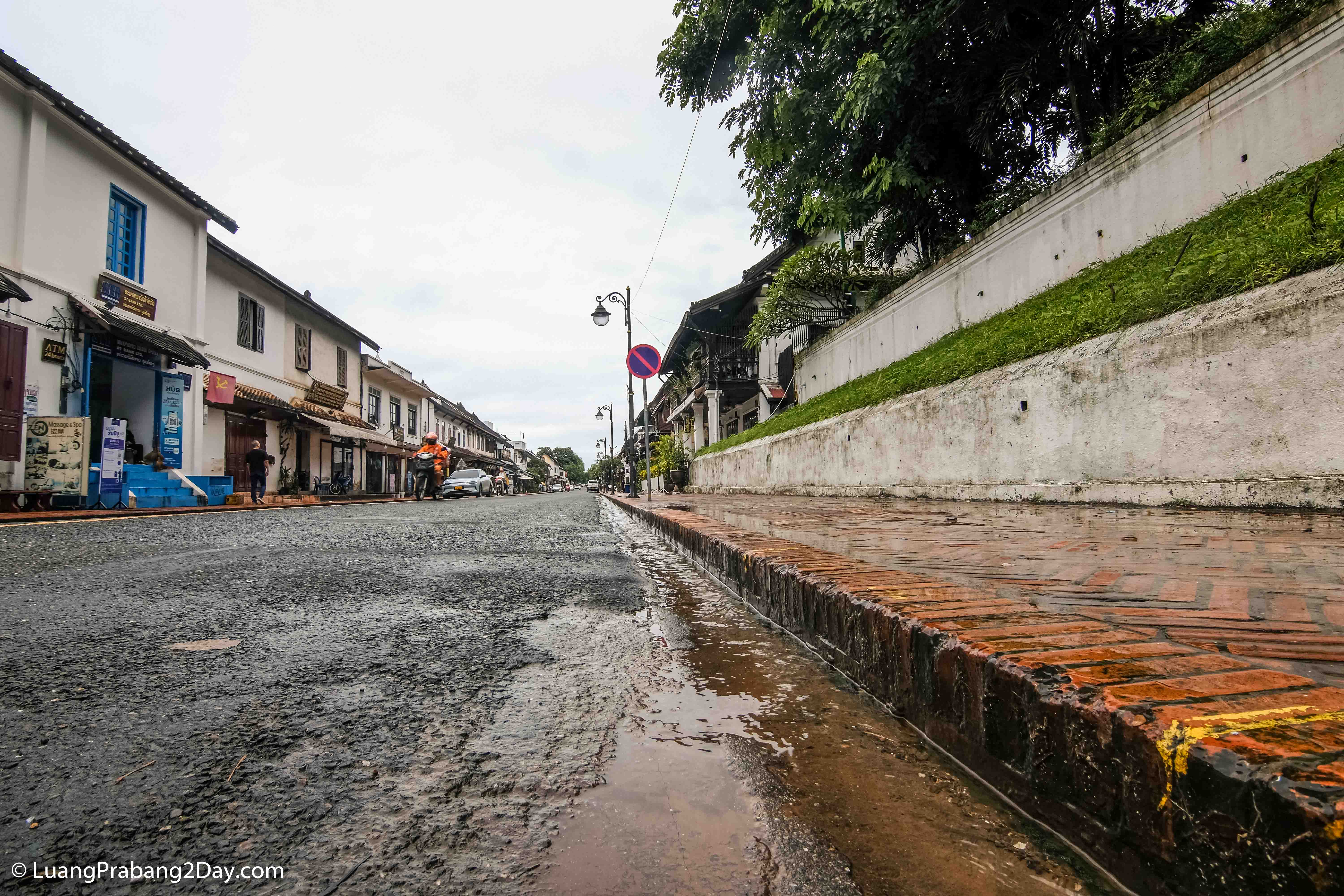
After a shower, one of Luang Prabang’s historic streets becomes noticeably quieter, its wet surface reflecting the subdued light of an overcast afternoon.

When the Streets Become Quiet

The change is perhaps most noticeable in the old town.

After rain, movement slows. Motorbikes become fewer, pedestrians shelter beneath roofs, and the streets briefly open into long, uninterrupted views.

Without strong sunlight, the colours of Luang Prabang also change. White façades become softer, old wooden shutters appear darker, and the red-brick pavements become richer.

This temporary stillness reveals something easily overlooked during busier hours: the scale of the town.

The buildings remain low. The street stays close to the pedestrian. Rooflines, walls, trees and verandas form a continuous streetscape rather than competing for attention.


At street level, rainwater collects beside the brick pavement, revealing textures that often disappear when the road is dry.

Rain Reveals the Surface of the City

Seen from close to the ground, the transformation becomes even clearer.

Water settles in small depressions beside the pavement. Rough asphalt becomes reflective. Handmade-looking brick surfaces darken. Moss and small plants appear more clearly along walls and drainage edges.

These details may seem ordinary, but they are part of the physical character of Luang Prabang.

A heritage city is not experienced only through famous temples or important buildings. It is also experienced through materials: brick, timber, plaster, stone, vegetation and water.

Rain temporarily brings these surfaces forward.


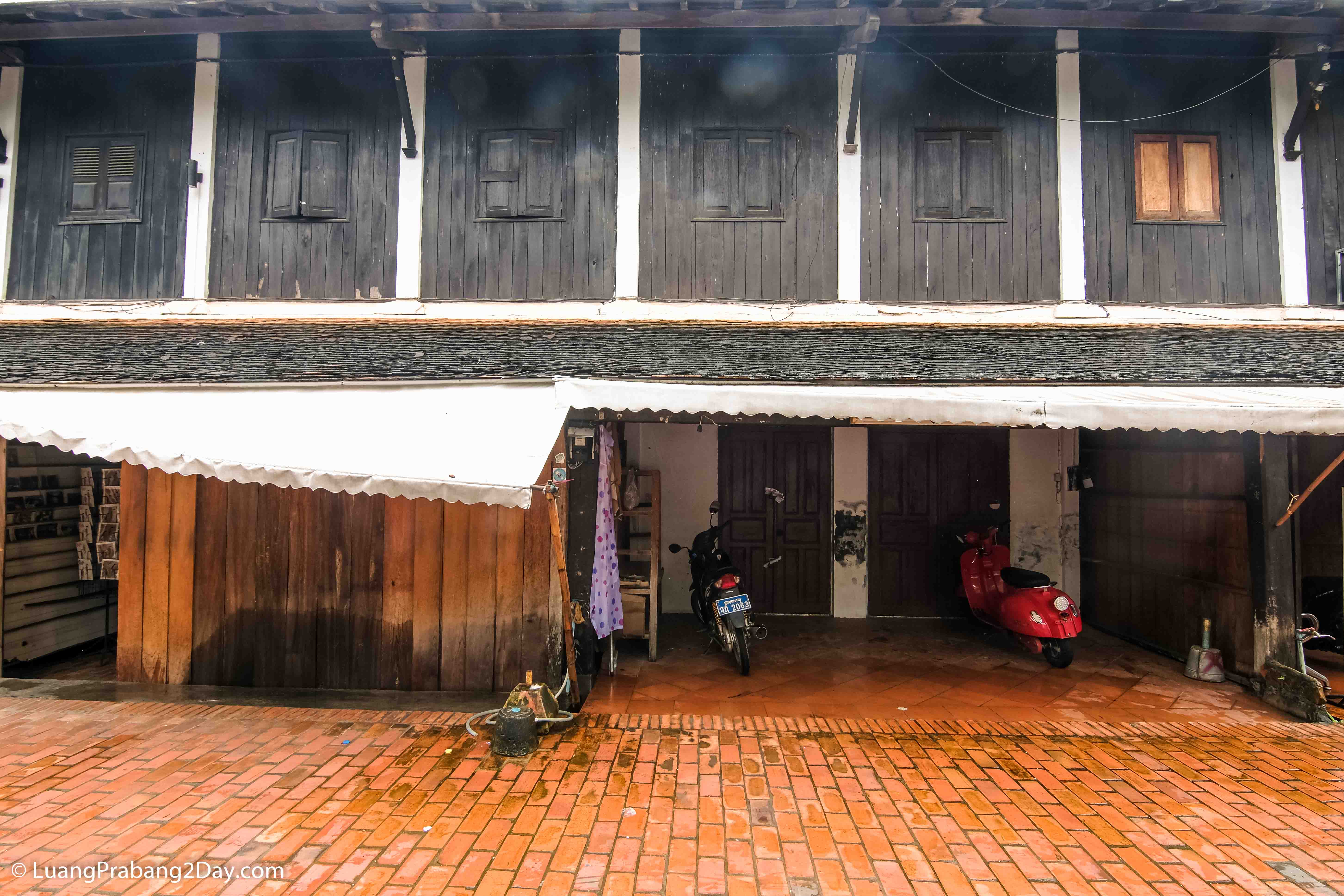
Dark timber shutters and rain-soaked brick pavement show how traditional materials respond to the tropical climate.

Architecture That Lives With the Climate

Luang Prabang's architecture has developed within a tropical environment where intense sun and seasonal rain are part of everyday life.

Deep roofs, covered entrances, shutters and shaded spaces are not merely visual characteristics. They also show how buildings and daily activities respond to climate.

After rain, this relationship becomes particularly visible.

Wooden façades absorb the subdued light while sheltered areas remain active spaces for motorbikes, household objects and everyday routines. The architecture is not isolated from life around it.

This is an important part of understanding Luang Prabang as a living heritage city.

Heritage here is not simply something preserved behind museum doors. Historic buildings continue to exist alongside homes, cafés, shops, monasteries, traffic and ordinary daily activity.


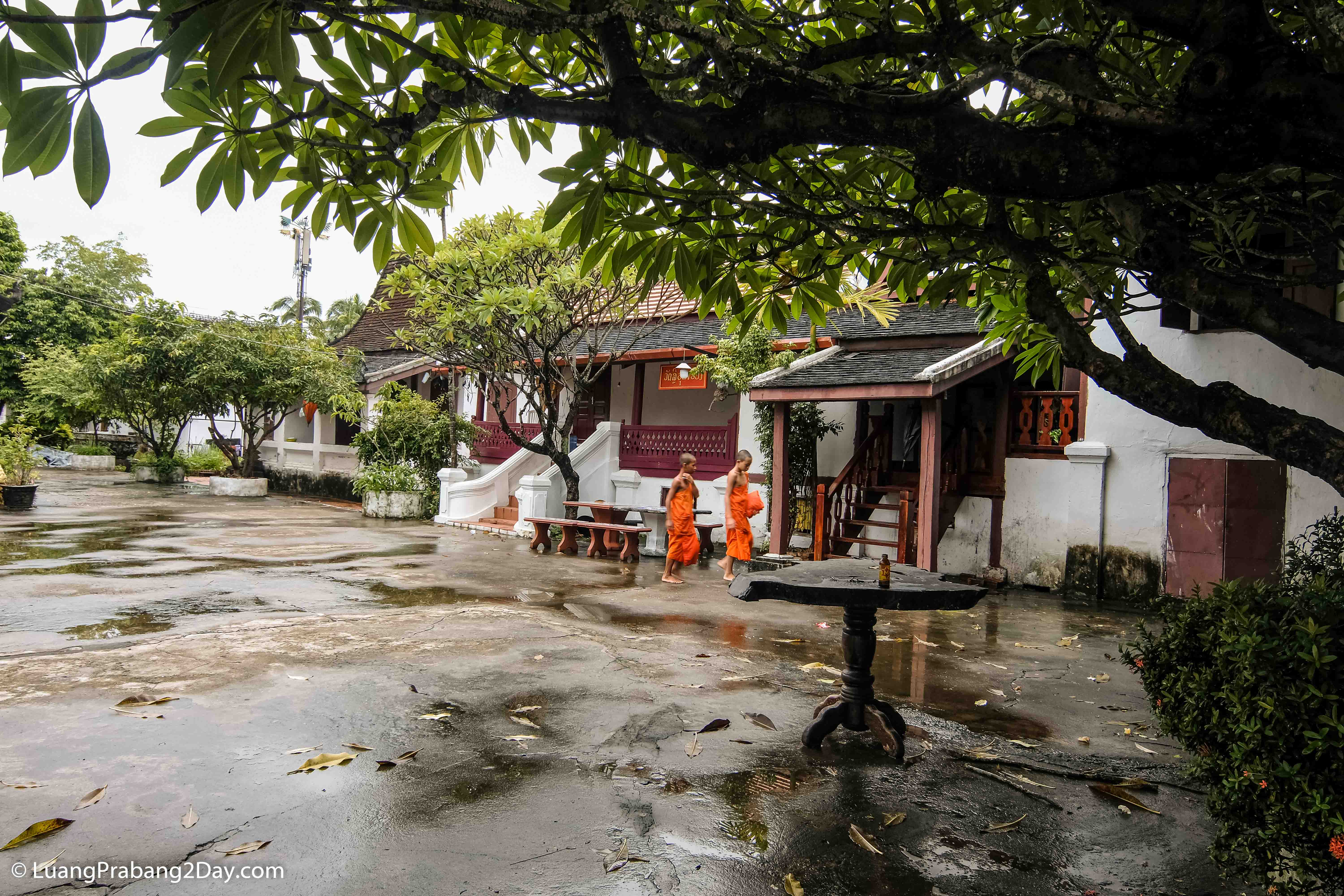
Young monks cross a rain-darkened monastery courtyard, where puddles, fallen leaves and old buildings become part of an everyday scene.

Living Heritage After the Rain

Inside the monasteries, the same quiet atmosphere continues.

Wet courtyards reflect fragments of trees and buildings. Fallen leaves remain scattered across the ground. Monks move between structures as ordinary monastic life continues after the shower.

Scenes like this help explain what makes Luang Prabang different from a heritage landscape preserved only for visitors.

The temples are historic, but they are also active religious spaces.

The streets are architecturally significant, but they are also used every day.

The old houses carry history, yet people continue to live, work and move around them.

Rain brings these layers together. For a moment, fewer distractions remain, and the relationship between architecture, nature and everyday life becomes easier to observe.


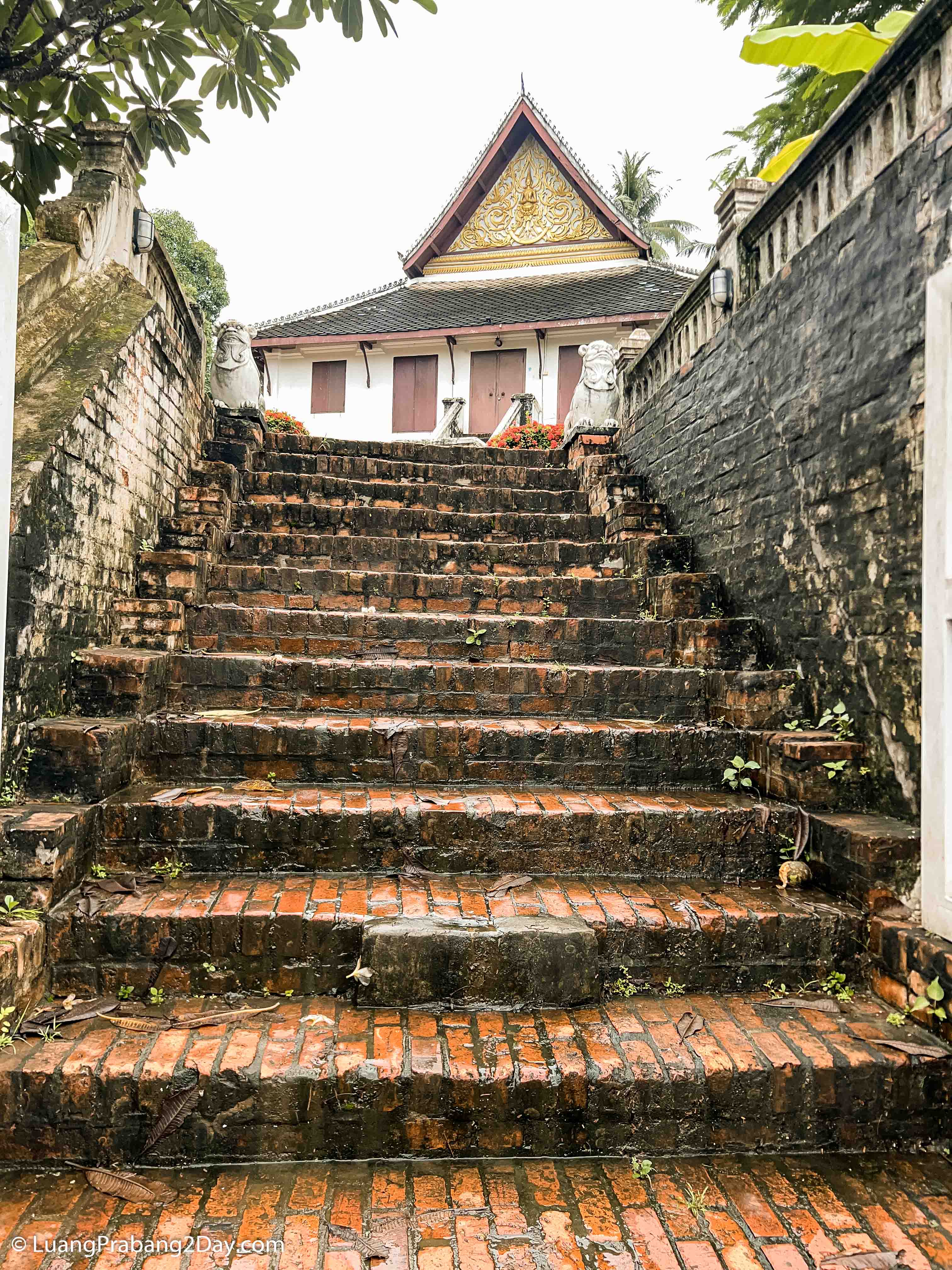
Rain darkens an old brick staircase, highlighting moss, small plants and the traces of time embedded in the historic fabric of Luang Prabang.

What the Rain Leaves Behind

Perhaps the smallest details tell the story best.

On an old staircase, rain settles between bricks that have been exposed to countless wet seasons. Moss grows along shaded surfaces. Tiny plants emerge from cracks. Water makes differences in age, texture and material suddenly visible.

Nothing here is monumental by itself.

Yet together these details reveal something fundamental about Luang Prabang: heritage is shaped not only by people, architecture and history, but also by climate and time.

The tropical environment continuously interacts with the city. Wood ages. Brick darkens. Vegetation returns. Water follows old paths through streets and courtyards.

Preservation therefore does not mean separating Luang Prabang from nature. Part of the city's character comes precisely from this continuing relationship.

A Different Way to See Luang Prabang

Visitors often encounter Luang Prabang through golden temples, morning alms giving, sunsets over the Mekong and the warm colours of tropical light.

But the city has another atmosphere.

It appears when the rain has just stopped.

The streets become quieter. The mountains disappear into clouds. Brick pavements shine beneath soft light. Monastery courtyards hold small reflections of trees and roofs.

For a short period, the city seems to slow down.

And in that stillness, Luang Prabang reveals something that is sometimes harder to notice on a bright and busy day:

heritage is not only what has survived from the past. It is the continuing relationship between place, people, architecture and landscape.

After the rain, that relationship becomes visible everywhere.

After the Rain — The Quiet Streets of Luang Prabang: How Rain Changes the Atmosphere of a Living Heritage City Lo Phettakoun (The Diamond Luang Prabang) LuangPrabang2Day 2026-08 Original Photo Essay / Visual Cultural Archive text/html, image/jpeg https://www.luangprabang2day.com/archive/2026/after-the-rain-quiet-streets-luang-prabang en An editorial photo essay exploring how monsoon rainfall transforms the physical materials, atmospheric light, historic streetscapes, and living heritage of Luang Prabang, Laos. Luang Prabang Rainy Season; Living Heritage Architecture; Tropical Climate Adaptation; Vernacular Architecture Laos; Urban Materiality; Mekong Landscape; Monastic Life; UNESCO World Heritage Site Luang Prabang, Lao PDR; UNESCO World Heritage Site Primary Visual Fieldwork & Editorial Curation by LuangPrabang2Day & The Diamond Luang Prabang; Direction by Lo Phettakoun; Featuring Post-Rain Landscapes, Historic Streetscapes, Monastic Courtyards, and Material Textures Copyright © 2026 LuangPrabang2Day & The Diamond Luang Prabang. All Rights Reserved. Governed under Heritage Protection & Editorial Integrity Framework.
Share this:

ABOUT THE AUTHOR

Hello We are OddThemes, Our name came from the fact that we are UNIQUE. We specialize in designing premium looking fully customizable highly responsive blogger templates. We at OddThemes do carry a philosophy that: Nothing Is Impossible